


Art Deco Wedding Band
An art deco wedding band brings geometric precision and enduring metalwork to the finger, offering a tangible link to the design sensibilities of the early twentieth century.
Art Deco Wedding Band
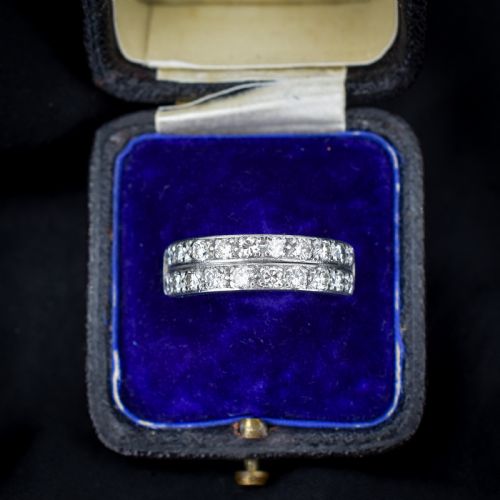
An art deco wedding band is typically a ring forged in platinum or gold, often set with diamonds or rubies in geometric patterns. These pieces span the decades from the nineteen-teens through to the nineteen-fifties, with the nineteen-twenties and thirties providing the strongest design characteristics.
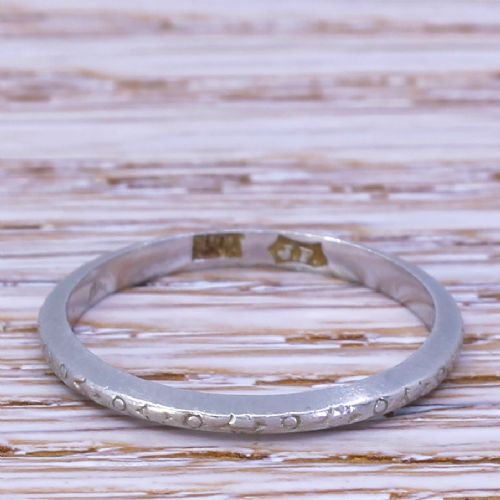
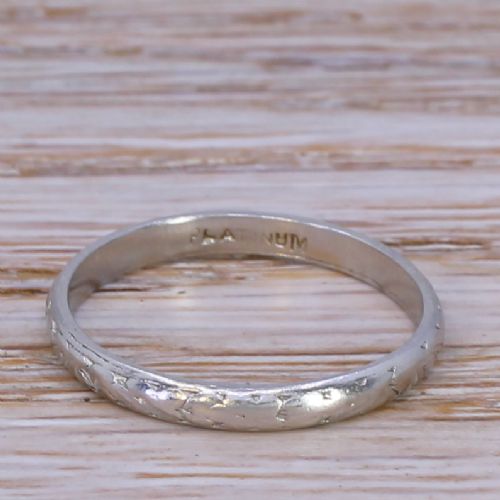
Buyers encounter both plain metal bands and stone-set variations, including half and full eternity rings. Plain bands frequently utilise high-carat yellow or rose gold, while stone-set versions favour platinum and eighteen-carat white gold to complement the brilliance of the diamonds.
How they were made
Goldsmiths and platinumsmiths of the period employed durable precious metals, casting and shaping platinum, twenty-two-carat yellow and rose gold, and eighteen-carat white and yellow gold into slender, engineered profiles. Metal purity varied, with twenty-two-carat yellow gold commonly chosen for plain bands.
Gemstones such as diamonds and rubies were integrated using precise setting techniques, securing rows of stones along the band. Old cut diamonds frequently appear in these rings, reflecting the cutting styles standard during the early decades of the twentieth century.
Dated examples span from nineteen-sixteen through to nineteen-fifty, capturing several decades of changing wedding band manufacture.
What varies in quality
Quality in an art deco wedding band rests upon the crispness of the metalwork and the uniformity of any set stones. Superior pieces maintain sharp geometric lines and secure claw or channel settings that hold diamonds or rubies flush and even.
The choice of metal also dictates the character of the piece, with heavier platinum and high-carat gold providing substantial weight and longevity compared to lighter alloy variations.
The Art Deco Wedding Band Glossary
- Eternity ring
- A band set continuously with gemstones symbolising endless affection. These typically feature diamonds or rubies circling the entire hoop.
- Old cut
- A diamond cutting style prevalent before modern brilliant cuts were standardised. It is characterised by a smaller table, higher crown and distinct culet.
- Platinum
- A dense, durable white metal favoured for fine jewellery during the period. Its strength allowed jewellers to create delicate settings that held stones securely.
- Half eternity ring
- A variation where gemstones occupy only the upper visible half of the band. This design offers the visual impact of an eternity ring with increased comfort on the underside of the finger.
Art Deco Wedding Band: Frequently Asked Questions
What defines an art deco wedding band?
An art deco wedding band is defined by its geometric styling, linear engraving, or the structured placement of diamonds and rubies. These bands reflect the design ethos of the nineteen-twenties and nineteen-thirties.
They appear in plain precious metals or as stone-set eternity rings, combining durability with a distinctive period aesthetic.
Were these rings made in yellow gold?
Yellow gold was widely used for plain wedding bands, particularly in twenty-two-carat purities during the nineteen-twenties and thirties. Rose gold also appears from the same era.
White metals such as platinum and eighteen-carat white gold were reserved primarily for diamond-set variations to complement the stones.
How do half and full eternity rings differ?
Full eternity rings feature gemstones encircling the entire band, whereas half eternity rings place stones only across the top arc. This makes half eternity rings simpler to resize.
Both styles utilise old cut diamonds and rubies set into platinum or white gold.
What stones are found in these bands?
Diamonds and natural rubies are the primary gemstones set into these rings. They appear in single rows, double rows, or full eternity circles.
Many incorporate old cut diamonds displaying characteristic facets from the early twentieth century.