

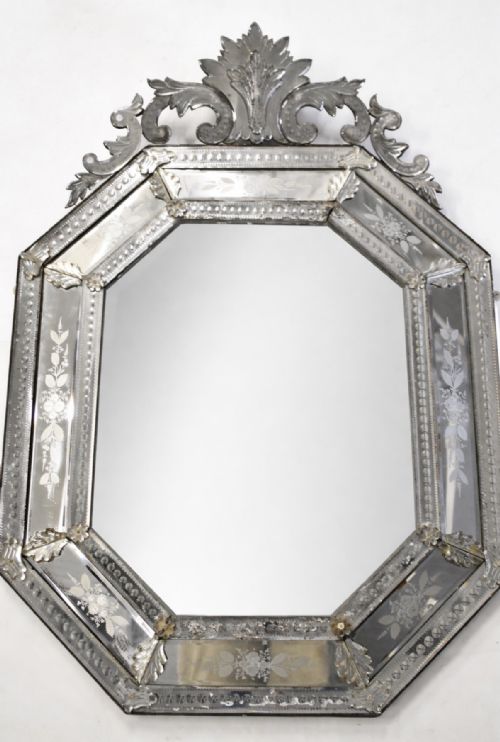


Silvered Venetian Mirror
A silvered venetian mirror brings striking light and intricate etched detail into a room, drawing the eye with its layered glass plates and ornate borders.
Silvered Venetian Mirror
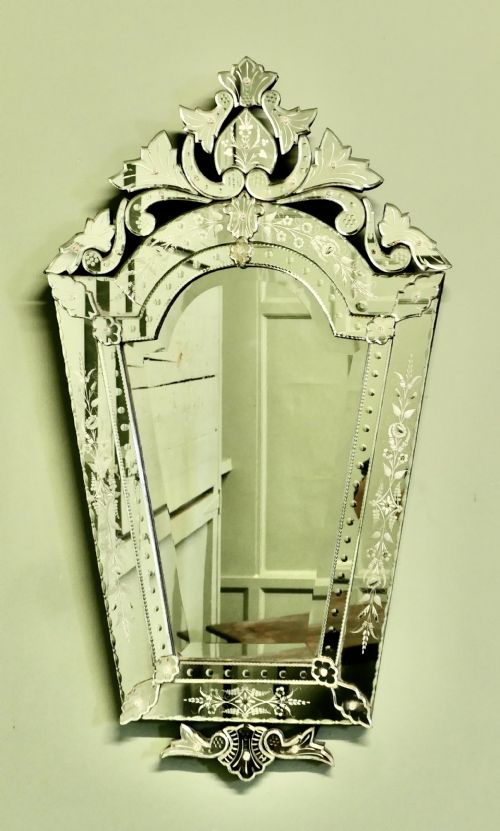
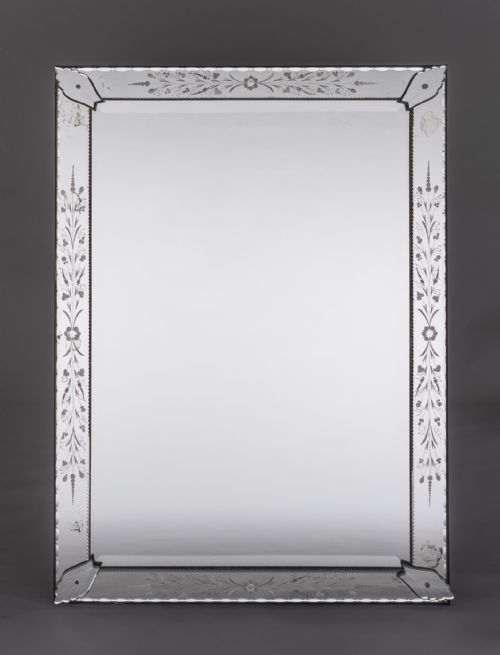
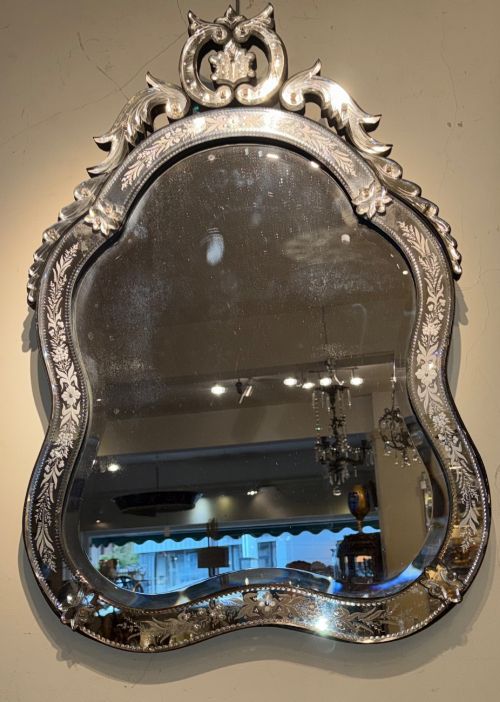
The pieces on this page originate predominantly from Italian workshops, with dating ranging from the eighteenth century through to the mid twentieth century. You are most likely to meet wall mirrors featuring bevelled glass plates and engraved floral or scroll motifs.
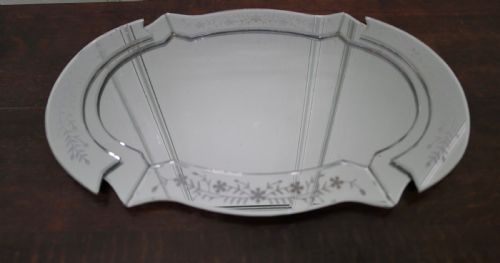
Forms vary from grand architectural overmantles designed for principal rooms to smaller decorative trays intended for display. Each variant carries the characteristic layered construction that defines the style, combining central mirror plates with bordered glass elements.
How they were made
Makers constructed these pieces using combinations of mirrored glass, silvered glass, and traditional wood or metal backing structures. Artisans secured individual glass sections onto wooden foundations using decorative clips and pins.
Decoration relied heavily on hand engraving and cutting techniques applied directly to the glass surface. The plates frequently incorporated bevelled edges to refract light effectively across the room.
Recorded periods span from the eighteenth century through to the Edwardian era and the mid twentieth century.
What varies in quality
The standard of a silvered venetian mirror rests on the depth of the hand engraving and the clarity of the underlying glass plates. Superior examples display crisp, deeply cut motifs that catch the light sharply without blurring.
Construction methods also distinguish finer specimens, particularly the complexity of the cushion frame and the precision with which individual glass sections fit together. The preservation of the original silvering and the integrity of the wooden backing frame contribute substantially to the overall standing of the piece.
The Silvered Venetian Mirror Glossary
- Cushion mirror
- A mirror featuring a convex, outward-curving profile created by angled glass panels surrounding the central plate. This design maximises reflection from multiple angles.
- Overmantle mirror
- A large horizontal mirror specifically proportioned to hang above a fireplace mantelpiece. These pieces often serve as the visual anchor of a formal room.
- Foxed glass
- Mirror glass that has developed dark spots, mottling, or patination due to the gradual oxidation of the silver backing over time. Collectors often appreciate this ageing for the authentic character it provides.
- Bevelled plate
- A mirror glass pane with edges that have been cut and polished at an oblique angle. This technique creates a prismatic border that catches and disperses light.
Silvered Venetian Mirror: Frequently Asked Questions
Where should I hang a large venetian mirror?
These mirrors suit principal living spaces, hallways, or above a fireplace mantel where they can reflect natural light and open up the room.
Ensure the wall structure can support the substantial weight of the wooden backing and glass plates safely.
How do I clean an antique silvered mirror?
Use a soft, dry microfibre cloth to remove dust gently from the glass surface and the delicate edges.
Avoid commercial liquid cleaners that might seep behind the glass plates and damage the fragile silvering or wooden backing.
What defines an Art Deco venetian mirror?
Art Deco examples incorporate sharper geometric lines, stepped borders, and stylized motifs alongside traditional glass-cutting techniques.
They reflect the modern aesthetic shifts of the 1920s and 1930s while retaining the classic Venetian construction methods.
Why do some mirrors have dark spots?
Dark spots and patination occur naturally as the silver backing oxidises over decades of exposure to air and moisture.
This ageing process, often called foxing, indicates genuine antiquity rather than a manufacturing defect.