

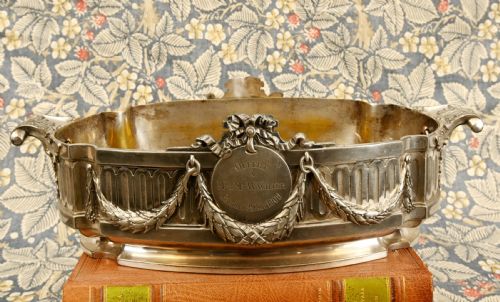


Silvered Metal Table Centrepiece
A silvered metal table centrepiece anchors a dining table with reflective presence, bringing architectural height and gleaming surface to floral displays and fruit arrangements.
Silvered Metal Table Centrepiece
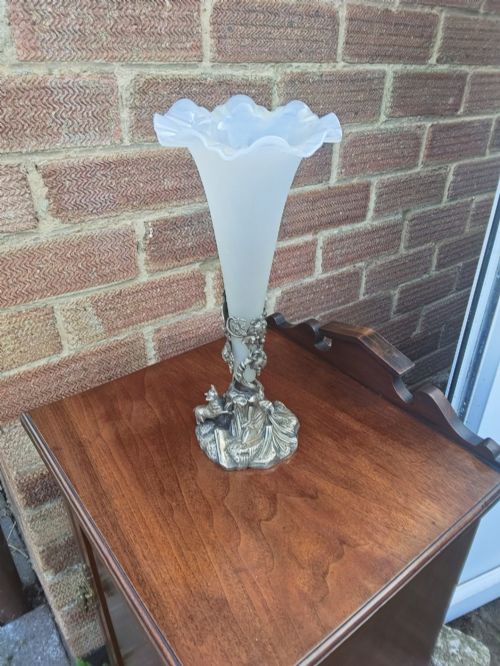
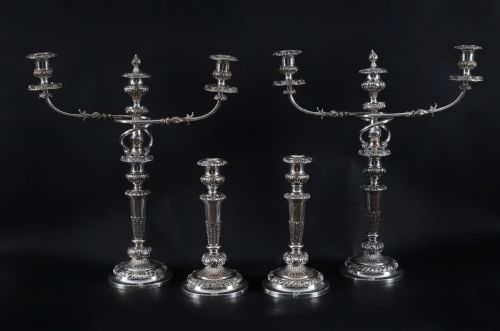
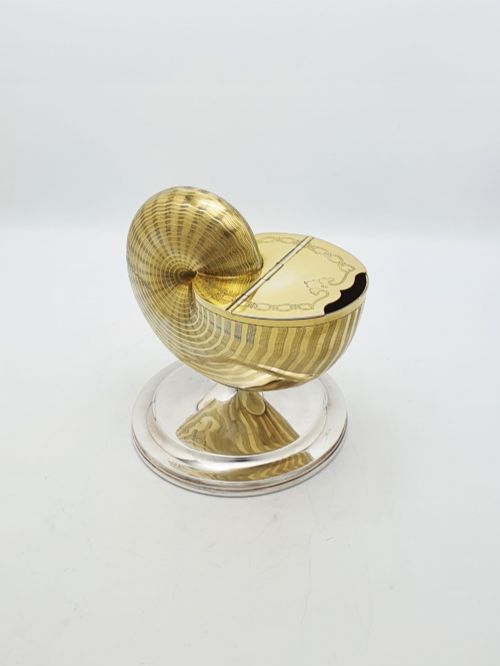
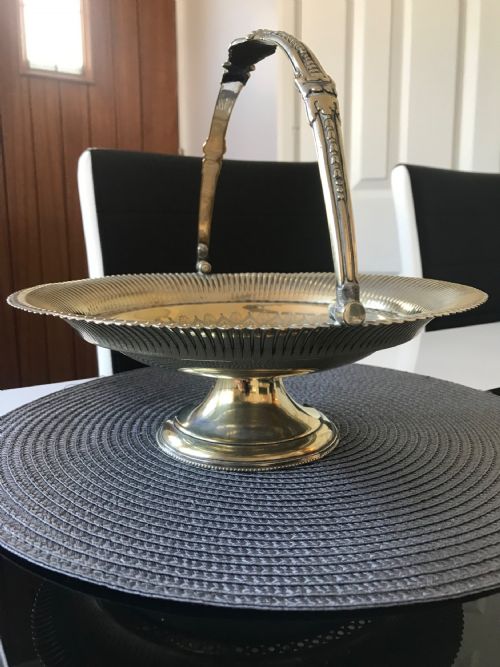
A silvered metal table centrepiece serves as the principal decorative focus of a formal dining table, often incorporating bowls, baskets, or branching candelabra elements. These pieces emerge across the eighteenth, nineteenth, and early twentieth centuries, spanning Georgian, Victorian, Edwardian, Art Nouveau, and Art Deco designs.
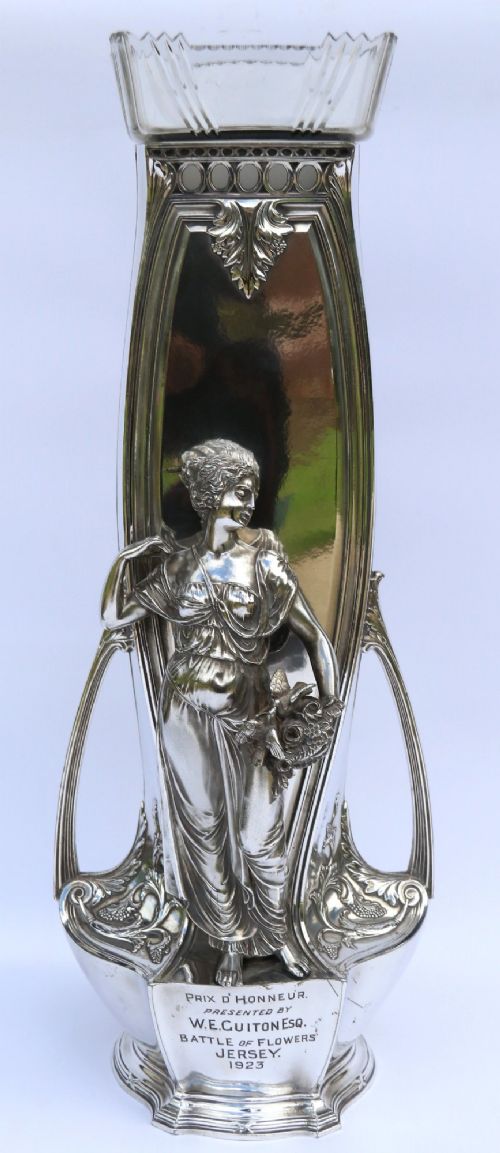
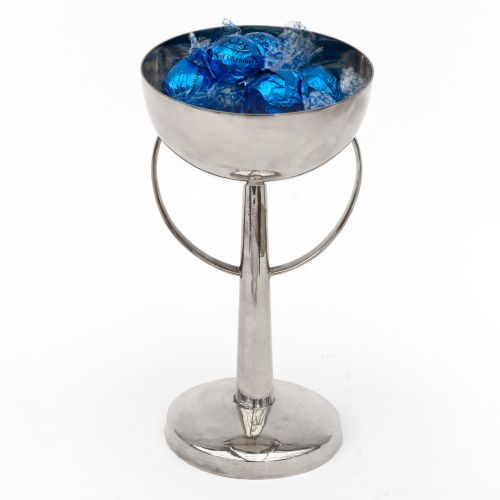
The selection here encompasses French nineteenth-century castings, Old Sheffield plate wares, and Continental modernist chromium comports. Buyers encounter everything from wirework fruit baskets and glass-lined epergnes to figural centerpieces supported by botanical motifs.
Makers and workshops across Britain, France, and Germany produce these dining table ornaments in varied scales, from modest bon-bon dishes to grand multi-branch suites.
Materials and construction
Construction relies on base metals such as copper, brass, pewter, and white metal coated with silver plating, Old Sheffield plating, or mercury silvering. Manufacturers also combine these metallic structures with blown glass inserts, crystal bowls, and opaque glass components.
Techniques range from traditional hand-raised wirework and Sheffield plating to nineteenth-century electroplating and structural bronze casting. Makers frequently employ chased detailing, openwork casting, and applied mounts to articulate floral and neoclassical ornamentation.
Silvered Metal Table Centrepiece Retail Price Guide 2026
Typical asking prices for silvered metal table centrepiece among the pieces listed under this phrase on Sellingantiques today, from the lower quarter to the upper quarter. They describe what is for sale here now, not the wider market.
Listings feature silvered metal table centrepieces spanning the eighteenth, nineteenth, and twentieth centuries, incorporating materials from Old Sheffield plate to crystal glass.
Judging quality
Quality rests upon the crispness of the casting and the integrity of the silver surface, where deeper relief work and heavier base metal gauges denote superior manufacture. Superior examples retain their original glass inserts and show balanced proportions across branching arms or handles.
The distinction between standard commercial output and exceptional work lies in the hand-finishing of chased details and the precision of structural joints. Maker signatures, such as those from documented German and French metalwork studios, indicate higher atelier standards.
WMF·Archibold Knox for Liberty & Co·Brille Paris·Blagden Hodgson & Co
The Silvered Metal Table Centrepiece Glossary
- Old Sheffield Plate
- A composite material formed by fusing a sheet of silver to a copper ingot before rolling them together into sheets. This technique predates nineteenth-century electroplating and leaves a characteristic thin line of visible copper at exposed edges.
- Epergne
- An ornamental centrepiece featuring a central bowl or basket surrounded by smaller branching dishes or vases. These multi-tiered vessels hold fruit, sweets, or floral arrangements.
- Comport
- A shallow decorative bowl raised on a pedestal foot, designed for serving fruit or confectionery on the dining table. They appear in silver plate, ceramic, and glass.
- Electroplated Nickel Silver
- A base alloy of copper, nickel, and zinc coated with an electrolytically applied layer of pure silver. This process replaced older plating methods from the mid-nineteenth century onward.
- Tazza
- A small, broad saucer-shaped vessel mounted on a stem and foot, used for display or serving. The form derives from Renaissance drinking vessels.
Silvered Metal Table Centrepiece: Frequently Asked Questions
How do I clean silvered metal?
Clean silvered metal gently with a soft microfibre cloth and a mild aqueous solution formulated for plated items. Avoid abrasive commercial dips that strip thin silver layers from the base metal.
Patina develops naturally over decades and adds depth to chased ornamentation, so aggressive polishing should be avoided in favour of light maintenance.
Can I use these for fresh flowers?
Many centrepieces include original glass liners or crystal bowls specifically designed to hold water and floral arrangements safely. Metal surfaces should remain dry to prevent corrosion.
For pieces lacking glass inserts, placing a separate watertight vessel inside protects the historical plating from moisture damage.
How do I date a centrepiece?
Dating relies upon stylistic markers such as asymmetric plant forms for Art Nouveau or geometric planes for Art Deco. Manufacturing techniques like Old Sheffield plating also point towards the Georgian era.
Maker marks, registration lozenges, and base metal stamps provide further chronological evidence when present on the underside.
What is the difference between an epergne and a centrepiece?
An epergne is a specific type of centrepiece that incorporates multiple hanging baskets, branching arms, or detachable vases radiating from a central column. Standard centrepieces usually consist of a single bowl, basket, or tazza.
Both serve the same decorative function on the dining table but offer different visual heights and capacities for display.