





Silvered Dial Desk Clock
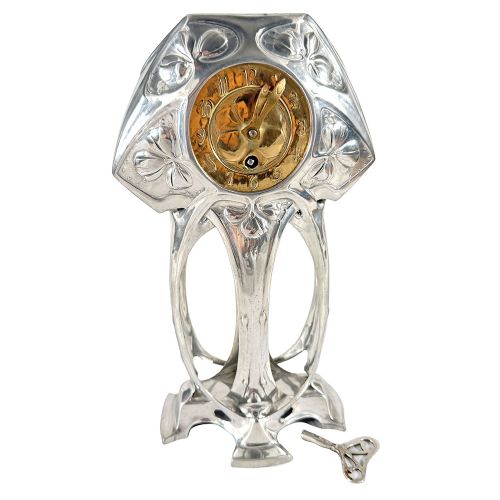
These silvered dial desk clock examples bring together brass, glass and mahogany across Victorian, Edwardian and Art Deco designs for daily use.
Silvered Dial Desk Clock
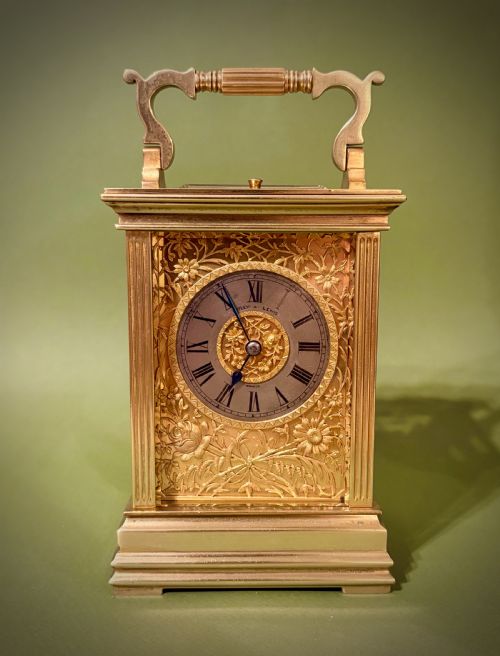
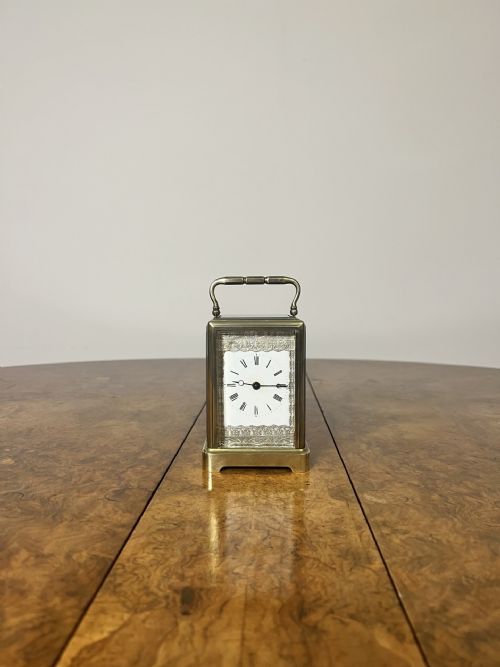
A silvered dial desk clock brings together timekeeping and compact forms designed for tables, desks and travel from the nineteenth and twentieth centuries. Buyers encounter carriage clocks, library clocks and strut clocks spanning periods from the Victorian era through Art Deco and Mid-Century Modern.
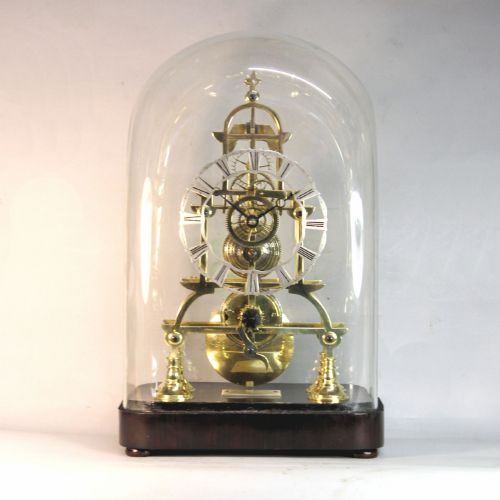
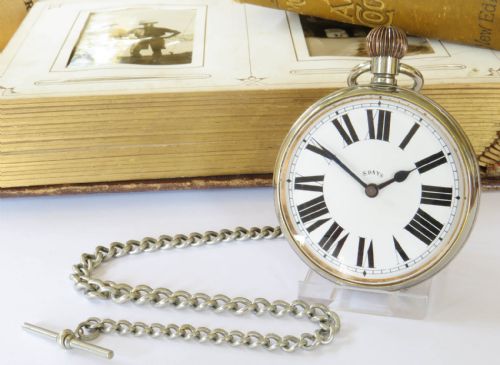
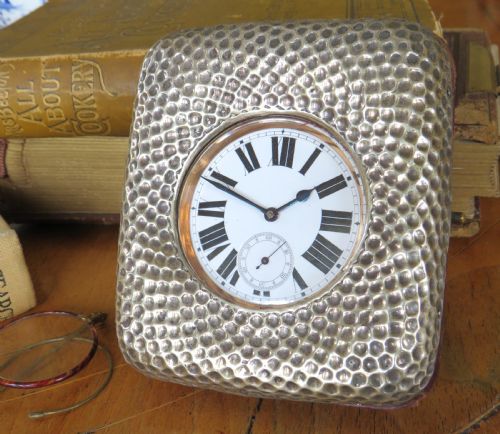
The selection ranges from French repeating carriage clocks and English fusee library clocks to promotional advertising pieces and pocket watch conversions. Materials span brass, glass, mahogany, silvered metal and chrome, reflecting both domestic interiors and commercial workspaces.
Materials and Construction
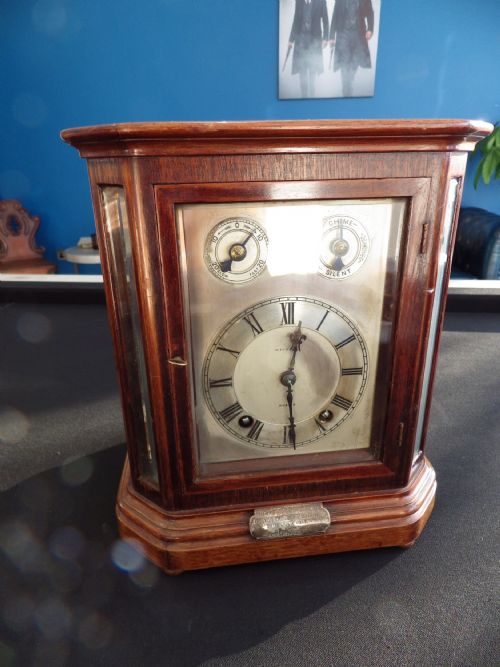
Cases combine metals such as brass, bronze, nickel and chrome with timber frames in mahogany, oak, rosewood and coromandel. Glass panels appear in library clocks and carriage designs to reveal the movement within.
Dials utilise silvered metal alongside enamel and brass elements, while movements range from eight-day mechanisms and fusee systems to platform escapements and mystery clock designs.
One recorded advertising clock was made specifically for a garage near Brooklands.
Distinctions in Quality
Quality rests upon the precision of the mechanical movement, the crispness of engraving on the silvered dial, and the integrity of the case construction. Heavier brass castings and solid timber housings indicate superior workshop production.
The integration of secondary complications, such as date work, striking trains or thermometers, separates standard timepieces from higher grade library and desk compendiums.
Mappin & Webb·Richard Winter·Friedrich Adler·Howell & James·Winterhalder & Hofmeier·Paul Garnier·Smiths Clocks·John Massey·Delépine·Henry Matthews·Walker
The Silvered Dial Desk Clock Glossary
- Silvered dial
- A metal face treated to achieve a frosted or satin silver finish, often paired with engraved numerals.
- Fusee
- A conical pulley connected to the mainspring by a chain or cord to maintain even tension as the power winds down.
- Platform escapement
- An independent escapement assembly mounted on a small platform within portable clocks.
- Carriage clock
- A small, portable spring-driven timepiece fitted with a carrying handle, developed for travel.
- Strut clock
- A timepiece supported by a hinged prop or stand attached to the rear of the case.
Silvered Dial Desk Clock: Frequently Asked Questions
What is a silvered dial desk clock?
A silvered dial desk clock is a portable or stationary timekeeper featuring a metal face treated with silver to create a pale, reflective surface. These pieces appear in forms ranging from brass library clocks to Art Deco desk models.
Such clocks served practical purposes in offices, libraries and drawing rooms. Their compact proportions made them suitable for moving between rooms or packing for travel.
How do I wind a mechanical desk clock?
Mechanical desk clocks utilise a key or a winding arbor attached to the movement. Winding requires gentle turns until resistance is felt, avoiding overwinding that can damage the mainspring.
Many period examples employ eight-day movements that require weekly attention. Handling the key with care preserves the internal gearing.
Where were these clocks used?
These timepieces found places on library writing desks, mantelpieces and bedside tables. Travel models accompanied owners on journeys in carriages and trains.
Their varied sizes accommodated domestic interiors as well as commercial offices and promotional displays.
How can I tell the period of a clock?
Dating relies on stylistic clues, case materials and mechanical signatures. Victorian and Edwardian examples often feature heavy brass cases or mahogany housings, while Art Deco models display streamlined geometric forms.
Makers' signatures and registration marks stamped on the movement or dial provide further chronological markers.