

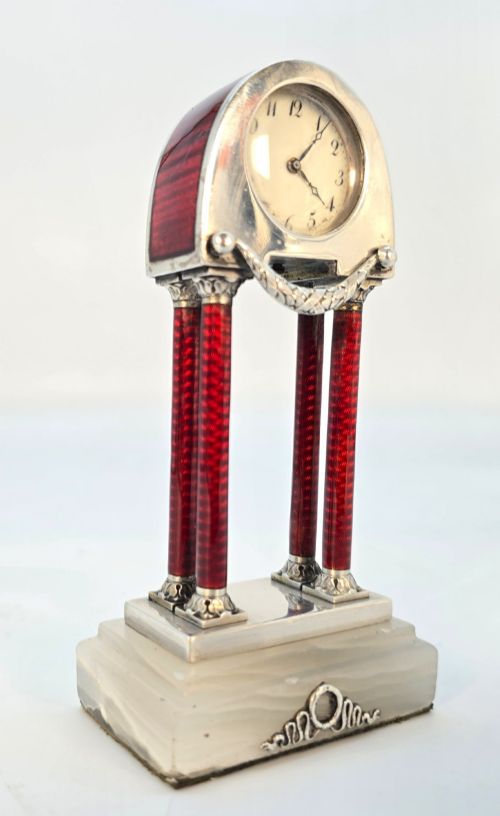
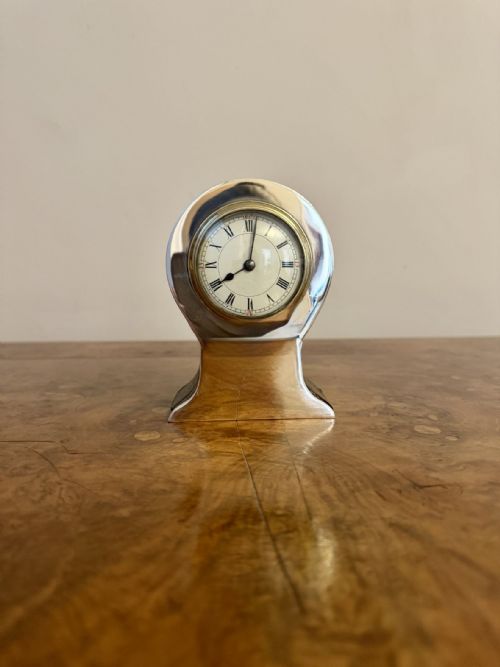
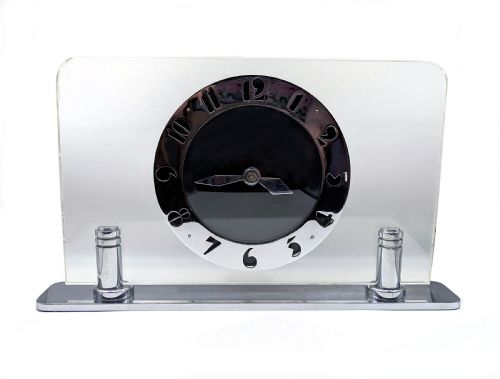
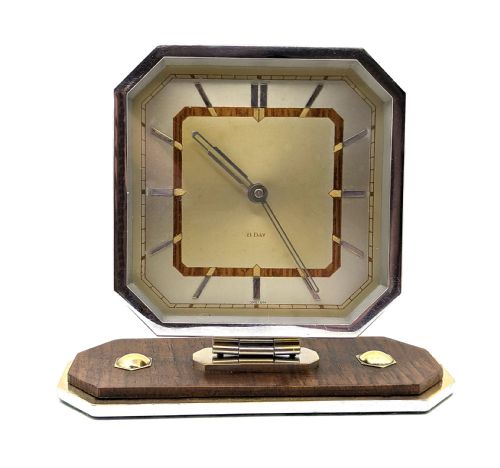
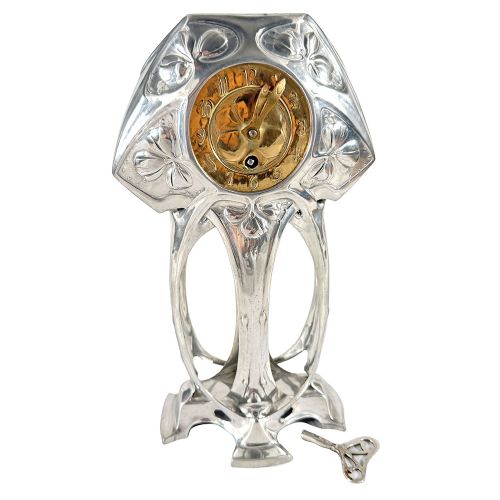
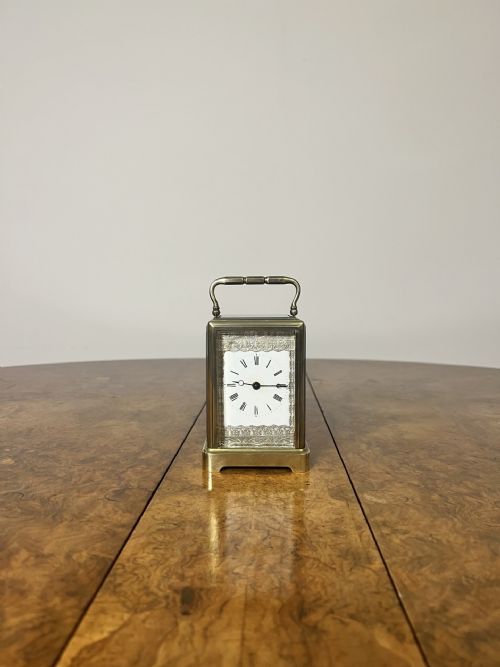

Silvered Desk Clock
These pieces range from early carriage clocks to Art Deco chrome items, bringing functional timekeeping and period design to a workspace.
Silvered Desk Clock
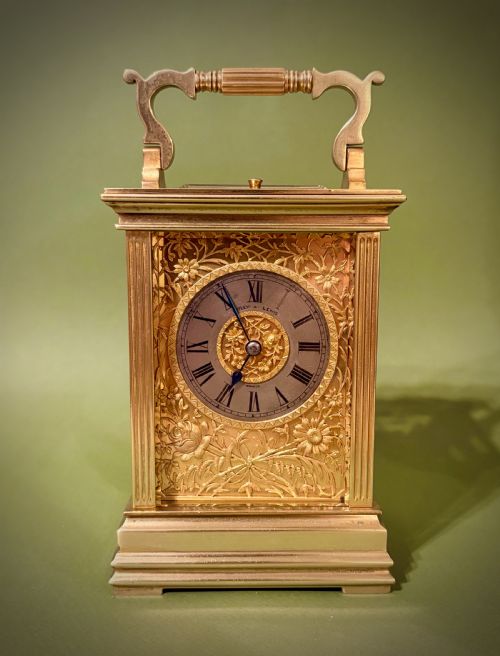
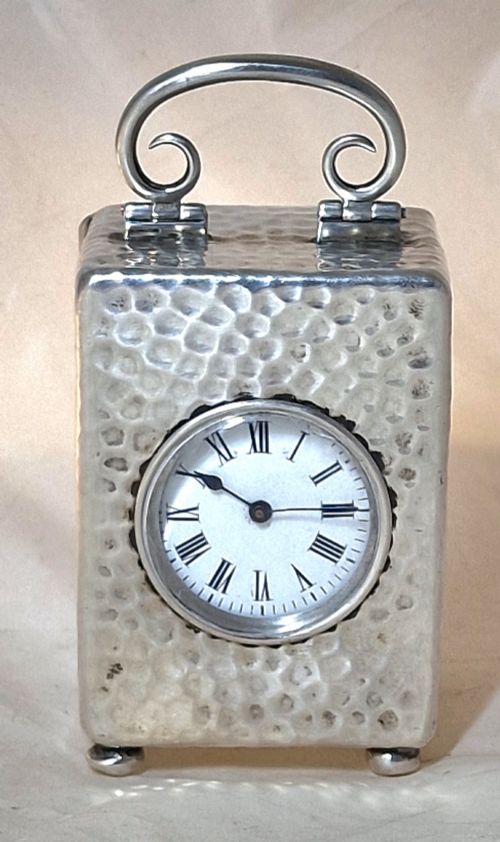
A silvered desk clock is a timekeeper designed for a workspace or table, appearing in formats like carriage clocks, easel clocks, and travel clocks. The selection spans periods from the Victorian era through the Edwardian period and into Art Deco designs of the 1930s.
Buyers will encounter various forms, including pocket watches adapted for desk stands, small mantle clocks, and compact travel pieces. These objects combine practical timekeeping with decorative metalwork and dial finishes.
Quality factors
Quality rests in the crispness of the metalwork, the clarity of the dial silvering, and the presence of makers' marks or hallmarks. Solid silver cases and specialised enamel decoration sit at the upper end of the range.
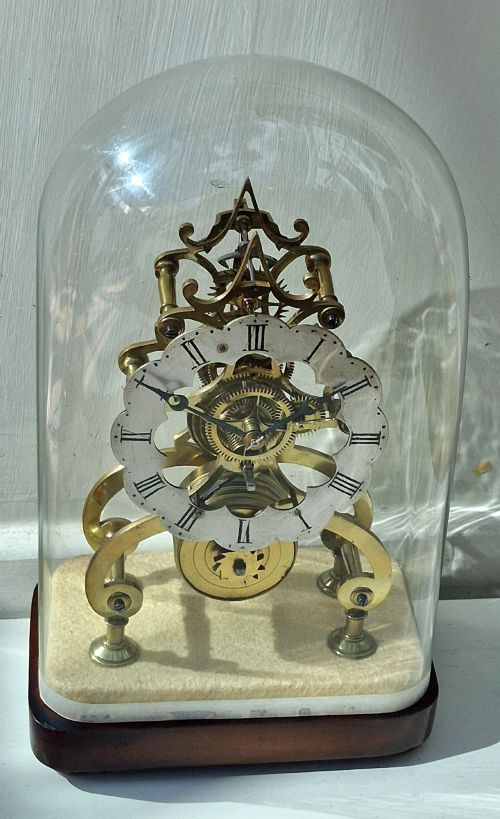
The sophistication of the internal movement and the integrity of glass panels and original cases further distinguish finer examples from standard production pieces.
Listings feature pieces spanning the Victorian era, the Edwardian period, and the 1930s, utilising materials such as silver, chrome, pewter, and mahogany.
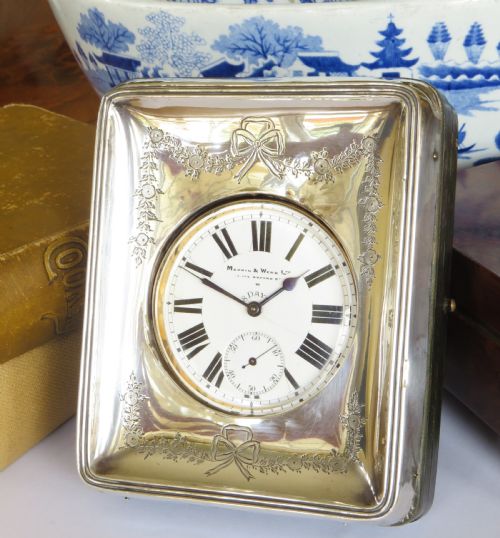
Mappin & Webb·Smiths Clockmakers·Liberty & Co·William Comyns·Harrods of London
The Silvered Desk Clock Glossary
- Silvered metal
- A metal surface treated with a compound of silver to give a white, reflective finish. This technique creates the metallic sheen seen on many period clock dials.
- Carriage clock
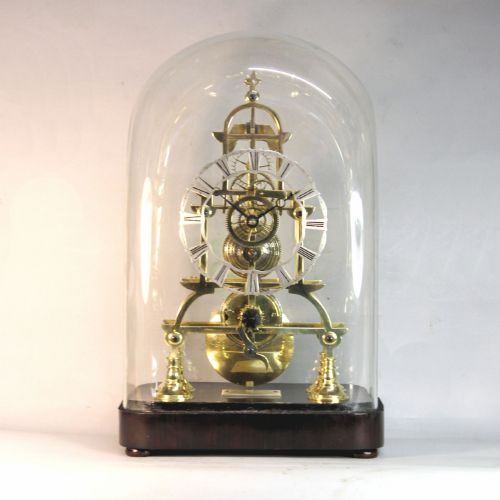
- A small, portable spring-driven clock with a handle, originally designed for travel. They frequently feature glass panels that expose the internal movement.
- Goliath pocket watch
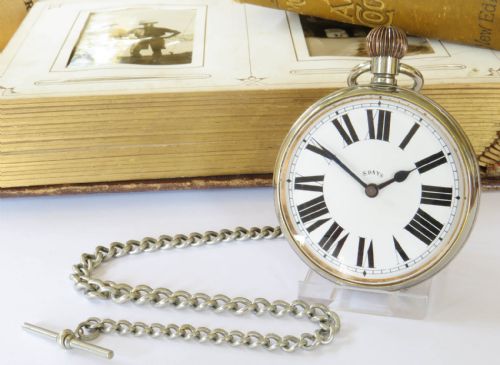
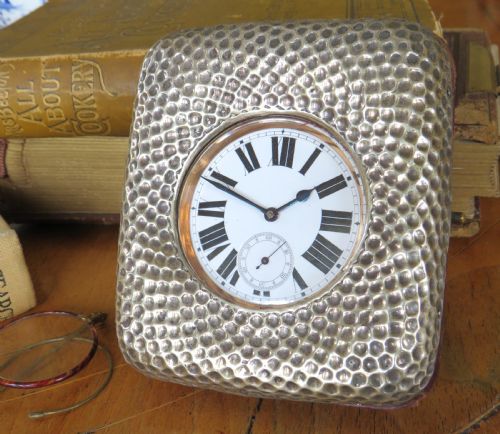
- An oversized pocket watch, often housed in a dedicated travel case or desk stand. These large timepieces function effectively as small desk clocks.
- Guilloche enamel
- Enamel decorated with intricate geometric patterns machine-turned into the underlying metal. It adds vibrant colour and texture to miniature clock faces and travel cases.
- Fusee
- A conical pulley used in clock mechanisms to maintain even force on the gear train as the mainspring unwinds. This device improves the timekeeping accuracy of mechanical clocks.
Silvered Desk Clock: Frequently Asked Questions
How do I wind a mechanical desk clock?
Most mechanical desk clocks utilise a key or a butterfly wing attached to the movement arbor. Turn the key gently until resistance indicates the mainspring is fully wound.
Avoid over-winding, as this can strain the internal spring mechanism and affect the reliability of the clock.
Where should I place a silvered desk clock?
Place the clock on a stable, level surface away from direct sunlight and drafts. Desks, mantelpieces, and side tables provide ideal settings where the metalwork and dial can be easily viewed.
Keep mechanical clocks away from damp areas to protect metal components and delicate enamel work from deterioration.
How do I tell an Art Deco clock apart from an Edwardian one?
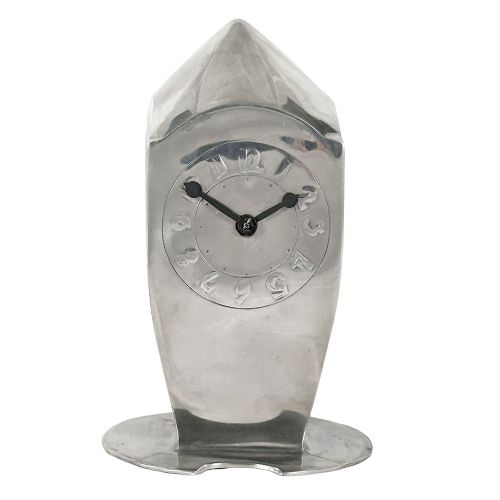
Art Deco clocks, typically dating from the 1930s, favour streamlined geometric shapes, chrome plating, and skyscraper motifs. They reflect a modern, industrial aesthetic.
Edwardian clocks, from the early 1900s, lean towards traditional forms incorporating sterling silver fronts, brass accents, and floral Art Nouveau details.
What is the difference between a travel clock and a desk clock?
Travel clocks usually feature folding leather or metal cases designed to protect the dial during transit. Many include a strut or folding stand.
Desk clocks remain stationary, often housed in heavy metal, solid silver, or mahogany frames intended exclusively for interior display.