



Silver Wood Bottle Coasters
Silver wood bottle coasters protect tables while holding wine bottles, combining metal and timber for dining room elegance.
Silver Wood Bottle Coasters
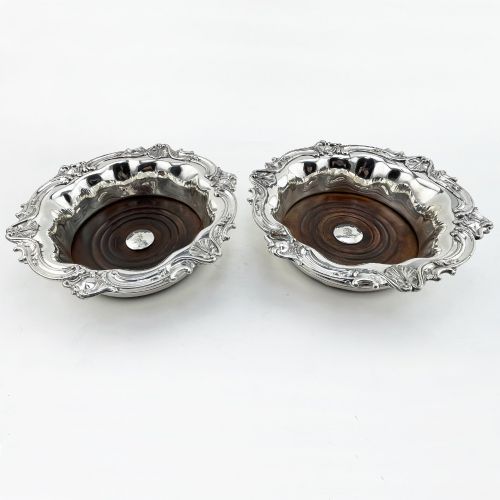
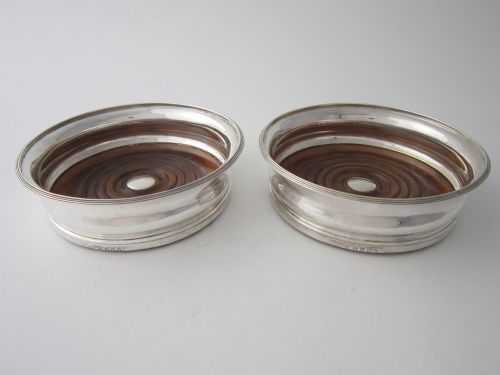
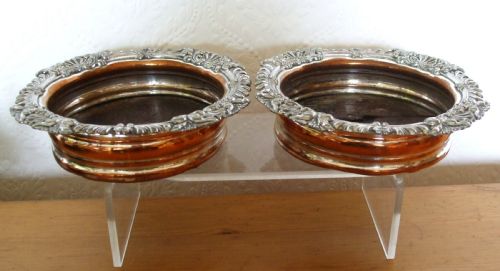
Silver wood bottle coasters are table accessories designed to hold wine bottles and decanters safely. The listings here present pieces primarily from the Georgian, Regency, George III, William IV, and Edwardian periods, stretching into the nineteenth century.
The dominant forms on this page include wine coasters, decanter coasters, and barware. Most examples appear as pairs or sets, combining turned timbers with precious metal mounts.
Origins span English manufacture from around eighteen hundred through to nineteen ten. Buyers encounter both sterling silver mounts and Old Sheffield plate fused with timbers such as mahogany and oak.
How they were made
Craftsmen shaped dense timbers like mahogany and oak into circular trays designed to support heavy glass bases. These wooden inserts often feature turned centres and fitted bosses to secure the central fastening screw.
Metalworkers formed the outer galleries from sterling silver or applied fused Old Sheffield plate over copper bases. Silversmiths then mounted these decorative rims directly onto the wooden bodies using traditional fixings.
Silver Wood Bottle Coasters Retail Price Guide 2026
Typical asking prices for silver wood bottle coasters among the pieces listed under this phrase on Sellingantiques today, from the lower quarter to the upper quarter. They describe what is for sale here now, not the wider market.
The object forms recorded here comprise wine coasters, decanter coasters, and barware from Georgian, Regency, and Edwardian eras.
What varies in quality
The distinction between ordinary and superior pieces rests on the crispness of the metal pierced work and the choice of timber. Finer examples display detailed gadroon or shell borders alongside well-figured mahogany or oak.
Makers who applied thick Old Sheffield plate over copper produced items that wore differently through generations compared to lighter sterling alternatives. The integration between the turned wooden base and the metal gallery dictates the overall rigidity of the piece.
Matthew Boulton·Asprey
The Silver Wood Bottle Coasters Glossary
- Old Sheffield Plate
- A composite material made by fusing a thin sheet of silver to a thicker copper base. This technique predominated before the invention of electroplating.
- Sterling Silver
- An alloy consisting of ninety-two point five percent silver and seven point five percent other metals, usually copper. It provides the standard legal purity for British silver wares.
- Wine Coaster
- A small portable tray designed to hold a bottle on the dining table after the servants withdrew. They allowed bottles to slide smoothly across polished mahogany surfaces.
- Gadroon
- A decorative carved or embossed ornamental border consisting of continuous curved ridges. This motif frequently appears on the rims of Georgian metalware.
Silver Wood Bottle Coasters: Frequently Asked Questions
What are silver wood bottle coasters used for?
These items serve to protect polished dining tables from moisture rings and scratches left by wine bottles. Diners also used them to slide bottles smoothly between guests.
They remain practical accessories for modern dining tables, accommodating standard wine bottles and decanters.
How do I date an old coaster?
Dating relies on stylistic markers, construction methods, and any accompanying hallmarks on the metal mounts. Georgian and Regency pieces often feature distinct pierced galleries and heavy turned timber bases.
Items from the later nineteenth and early twentieth centuries show shifts in decorative motifs and plating techniques.
Are these items sold individually or in pairs?
The selection includes individual pieces alongside matching pairs and larger sets of three or four. Pairs and sets prove especially common for serving multiple wines across a dining table.
Buyers frequently seek out matched pairs to balance table settings during formal meals.
What woods were typically used?
Mahogany and oak appear most frequently as the primary timber components for these pieces. Cabinetmakers selected these dense woods for their stability and rich grain patterns.
Turned wooden bases provide a contrasting warm texture against the polished silver or Old Sheffield plate galleries.