


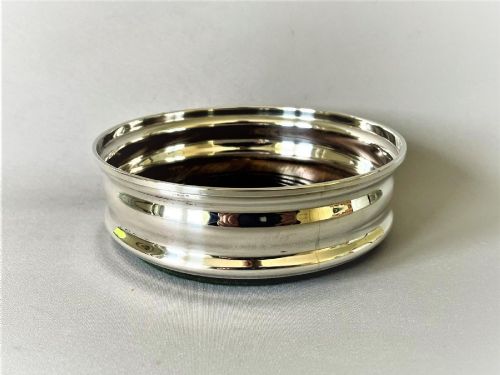


Silver Wine Bottle Bases
Silver wine bottle bases protect your dining table in style, holding decanters and bottles safely while adding traditional elegance to the room.
Silver Wine Bottle Bases
When you search for silver wine bottle bases, you find circular table accessories designed to hold wine bottles, decanters, and champagne vessels securely. These pieces protect polished dining tables from rings and spills during meals.
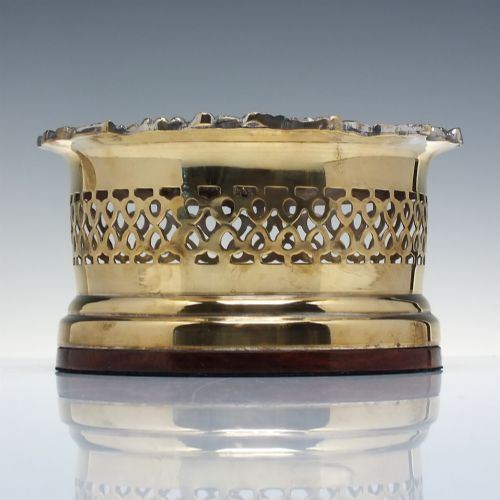
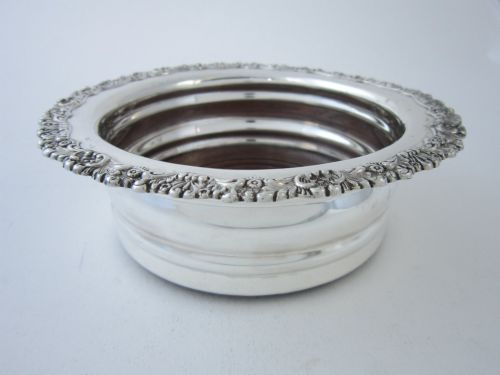
The versions you are most likely to meet on this page take the form of silver or silver plated coasters, often paired with wooden bases. They appear in styles ranging from Victorian and Edwardian to Art Nouveau and Georgian forms.
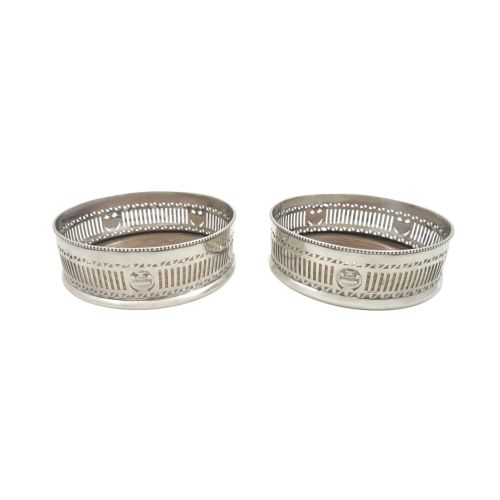
Many examples arrive as pairs or larger groups intended for multiple bottles. Their primary role combines practical table protection with decorative display for formal dining settings.
How they were made
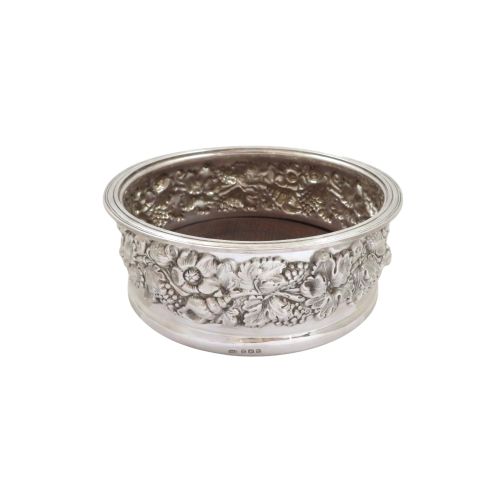
Makers combined polished metals with dense timbers to build sturdy frames that could support heavy glass bottles. Sterling silver and silver plate form the visible decorative borders, while mahogany and other woods provide structural weight at the base.
Interior surfaces often feature felt linings or wooden inserts to cushion the base of a decanter. Sheffield plating and standard silver plating techniques created rich metallic finishes over base metals during the nineteenth and twentieth centuries.
Silver Wine Bottle Bases Retail Price Guide 2026
Typical asking prices for silver wine bottle bases among the pieces listed under this phrase on Sellingantiques today, from the lower quarter to the upper quarter. They describe what is for sale here now, not the wider market.
What varies in quality
The distinction between standard examples and finer pieces lies in the crispness of the chased or pierced metalwork around the rim. Superior items display deep, hand-worked grape and vine motifs rather than shallow, mass-produced stamping.
The choice of inner material also defines the tier of the piece, with solid mahogany bases and thick sterling silver hallmarks indicating superior workshop origins compared to basic plated alternatives.
The Silver Wine Bottle Bases Glossary
- Sterling silver
- A high grade of silver containing 92.5 percent pure silver by weight. This metal provides a bright, durable surface for decorative tableware.
- Silver plate
- A layer of silver fused to a base metal core. This technique offered an accessible way to achieve the appearance of solid silver.
- Sheffield plate
- An early form of silver plating created by fusing a sheet of silver to a copper ingot. Pieces made this way display distinct warmth and depth.
- Mahogany
- A durable tropical hardwood prized for its rich reddish-brown grain. It provides stable weighting at the centre of many bottle coasters.
- Coaster
- A small tray or dish placed beneath a bottle to catch drips. These objects evolved specific raised rims to keep rolling vessels contained.
Silver Wine Bottle Bases: Frequently Asked Questions
How do I use a silver bottle base?
Place the base directly onto the dining table or sideboard before setting down your wine bottle or decanter. The raised rim keeps the vessel steady while catching any condensation or drips.
Lift the entire base when passing the bottle around the table rather than sliding it across polished wood. This protects both your table surface and the underside of the metal.
Can these hold champagne bottles?
Certain larger bases accommodate wider champagne or magnum bottles, as seen in period Edwardian and Victorian designs. Check the internal diameter of the piece before pairing it with oversized glassware.
Standard wine bottles fit comfortably into the majority of traditional coasters. Magnum-specific examples provide the extra width needed for sparkling wine vessels.
How do I clean silver wine bases?
Use a soft cloth and a dedicated silver polish to maintain the shine of the metal rim. Take care to avoid getting moisture onto the wooden or felt base underneath.
Gentle buffing removes tarnishing without wearing away thin silver plate layers. Store the pieces in dry conditions to prevent rapid tarnishing between uses.
Are these pieces sold in pairs?
Many listings feature matched pairs designed to sit at opposite ends of a long dining table. Single pieces also appear frequently for individual use on sideboards.
Pairs offer a balanced look during formal dinners when serving both red and white wine simultaneously. Collectors often seek out matching sets for symmetry.