

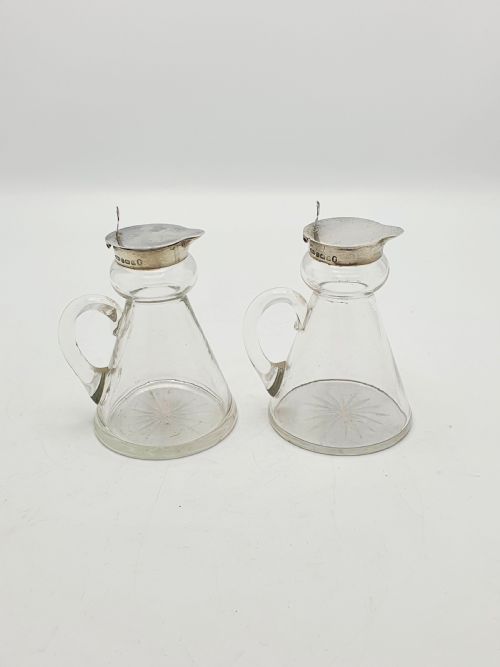


Silver Whiskey Decanter
A silver whiskey decanter combines cut glass and sterling mounts to hold spirits in period style.
Silver Whiskey Decanter
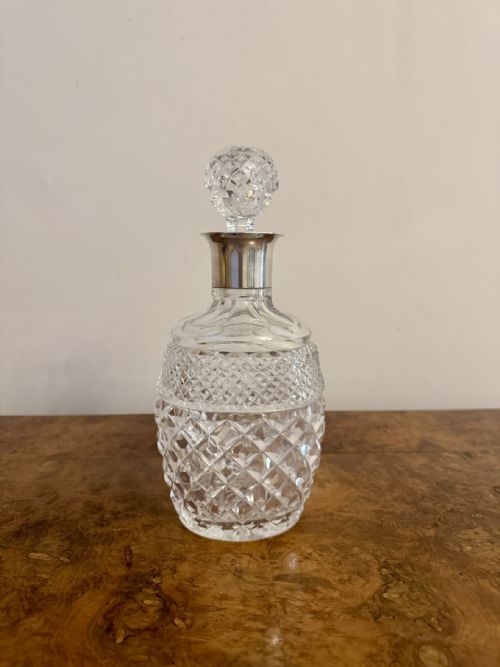
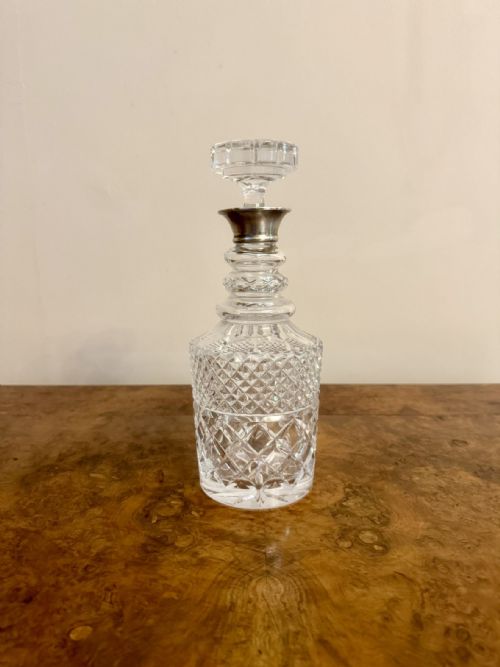
A silver whiskey decanter typically appears as a cut glass or crystal body fitted with a hallmarked sterling silver collar, mount, or stopper. These vessels span Victorian, Edwardian, and George V periods, reflecting changing domestic habits around hospitality.
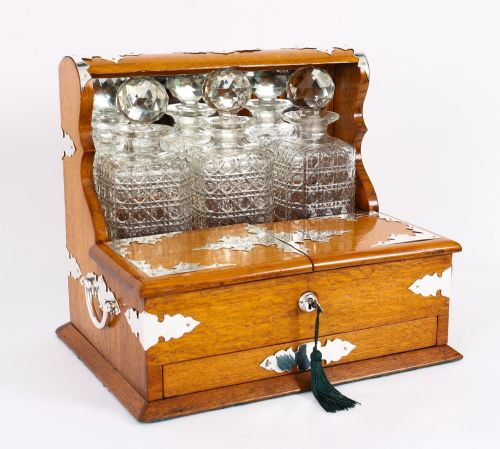
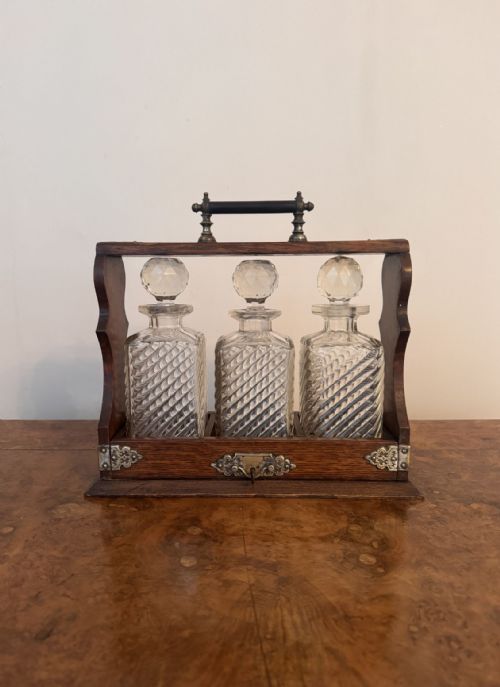
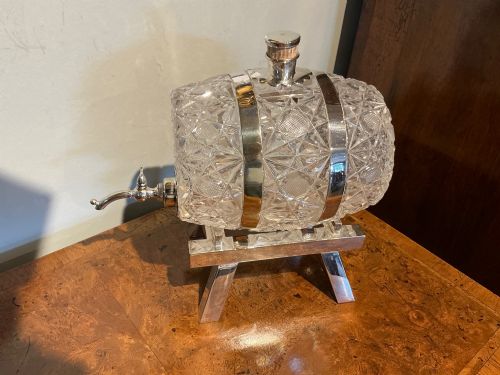
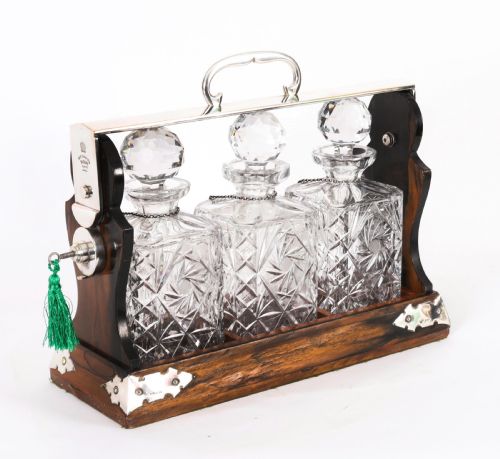
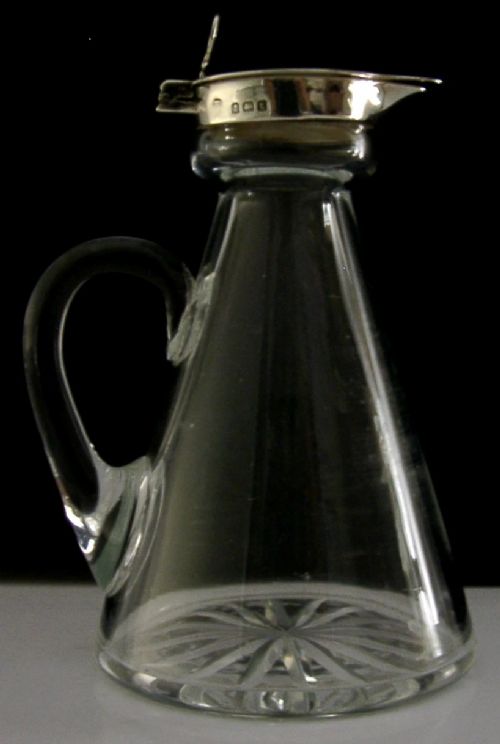
The most common formats on this page include the single-serving whisky noggin with its distinct handle and spout, the larger table decanter, and multi-bottle tantalus sets housed in oak or mahogany. Makers also produced dedicated spirit barrels and fitted games compendiums for entertaining.
Pieces frequently arrive paired with matching silver spirit labels or tots to complete the barware service. Dating relies on the stamped silver hallmarks that record the assay office and year of manufacture.
Materials and construction
The body of a silver whiskey decanter utilises heavy lead crystal or cut glass, often deeply faceted to catch the light. Mouth-blown vessels display pontil marks on the base, while pressed variants show uniform internal patterns.
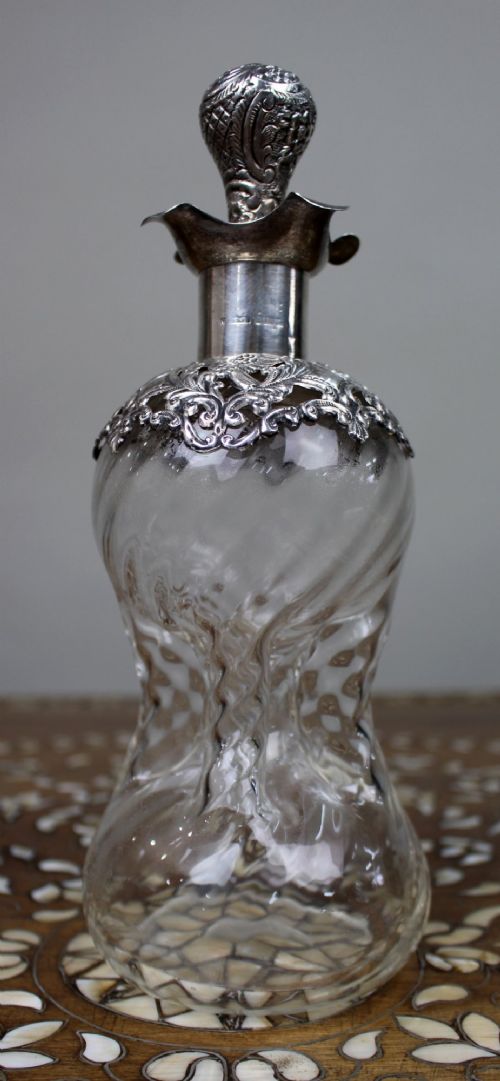
Silversmiths formed the mounts and collars from sterling silver or silver plate, securing them to the glass neck with specialised adhesive. Hallmarks stamped directly onto the silver record the maker's mark, city, and date.
Tantalus frames incorporate quarter-sawn oak, blonde oak, coromandel, or mahogany, fitted with brass locking mechanisms and swing handles. These wooden housings required precise carpentry to align with the silver-topped bottles.
Listings span the Victorian, Edwardian, and George V periods, utilising sterling silver, cut crystal, oak, and mahogany.
Distinctions in quality
Quality rests upon the weight and clarity of the crystal vessel alongside the gauge of the silver mount. Heavier metalwork and deeply hand-cut facets indicate superior manufacturing standards.
The reputation of the silversmith and the crispness of the assay office hallmarks elevate certain pieces. Complete sets retaining matching stoppers, labels, and original locking keys command greater interest than assembled groupings.
Betjemann·Hukin and Heath·Elkington·Freeman and Son·Taylor Tunnicliffe and Co
The Silver Whiskey Decanter Glossary
- Tantalus
- A locked wooden frame designed to secure spirit decanters while allowing the contents to remain visible. The device prevents unauthorised access to the whisky bottles.
- Noggin
- A small single-serving decanter or jug, usually featuring a handle and a lip for pouring. These miniature vessels were standard for individual portions of spirits.
- Hallmark
- A series of official stamps applied to precious metals indicating the standard of purity, the assay office, and the year of production. They provide definitive dating for the silver mounts.
- Decanter label
- A small silver tag suspended by a chain around the neck of a bottle to identify the contents. Collectors often find them engraved for whiskey, gin, or brandy.
- Glug glug decanter
- A vessel featuring a constricted neck that produces a bubbling sound when liquid is poured. This design aerates the spirit as it leaves the bottle.
Silver Whiskey Decanter: Frequently Asked Questions
What is a whiskey noggin?
A whiskey noggin is a small, single-serving glass decanter fitted with a handle and a silver collar. It typically held a single portion of spirits for an individual guest.
These pieces date predominantly from the Edwardian and George V eras. They often sit alongside matching silver labels and tots on a bar tray.
How does a tantalus work?
A tantalus locks the stoppers of the decanters in place via a hinged wooden bar and a metal rod. Turning the key releases the mechanism so the bottles can be lifted out.
Invented in the Victorian period, the device kept expensive spirits secure from household staff while displaying the cut glass bottles.
How do I date a silver collar?
Dating relies on the stamped silver hallmarks located on the collar or mount of the decanter. These marks show the assay office city, the silver standard, and a date letter.
Matching these symbols against official records reveals the exact year the metal component was tested and registered.
Are stoppers usually original?
Stoppers are frequently matched replacements rather than the original factory components. Glass was fragile, and stoppers were easily misplaced or broken over decades of use.
Examining the fit, glass tint, and cutting pattern helps determine whether a stopper belongs to the body of the decanter.