




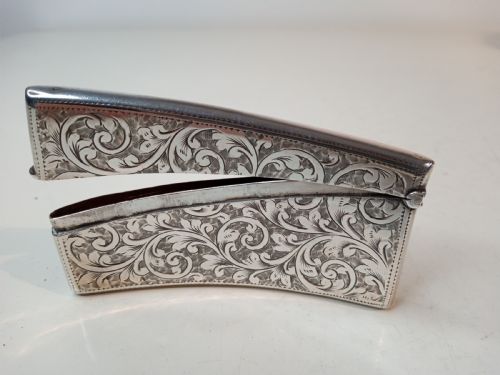


Silver Visiting Card Box
A silver visiting card box is a small pocket receptacle for social pleasantries, and these pieces are Victorian and Edwardian silver cases for calling cards.
Silver Visiting Card Box
When you search for a silver visiting card box, you enter a world of formal Victorian and Edwardian calling etiquette where visits required tangible credentials. The items found here span the nineteenth and early twentieth centuries, encompassing both slim pocket cases and rigid card boxes.
The versions you are most likely to meet on this page are sterling silver card cases from the Victorian and Edwardian eras, often shaped in flat rectangular formats designed to slip easily into a pocket or reticule. Alongside traditional British silver, one encounters tortoiseshell and mother of pearl examples, as well as distinct Anglo-Indian silver pieces decorated in repoussé.
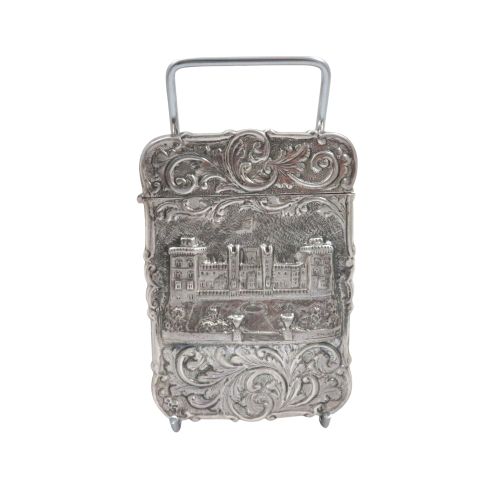
Many of these surviving objects reflect high social standing through their specific topographical engravings, such as depictions of Windsor Castle or St Paul's Cathedral. They survive today as tactile links to a period when social interaction relied upon engraved pasteboards exchanged between households.
How they were made
The primary material underpinning these objects is sterling silver, frequently paired with internal silver gilt linings that protect the metal from tarnishing against paper cards. Artisans also utilised organic materials such as tortoiseshell, mother of pearl and bone to construct contrasting panels and decorative inlays.
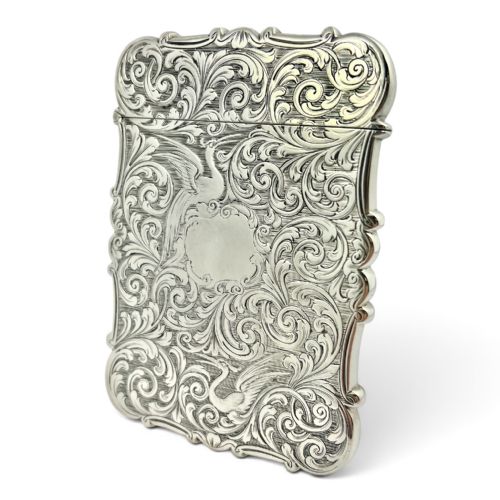
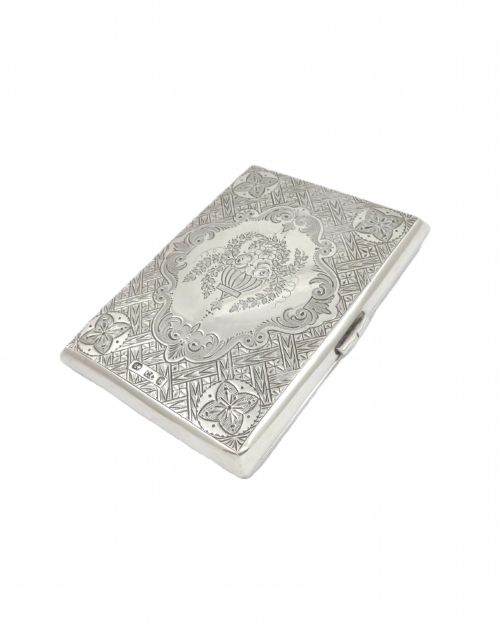
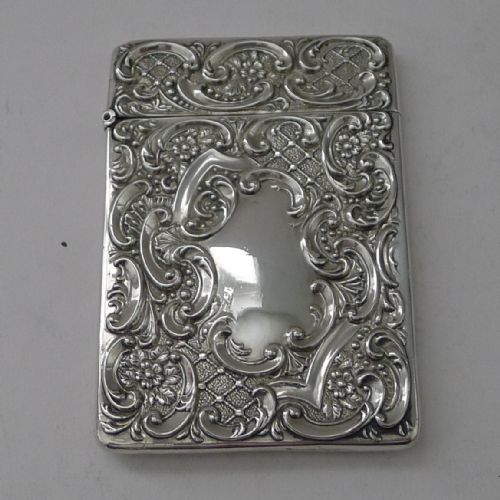
Surface decoration relies heavily on crisp hand engraving, detailed chasing and deep repoussé work to render complex architectural scenes and wildlife imagery. Smithing techniques of the nineteenth century allowed panels to be shaped with high relief, particularly on castle top boxes where specific landmarks dominate the lid.
Victorian callers relied on these tiny metallic vaults to ensure their social currency arrived unbent and ready to impress.
What varies in quality
The distinction between ordinary and exceptional work rests on the crispness of the chasing and the complexity of the subject matter. Top tier examples exhibit deeply detailed architectural reliefs or crisp animal motifs such as stags and dogs, while lesser items rely on standard engine turned patterns.
Material selection also dictates standing, with mixed media pieces incorporating tortoiseshell or mother of pearl demanding higher skill in assembly than plain metal containers. Furthermore, the presence of specific topographical views by noted silversmiths elevates the piece beyond standard utilitarian production.
Nathaniel Mills·George Unite·Foxall and Co
The Silver Visiting Card Box Glossary
- Castle top
- A style of silver box featuring a detailed architectural relief of a famous building or landmark on the lid. These are particularly prized by collectors for their miniature artistic fidelity.
- Repoussé
- A metalworking technique where the metal is hammered from the reverse side to form a raised design in relief. This method creates tactile, highly ornate surfaces on Indian silver and Victorian cases.
- Sterling silver
- An alloy of silver containing ninety-two point five percent pure silver and seven point five percent other metals, usually copper. This standard ensures structural durability for pocket items.
- Silver gilt
- Silver that has been coated with a thin layer of gold on its interior surfaces. This treatment prevents the silver from tarnishing when exposed to handling and the paper cards stored inside.
- Aide memoire
- A small pocket notebook or memorandum pad often combined with a card case. These allow the owner to record social engagements alongside the distribution of visiting cards.
Silver Visiting Card Box: Frequently Asked Questions
How were visiting card cases used?
These cases were carried during social calls to hold engraved pasteboard calling cards that were presented upon visiting an acquaintance's home. Leaving a card indicated that a social visit had been paid even if the host was not home.
As etiquette demanded rigid adherence to social rules during the Victorian and Edwardian eras, keeping cards crisp and clean within a protective metal or shell case was essential for polite society.
What is the difference between a case and a box?
While the terms are often used interchangeably in trade, a card case is typically a thin, flat sleeve designed to slide easily into a pocket. A card box is generally more rigid and deeper, intended for stationary storage on a hall table.
Both forms served the same ultimate social function of preserving and dispensing calling cards during the height of formal visiting culture.
How do I care for antique silver?
Antique silver requires minimal intervention, needing only occasional gentle cleaning with a soft cloth to maintain its natural finish without removing historic patina. Avoid harsh modern dips that can strip away fine engraving and alter the surface character.
Storing the items in a dry environment away from direct sunlight protects organic elements like tortoiseshell and mother of pearl from warping or fading over time.