




Silver Vanity Frame
A silver vanity frame brings a brilliant reflective surface and gleaming metalwork to a dressing table.
Silver Vanity Frame
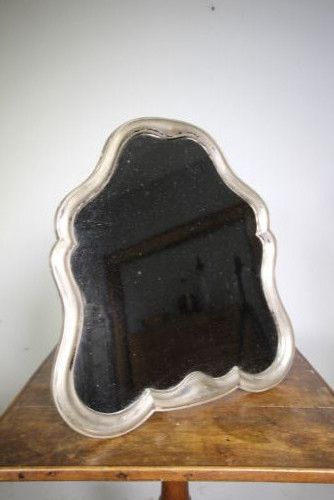
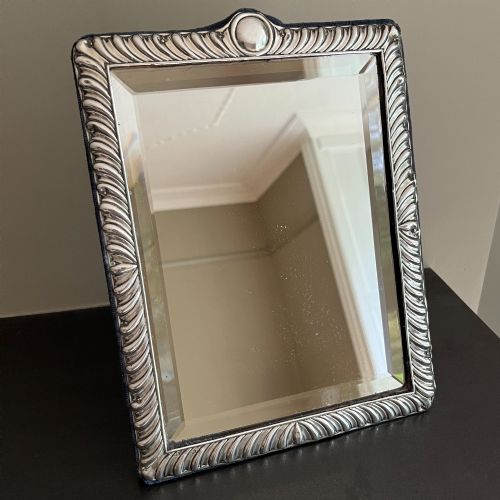
A silver vanity frame encompasses portable dressing table mirrors, easel-backed desk mirrors, and hanging wall pieces designed for personal grooming. These items appear across Victorian, Edwardian, and mid-twentieth century periods, alongside specific regional interpretations.
The pieces listed on this page focus heavily on tabletop and dressing table mirrors featuring sterling silver or silver plate mounts. Makers utilised easel backs and strut supports so these frames could stand independently upon surfaces.
Buyers will encounter various stylistic approaches, including ornate Rococo Revival scrolling, organic Art Nouveau motifs, and clean geometric lines. Materials frequently combine structural wood or velvet backing with glass mirrors and silver borders.
Materials and construction methods
Craftsmen built these frames using sterling silver, silver plate, or silver gilt mounted over sturdy wooden cores or velvet backing. Glass mirror plates and mirror glass provide the reflective surfaces, often secured by integrated metal bezels.
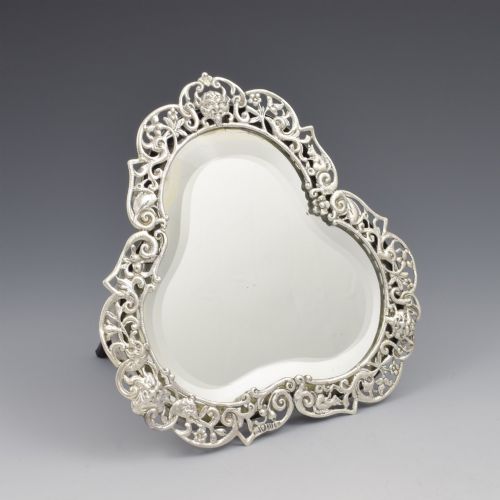
Decoration relied on piercing, embossing, and silver casting techniques to create intricate animal, bird, and floral motifs. Easel backs utilised hinged metal struts to allow adjustable viewing angles on dressing tables.
Silver Vanity Frame Retail Price Guide 2026
Typical asking prices for silver vanity frame among the pieces listed under this phrase on Sellingantiques today, from the lower quarter to the upper quarter. They describe what is for sale here now, not the wider market.
Periods represented span from the nineteenth century through the Edwardian era and into the mid-twentieth century.
Distinctions in quality
Quality reveals itself in the crispness of the silver chased work and the weight of the metal mount. Heavier sterling silver frames with deep, detailed relief show superior craftsmanship compared to lighter plated alternatives.
The integrity of the structural support, such as a secure wooden back and a robust easel strut, separates finer pieces from lesser examples. Intact original mirror glass and well-preserved velvet linings further elevate the standard of the item.
Henry Matthews·WMF
The Silver Vanity Frame Glossary
- Sterling silver
- A silver alloy containing 92.5 percent pure silver by mass, frequently used for high-end vanity frames. This standard metal carries hallmarks indicating assay offices and dates.
- Easel mirror
- A tabletop mirror supported by a hinged metal or wooden leg at the back. This construction allows the frame to stand upright on dressing surfaces.
- Silver gilt
- Silver that has been coated with a thin layer of gold on its surface. This technique produces a warm, dual-tone metallic appearance.
- Art Nouveau
- An international style of art and architecture prominent in the late nineteenth and early twentieth centuries. It is characterised by fluid, organic lines and motifs derived from nature.
- Triptych
- A mirror composed of three hinged sections, allowing the outer panels to angle inward. This design provides multiple viewing angles for grooming.
Silver Vanity Frame: Frequently Asked Questions
How do I clean a silver vanity frame?
Use a soft microfiber cloth with a dedicated silver polish to remove tarnish from the metal frame. Take care to avoid getting liquid cleaner onto the mirror glass or the velvet backing.
Store the frame in a dry environment to slow down the natural oxidation process of the silver. Gentle, regular dusting preserves the chased details without wearing away the metal.
Can these mirrors be hung on walls?
Some vanity pieces function as wall mirrors if they feature integrated hanging loops or rings on the reverse. Many examples on this page are specifically designed as tabletop or easel mirrors.
Check the reverse of the frame for structural hanging hardware before attempting wall mounting. Easel struts are primarily meant for desk support rather than wall hanging.
What periods do these frames represent?
The selection spans the nineteenth and twentieth centuries, including Victorian, Edwardian, and later twentieth-century eras. Stylistic cues such as Rococo Revival curves or Art Nouveau whiplash lines often indicate the manufacturing period.
Assay hallmarks on sterling silver mounts provide precise dating and location details for British pieces. Mid-century examples introduce alternative origins and simpler geometric forms.
Are the mirror plates original?
Many older frames retain their original mirror glass, which can exhibit light foxing or spotting due to age. This natural ageing process confirms the antiquity of the piece.
Replacement mirror plates occasionally appear in pieces that required restoration over time. Inspect the edges of the glass to understand its relationship to the metal mount.