
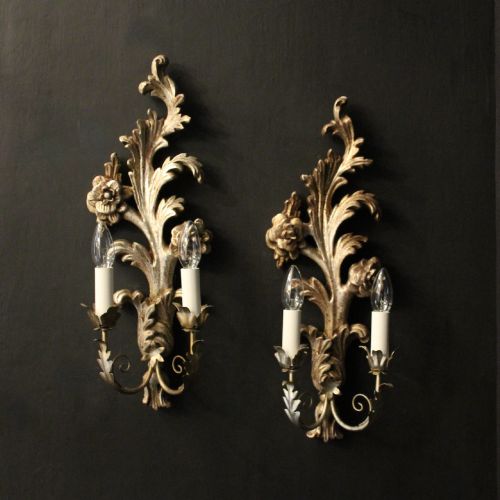
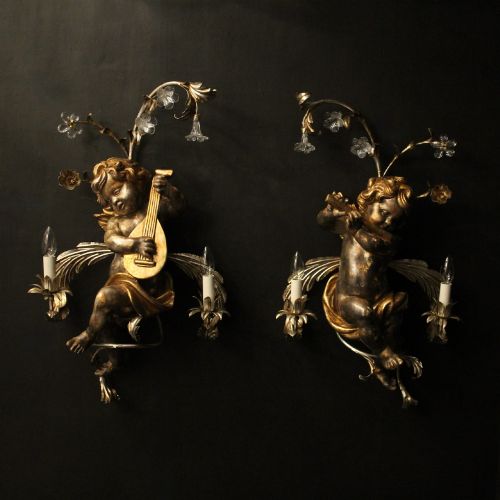


Silver Twin Light Appliques
Silver twin light appliques are wall-mounted dual-branch fixtures that bring reflective metallic warmth and period character to a room.

Silver Twin Light Appliques
Silver twin light appliques are wall-mounted lighting fixtures featuring two distinct arms designed to hold candles or illuminate a space from a vertical surface. When you search for silver twin light appliques, you encounter items primarily from the Victorian, Edwardian, and 1930 periods, alongside earlier nineteenth-century examples.
The selections span various distinct regional aesthetics, including Florentine, Italian Baroque, French Louis XVI style, and Rococo Revival. These pieces function both as practical illumination and as decorative architectural wall ornaments.
You will most frequently meet pieces fashioned as twin arm wall lights, wall sconces, and candle holders. Their forms range from ornate figural designs featuring cherubs and mermaids to structured giltwood and cut glass configurations.
How they were made
Makers constructed these appliques using a combination of metals, woods, and minerals, applying silver leaf, silver gilt, and giltwood over brass, bronze, and base metals. Crystal and cut glass elements frequently augment the metallic frames to enhance light reflection.
Techniques relied on traditional carving, gilding, and metalworking methods appropriate to each respective period, from Victorian Revival workshops to 1930s continental studios. Artisans combined cast or forged metal components with hand-applied surface finishes to achieve the desired lustre.
Materials recorded across the current selection include traditional giltwood, cut glass, crystal, brass, bronze, silver leaf, and silver gilt.
What varies in quality
Quality in these wall fittings is determined by the crispness of the modelling and the depth of the surface gilding or silvering. Pieces featuring hand-carved wooden elements or finely detailed figural work such as mermaids and cherubs demonstrate superior craftsmanship compared to simpler cast metal alternatives.
The integration of high-grade materials like Murano glass or genuine cut crystal components separates standard commercial production from more ambitious decorative items. Preservation of the original silver leaf and gilt surfaces also dictates the overall standard of an applique.
The Silver Twin Light Appliques Glossary
- Applique
- A wall-mounted lighting fixture or decorative bracket. These pieces project outward from a vertical surface to hold candles or lamps.
- Giltwood
- Wood that has been treated with a thin layer of gold leaf or gilt. This technique provides a luminous golden finish to carved architectural elements.
- Murano
- Glass originating from the islands of Murano near Venice. It is renowned for historic glassmaking traditions and intricate decorative qualities.
- Rococo Revival
- A nineteenth-century design movement inspired by the ornate, asymmetric scrollwork of the eighteenth-century Rococo style.
- Silver Gilt
- Silver object or surface that has been coated with a thin layer of gold. This process combines the appearance of gold with a silver base.
Silver Twin Light Appliques: Frequently Asked Questions
How do I install these appliques safely?
These wall-mounted fixtures require secure anchoring to wall studs or appropriate masonry fixings to support their weight safely. Professional installation is recommended, especially for older pieces that may require rewiring for modern electrical standards.
Ensure the mounting bracket matches the structural capacity of the wall material before hanging any heavy metal or giltwood fixture.
Where should I place wall sconces?
Wall sconces work effectively in pairs flanking mirrors, fireplaces, or doorways to create balanced ambient illumination. They perform well in hallways, dining rooms, and living areas where eye-level accent lighting enhances the room's atmosphere.
Position them at a height that prevents glare while adequately illuminating the surrounding architectural details.
How can I tell the period?
Dating relies on examining the construction methods, fixing types, and stylistic indicators characteristic of periods like the Edwardian era, Victorian era, or the 1930s. Tool marks, screw types, and the composition of the base metals often provide clear chronological clues.
Compare the decorative motifs, such as Rococo revival scrollwork or Art Nouveau curves, against documented design histories of those decades.