







Silver Tea Urn Stand
A silver tea urn stand brings together the ceremony of tea and the finest metalwork of the Victorian and Edwardian eras.
Silver Tea Urn Stand
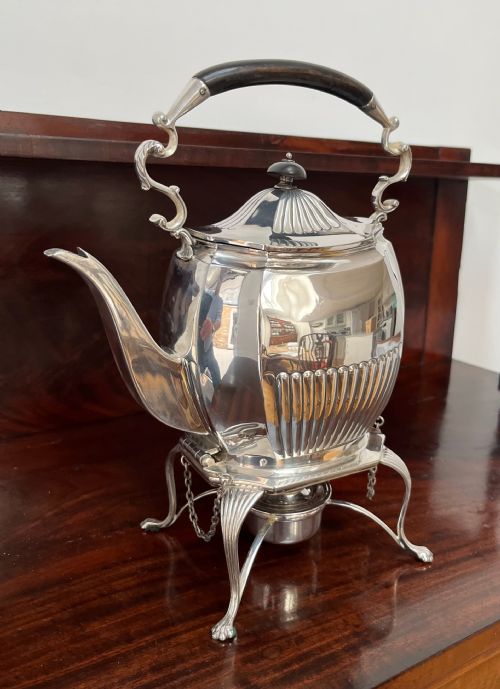
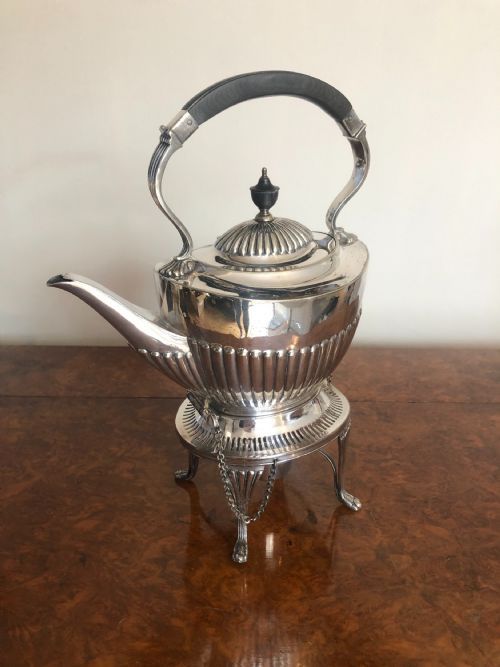
When searching for a silver tea urn stand, collectors encounter spirit kettles and teaware mounted on dedicated frames or occasional tables. These pieces span the Georgian Revival, Victorian, and Edwardian periods.
The most common version met on this page is the silver plated spirit kettle complete with its original burner and stand, dating predominantly from the Edwardian era.
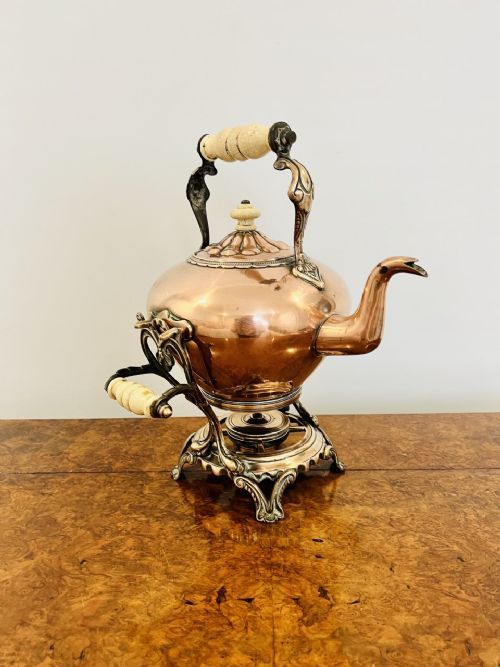
The assortment also encompasses sterling silver coffee biggins and copper kettles, demonstrating the diverse forms used for heating water in polite company.
How they were made
Silversmiths utilised sterling silver and silver plate over base metals, often employing EPNS during the later periods of manufacture.
Handles and insulators frequently incorporated organic materials such as bone and ebony, alongside ebonised wood to prevent heat transfer.
Silver Tea Urn Stand Retail Price Guide 2026
Typical asking prices for silver tea urn stand among the pieces listed under this phrase on Sellingantiques today, from the lower quarter to the upper quarter. They describe what is for sale here now, not the wider market.
Many burners still retain faint traces of old methylated spirit, smelling faintly of past drawing room tea parties.
What varies in quality
The distinction between standard items and exceptional pieces rests upon the crispness of the chasing and the integrity of the original burner mechanisms.
Makers such as Paul Storr and Fenton Brothers demonstrate superior weight and balance, marking a clear divergence from lesser commercial productions.
Paul Storr·Fenton Brothers·Frederik Ellis Tim And Co
The Silver Tea Urn Stand Glossary
- Spirit kettle
- A water vessel heated by a small under-mounted burner containing methylated spirit. It allowed tea to remain hot at the table without returning to the kitchen.
- Coffee biggin
- A tall coffee pot fitted with an internal straining device or filter. This form represents the formal coffee service of the nineteenth century.
- EPNS
- Electroplated nickel silver. A common base metal manufacturing method popularised during the Victorian period.
Silver Tea Urn Stand: Frequently Asked Questions
What is a silver tea urn stand used for?
These stands held heavy kettles over small spirit burners during formal tea service. They kept water at a rolling boil throughout long afternoon gatherings.
Hostesses managed the tea preparation directly in the drawing room using these portable heating assemblies.
How do I identify an Edwardian spirit kettle?
Edwardian examples often feature bright silver plating and delicate Georgian Revival motifs. Look for registration numbers or maker marks stamped near the rim.
The inclusion of an original matching burner strongly indicates an authentic period ensemble.
Are these kettles made of solid silver?
Most surviving examples utilise silver plate over a durable base metal rather than solid sterling silver. Sterling pieces do exist but were typically reserved for wealthy households.
Check the hallmarks or plating marks underneath the base to confirm the metal composition.
How do I clean a silver plated kettle?
Use a non-abrasive silver cloth to maintain the shine without wearing through the thin plated layer. Avoid harsh liquid dips that strip the aged dark patina from recessed areas.
Keep bone and ebony handles dry during cleaning to prevent splitting the natural material.