






Silver Tea Ball
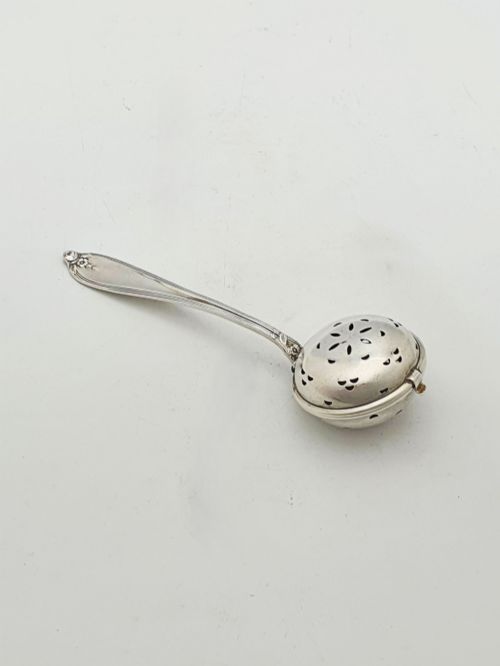
These silver tea ball pieces are ingenious perforated vessels designed to steep loose leaves directly in the cup.
Silver Tea Ball
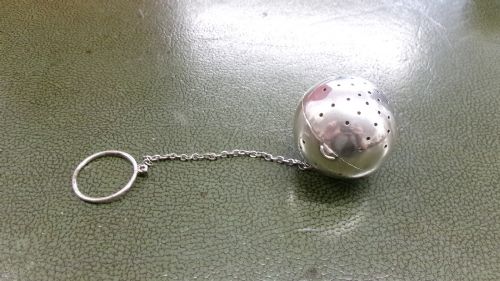
When you search for silver tea ball, you encounter specialised sterling silver tea infusers and egg strainers intended for domestic tea preparation. The pieces on this page span the Victorian era and around 1900, presenting compact forms that suspend from chains or feature pierced globes.
These items served the Victorian tea table as individual infusers rather than large pots. They reflect a period of refined social ritual where tea brewing was portioned precisely for single cups.
How they were made
Makers shaped solid sterling silver into perforated hemispheres and spheres, engineering tiny holes that allowed water to circulate while containing the leaves. Chains and hanging rings were attached securely to allow retrieval from hot liquid.
The construction relies on precision piercing and hinge work to open and close the ball securely. Metalsmiths utilised durable sterling silver to withstand frequent immersion in boiling water.
Silver Tea Ball Retail Price Guide 2026
Typical asking prices for silver tea ball among the pieces listed under this phrase on Sellingantiques today, from the lower quarter to the upper quarter. They describe what is for sale here now, not the wider market.
Listings and archives for this phrase show pieces exclusively in sterling silver, dating from the Victorian period up to nineteen hundred.
What varies in quality
Quality rests in the crispness of the piercing and the integrity of the hinges and catches. Superior examples exhibit uniform perforations and substantial silver gauge that resist denting.
Makers who invested time in delicate piercing and robust chain attachments produced pieces that survive with tighter closures and clearer hallmarks. Simpler or lighter specimens often show fatigue around the clasp mechanism.
The Silver Tea Ball Glossary
- Sterling Silver
- A standard alloy consisting of ninety-two point five percent silver and seven point five percent other metals, usually copper. This composition provides the durability required for functional tableware.
- Tea Infuser
- A small perforated container holding loose tea leaves for steeping in a cup or pot. These devices replaced larger strainers in domestic use.
- Hallmark
- An official stamp applied to precious metals indicating the standard of purity, the assay office, and the date letter. These marks authenticate the origin of the silver.
- Egg Strainer
- A perforated utensil resembling a tea ball that filters liquid or holds ingredients, often associated with Victorian silver tea wares.
Silver Tea Ball: Frequently Asked Questions
How do you use a silver tea ball?
You open the perforated sphere, place loose tea leaves inside, and clasp it shut. The chain allows you to lower the ball into hot water for steeping.
Once the desired strength is reached, you lift the ball out by the chain and rest it on a small saucer. The tiny holes permit water flow while keeping the leaves contained.
What period do most silver tea balls come from?
The examples recorded in our archive and current listings date primarily from the Victorian era and around nineteen hundred. This period saw a rise in portable tea accessories.
Industrial techniques allowed for finer piercing of silver spheres during these decades, making individual infusers popular in households.
Are tea balls made of solid silver?
The pieces handled here are fashioned from solid sterling silver rather than plated base metals. Hallmarks stamped into the metal verify this standard.
Solid construction ensures the metal resists corrosion from repeated exposure to boiling water and tea acids over generations.
How do you clean an antique silver tea ball?
Maintenance involves gentle washing in warm soapy water and careful drying with a soft cloth. Avoid abrasive dips that can remove collector patination.
Because the perforations are tiny, a soft brush helps clear any residual tea particles from the pierced pattern without harming the metal.