
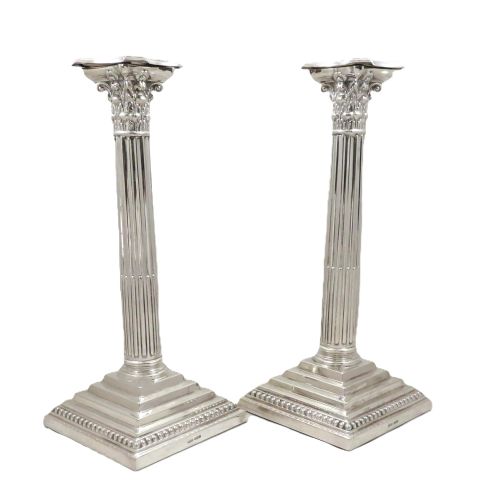
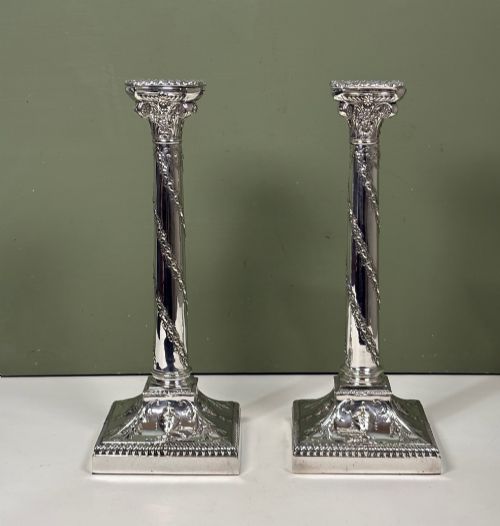
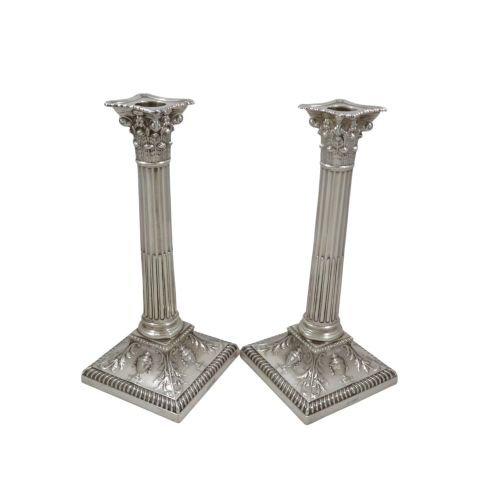
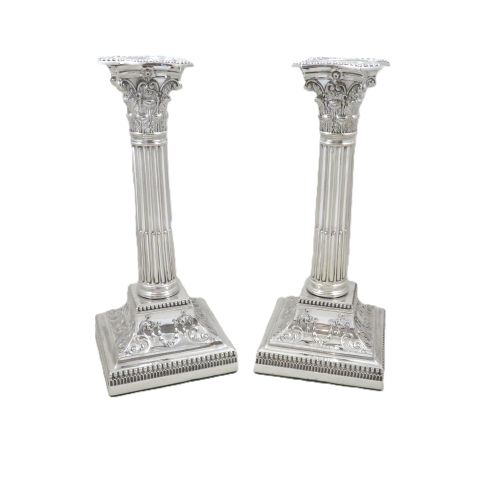



Silver Tapered Column Candlesticks
Silver tapered column candlesticks bring architectural dignity to a dining table, combining classical proportions with functional candlelight.
Silver Tapered Column Candlesticks
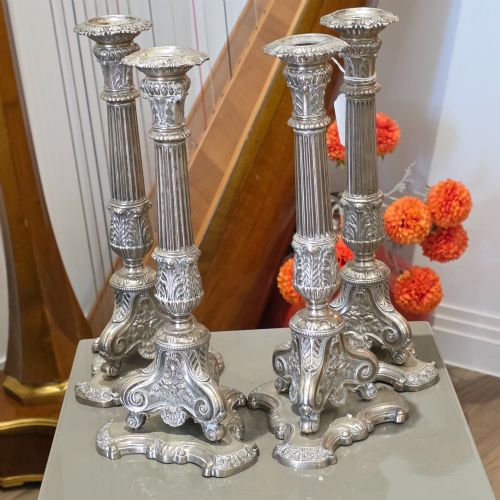
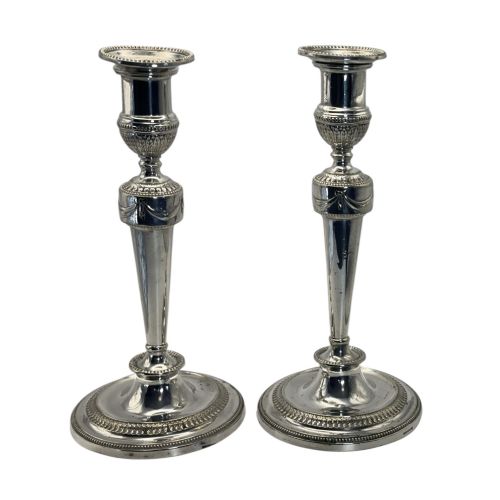
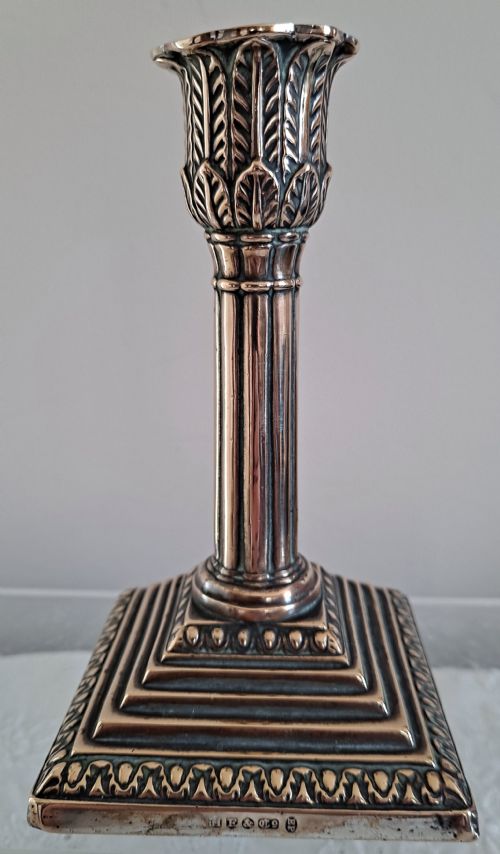
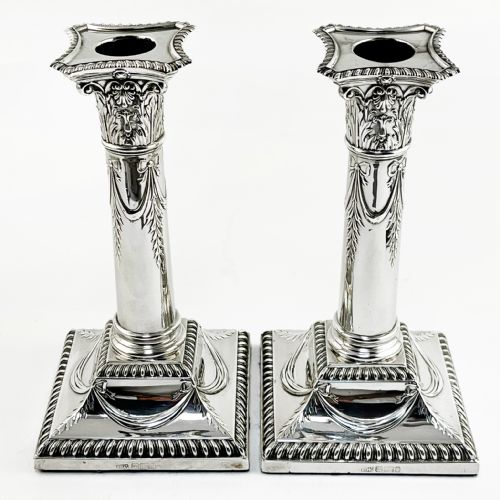
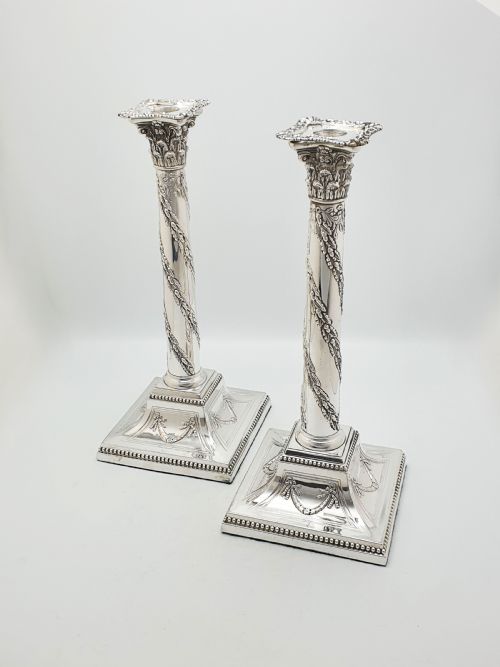
Silver tapered column candlesticks appear in various forms across the Georgian, Victorian, and Edwardian periods, frequently taking inspiration from Neoclassical architecture. Buyers searching for silver tapered column candlesticks encounter items ranging from miniature desk examples to substantial floor and mantelpiece pairs standing over thirty centimetres tall.
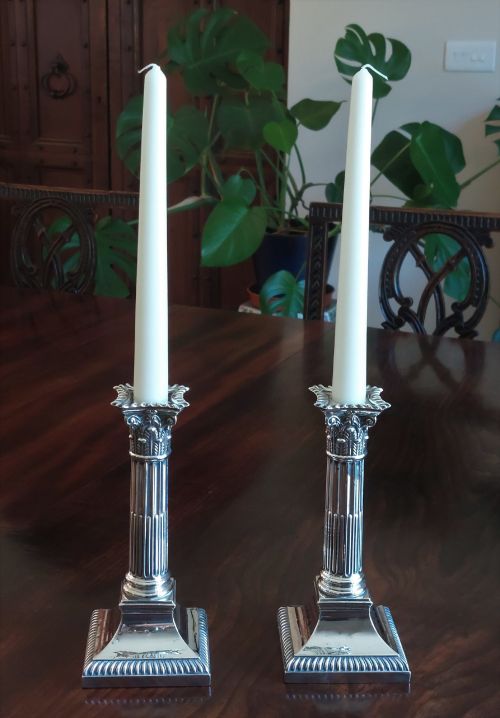
The architectural influence manifests clearly in Corinthian column designs and stepped square bases, reflecting the revivals popular in the nineteenth and early twentieth centuries. Makers utilise sterling silver and diverse plated metals, including Old Sheffield Plate and silver plate on copper or brass.
Most surviving pairs date from the late nineteenth century through to the Edwardian era, though earlier Georgian examples and mid-Victorian pieces occasionally surface. These lighting pieces serve both decorative and practical functions, often retaining removable sconces or drip pans.
Materials and construction
Silversmiths constructed these columns using sterling silver or applied silver layers over base metals like copper, brass, and nickel silver. Old Sheffield Plate examples involve fusing a thin sheet of silver to a copper ingot before rolling and shaping the metal.
Weighted bases filled with resin, plaster, or wooden cores provide stability to tall slender shafts, preventing the candlesticks from tipping easily. Cast components form the detailed capitals, fluted shafts, and stepped square bases, which are subsequently soldered or assembled together.
Some column candlesticks incorporate delicate glass inserts alongside metal shafts to catch the flickering candlelight.
Quality variations
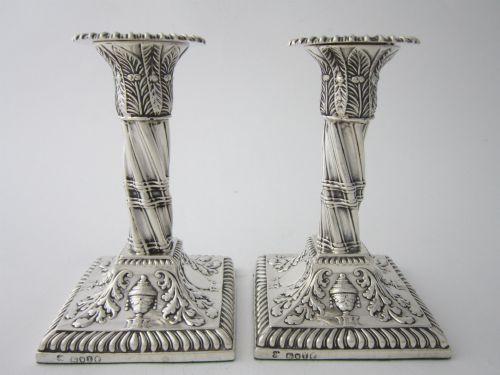
Quality rests primarily on the crispness of the casting detail in the capital leaves and fluted column shafts, where superior workshops achieved sharp, deep definition. The choice of base material and the thickness of the silver or plating layer also separate utilitarian pieces from high-end commissions.
Proportion and balance dictate aesthetic success, with finer examples maintaining correct architectural symmetry between the base, column, and removable sconce. Maker marks and clear hallmarks on sterling items add significant documentary value compared to unmarked or heavily worn plated alternatives.
Conrad Eduard Mappe·Garrard & Co·Mappin & Webb·John Pound & Co·Thomas Bradbury & Sons Ltd·Ferdinand Barbedienne
The Silver Tapered Column Candlesticks Glossary
- Corinthian column
- A classical architectural order featuring an ornate capital decorated with acanthus leaves, frequently adopted for the top section of decorative candlesticks. This style originates from ancient Greek and Roman architecture.
- Old Sheffield Plate
- An early fusing technique where a sheet of silver is fused to a copper base before being shaped into candlesticks. This method predates modern electroplating and produces a warm, distinct metal appearance.
- Removable sconce
- A small detachable pan fitted into the top of the candlestick to catch dripping wax. It protects the main body of the stick and simplifies cleaning.
- Neoclassical revival
- An artistic movement reviving classical Greek and Roman forms during the eighteenth and nineteenth centuries. candlesticks from this period display strict symmetry, fluting, and classical motifs.
Silver Tapered Column Candlesticks: Frequently Asked Questions
How do I clean silver candlesticks safely?
Use a soft cloth and a gentle silver polish specifically formulated for sterling silver or plated surfaces. Avoid harsh scrubbing that can wear through thin silver plating, particularly on raised architectural details like column flutes.
Take care around weighted bases and felt bottoms to prevent moisture from seeping inside the structure. Store candlesticks in dry environments to minimise tarnishing between uses.
Are these candlesticks suitable for everyday use?
Many pairs remain robust enough for dining tables and mantelpieces, provided you handle them with care. Ensure candles fit securely in the nozzle to prevent wax dripping down the column shaft.
Remove stubs before the flame reaches the metal or the removable sconce to avoid overheating the weighted interior filling. Regular maintenance keeps the metal bright during frequent use.
How can I tell sterling silver from silver plate?
Look closely at the metal for official hallmarks indicating silver standards, such as a lion passant for British sterling or specific town and maker marks. Silver plated items typically feature maker names without standard assay office marks, and wear may reveal a base metal like copper underneath.
Unmarked pieces often require professional testing to confirm whether the construction is solid sterling silver or plated over brass, copper, or nickel.
What is Old Sheffield Plate?
Old Sheffield Plate is an early manufacturing technique where a thin layer of silver is fused onto a thick copper core. This creates a durable material that predates nineteenth-century electroplating methods.
Items made this way often show a thin line of exposed copper along cut edges or areas of heavy wear, which collectors value as a sign of authenticity.