

Silver Tankard Mug
A silver tankard mug brings centuries of drinking custom and commemorative silver directly to the table.
Silver Tankard Mug
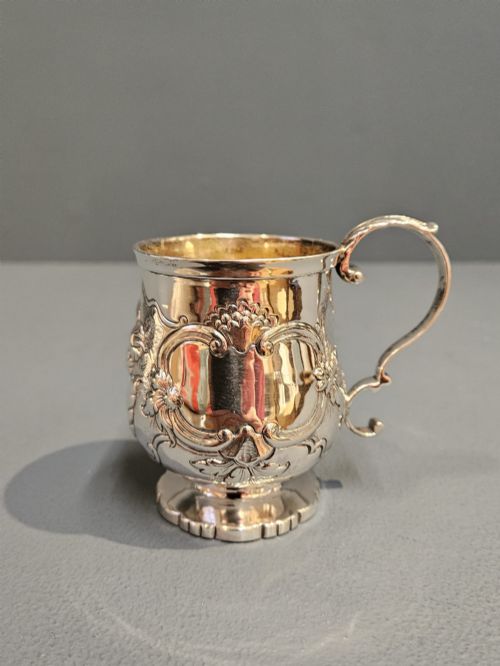
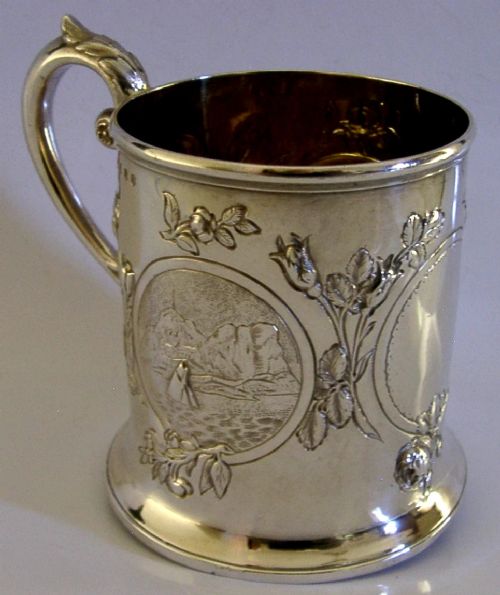
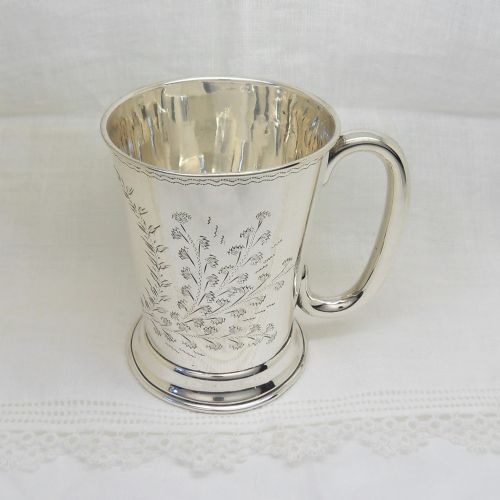
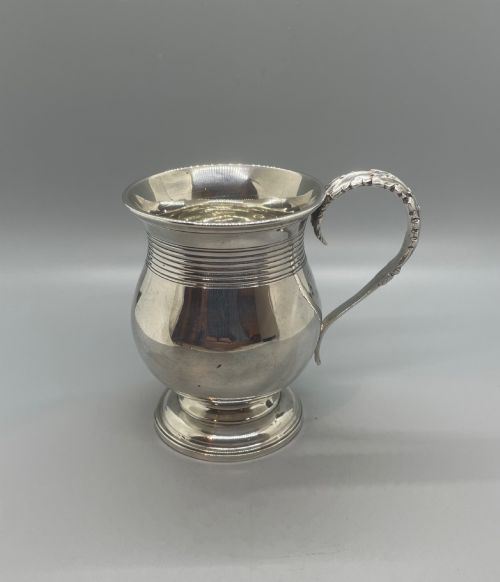
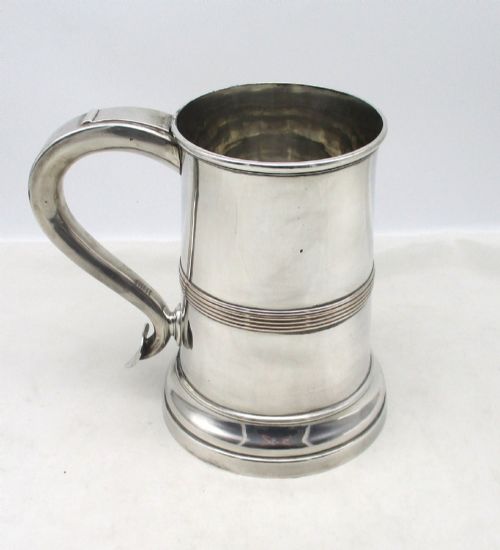
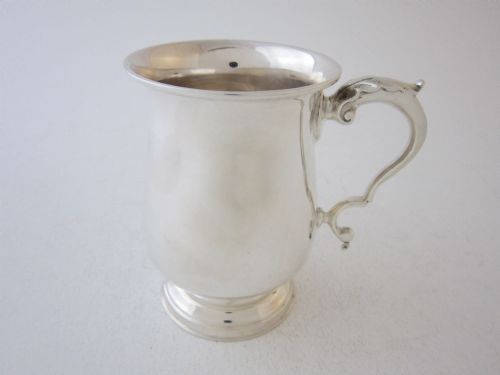
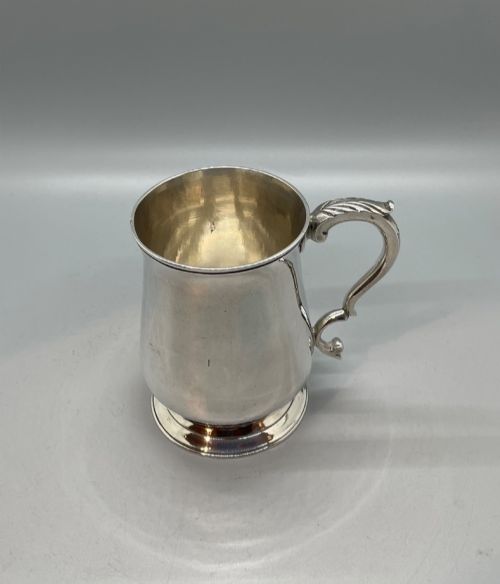
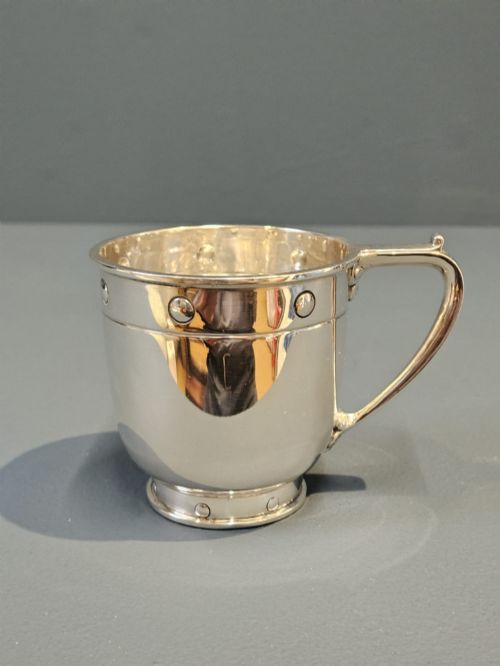
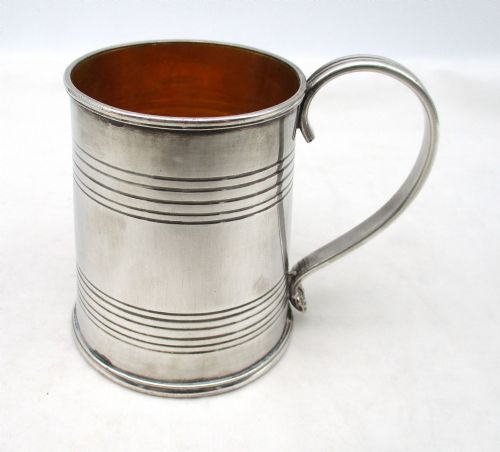
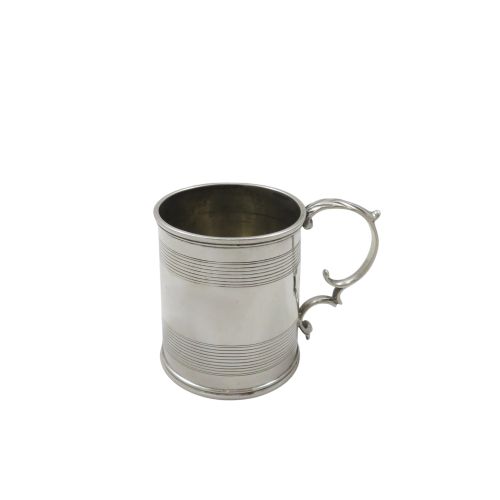
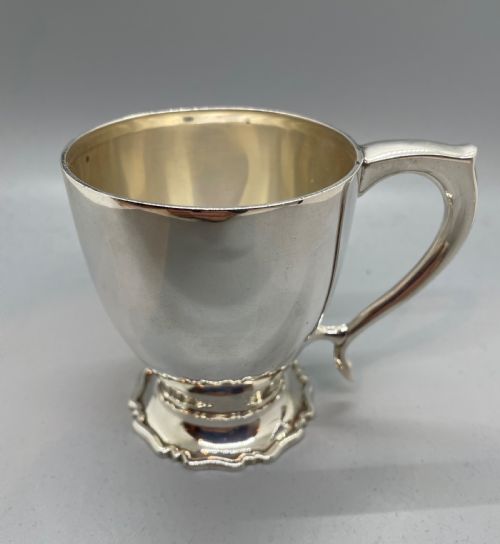
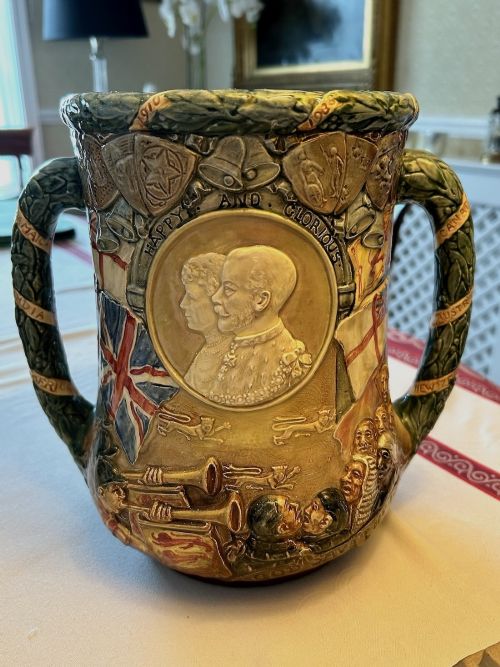
A silver tankard mug spans heavy Georgian pint drinking vessels, Victorian christening cups, and early twentieth-century presentation pieces. The forms range from plain cylindrical bodies to embossed loving cups and lidded vessels created for daily use or special ceremonies.
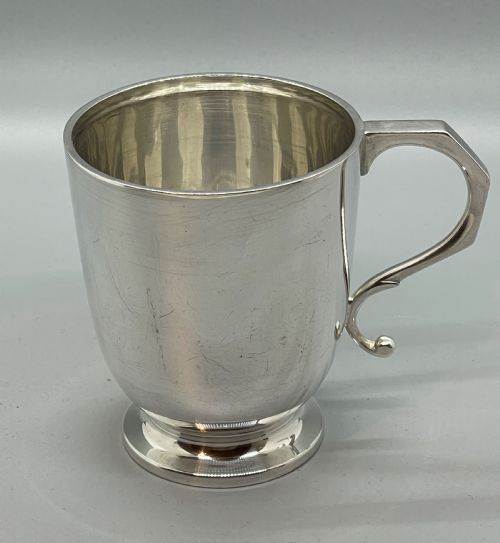
Most examples met on this page are either sterling silver christening mugs or pint-sized drinking tankards dating from the eighteenth century through to the mid-twentieth century. Buyers also encounter Old Sheffield Plate and silver-plated items featuring decorative handles shaped like animals or floral motifs.
Materials and construction methods
Silversmiths constructed these drinking vessels primarily from sterling silver or Old Sheffield Plate, fusing layers of silver and copper to create durable forms. Many pieces bear clear hallmarks indicating assay offices in London, Birmingham, Sheffield, and Chester.
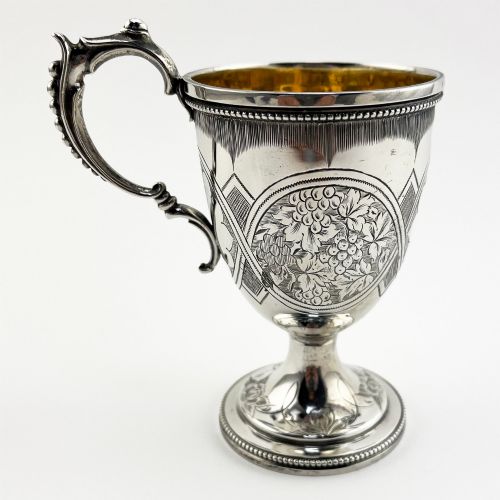
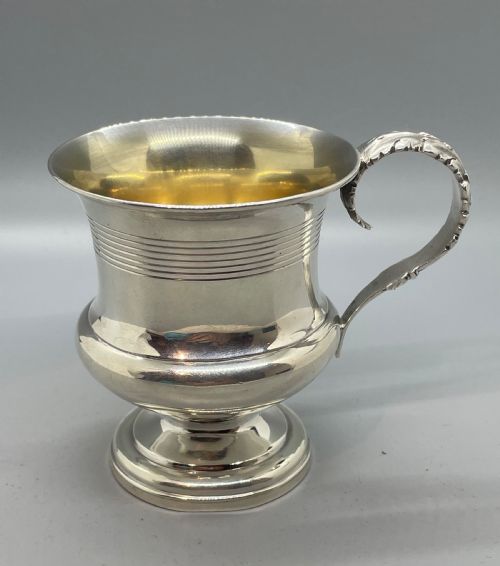
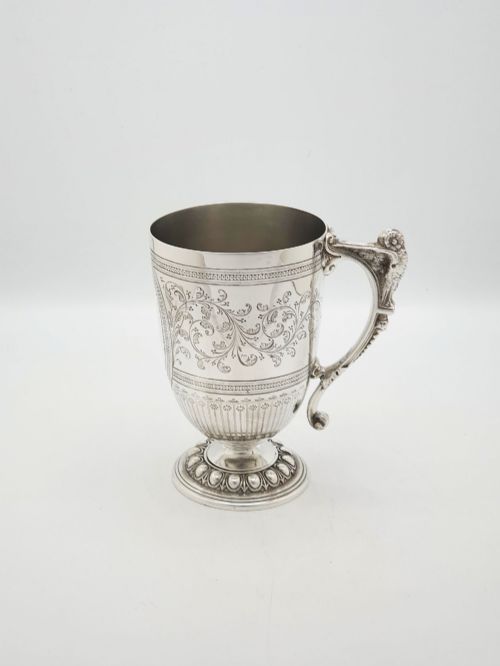
Surface decoration involved hand engraving, embossing, and gilding with silver or gold washes on the interior, known as silver gilt or gold gilt. Handles were often cast separately and soldered securely to the main body, featuring scroll or novelty designs.
Silver Tankard Mug Retail Price Guide 2026
Typical asking prices for silver tankard mug among the pieces listed under this phrase on Sellingantiques today, from the lower quarter to the upper quarter. They describe what is for sale here now, not the wider market.
Listings feature items ranging from eighteenth-century Georgian Old Sheffield Plate tankards to mid-century modern sterling silver pint mugs.
Assessing quality in drinking vessels
The distinction between ordinary and superior pieces rests on the weight of the metal and the crispness of the chasing or engraving. Substantial gauge silver provides a reassuring heft in the hand, whereas lighter vessels feel fragile.
Maker marks and legible hallmarks elevate a piece, confirming the origin and standard of the metal. Superior examples display careful finishing at the joints and rim without visible solder or distortion.
Barker Bros·R E Stone·Richard Morton·John Payne·William Grundy·G R Collis·Thomas Whipham·Charles Wright·Garrards·Carrington & Co
The Silver Tankard Mug Glossary
- Hallmark
- Official marks stamped onto precious metal to guarantee the purity standard and show the assay office, maker, and year of production.
- Christening mug
- A small presentation cup traditionally given to mark the birth or baptism of a child, often featuring personalized engraving.
- Old Sheffield Plate
- An early composite material made by fusing a thin sheet of silver to a thicker copper base, common in eighteenth and nineteenth-century production.
- Loving cup
- A large drinking vessel with two or more handles, traditionally passed around a group during celebrations.
- Silver gilt
- Sterling silver that has been coated with a thin layer of gold on the interior or exterior surface for decoration and protection.
Silver Tankard Mug: Frequently Asked Questions
What is the difference between a mug and a tankard?
A tankard traditionally refers to a lidded drinking vessel for beer or ale, while a mug is open at the top. Over time, silversmiths and makers used the terms interchangeably for handled drinking vessels of similar proportions.
Many antique pieces catalogued under these terms function equally well for display or commemorative use, regardless of whether they originally featured a hinged lid.
How do I know the date of my silver mug?
British silver carries a strict system of hallmarks that includes a specific letter code representing the year it was assayed. By consulting standard reference tables for London, Birmingham, Sheffield, and other offices, you can pinpoint the exact year of manufacture.
Pieces without hallmarks rely on stylistic evidence such as the shape of the scroll handle, the depth of the footring, and the style of any engraved dedication.
Can I use an antique silver mug for drinking?
Solid sterling silver vessels are food-safe and non-toxic, making them suitable for drinking water, beer, or wine. Many collectors regularly use pint tankards and christening mugs for special toasts and family gatherings.
Old Sheffield Plate and silver-plated pieces require more care to avoid wearing through the thin silver layer to the underlying copper base during washing.
Why do some silver mugs have gold inside?
The golden interior is known as silver gilt or wash gilding, applied to protect the silver from tarnishing when exposed to acidic liquids like wine or fruit juice. It also provides a rich decorative contrast to the polished exterior silver.
This technique was common on eighteenth and nineteenth-century christening cups and presentation tankards intended to be both functional and decorative.