
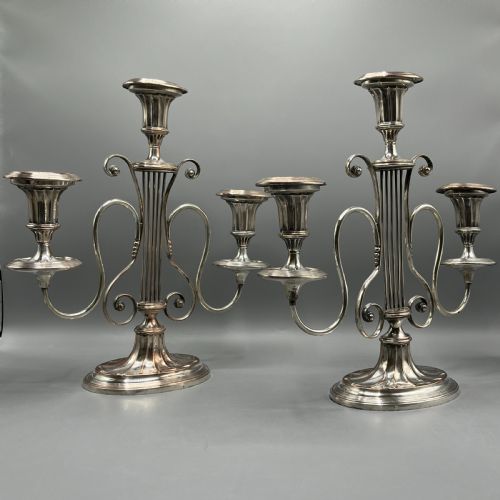


Silver Table Candleholders
Silver table candleholders bring period grace to any dining room, offering warm light through sterling silver and plated forms.
Silver Table Candleholders
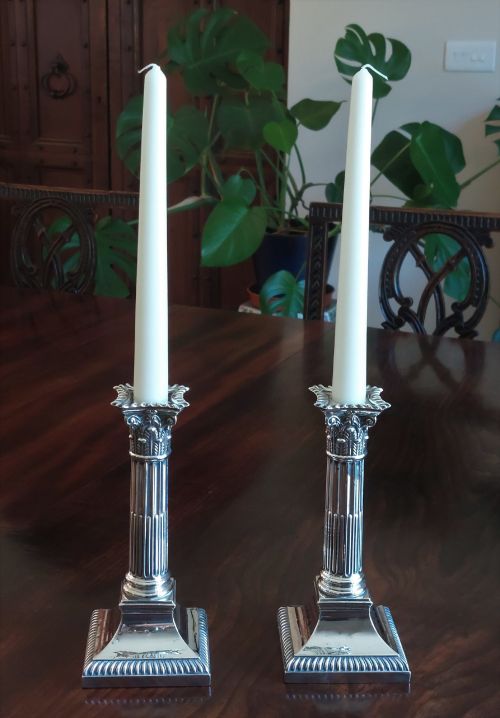
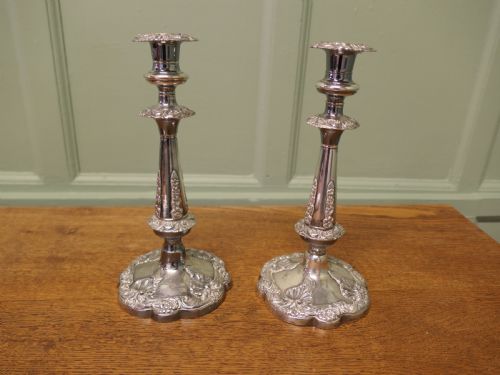
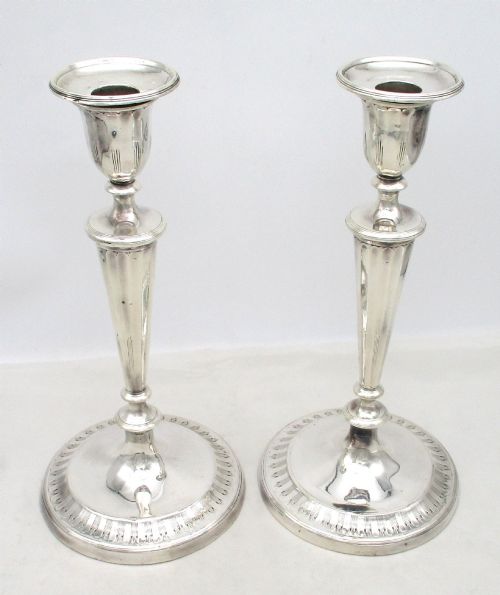
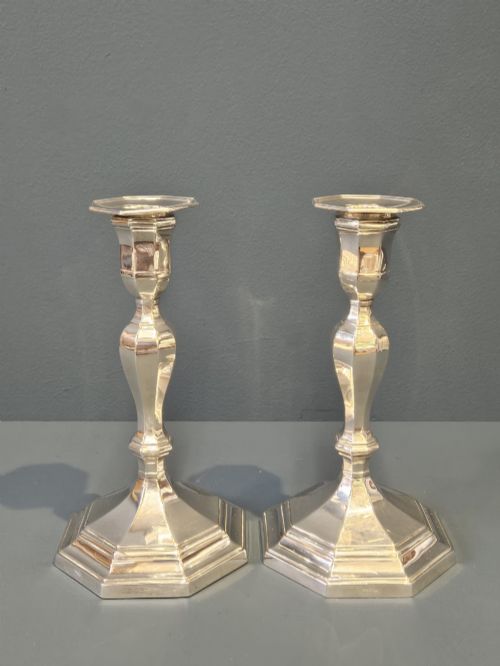
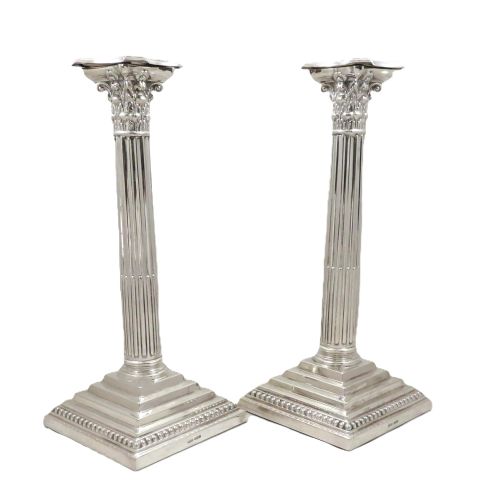
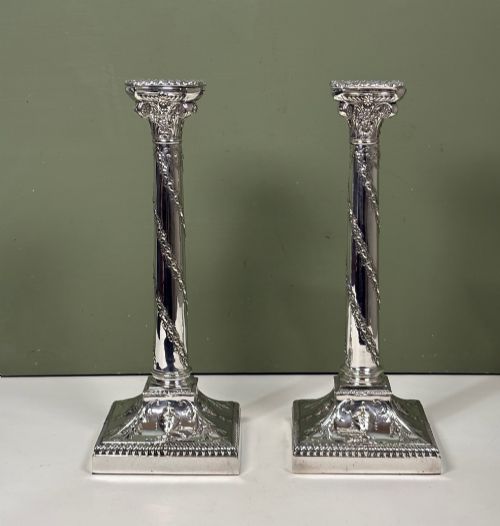
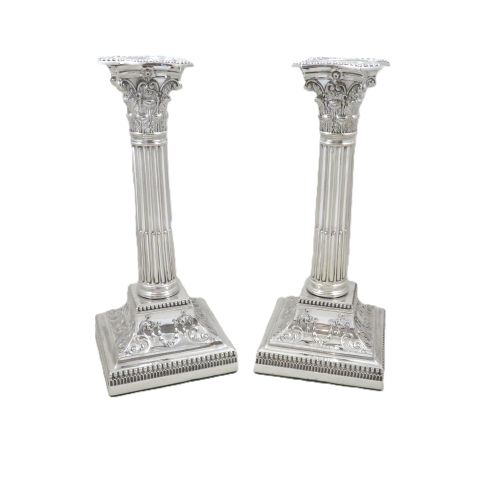
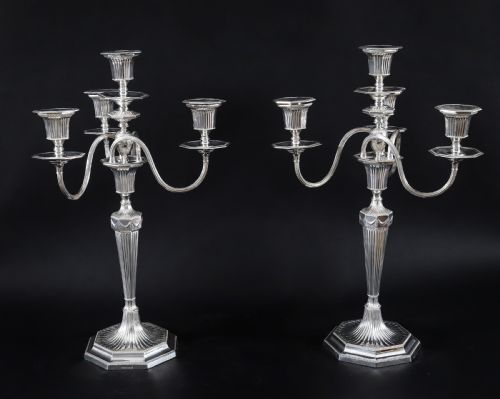
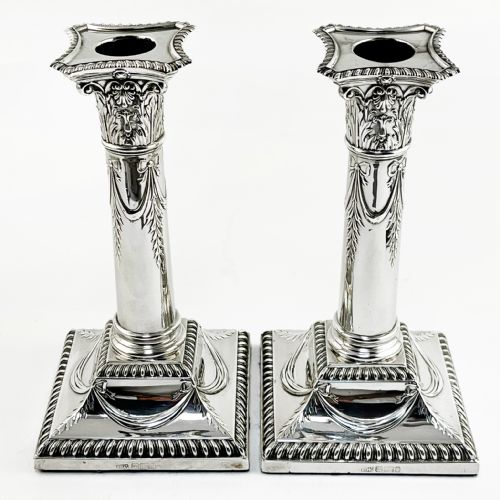
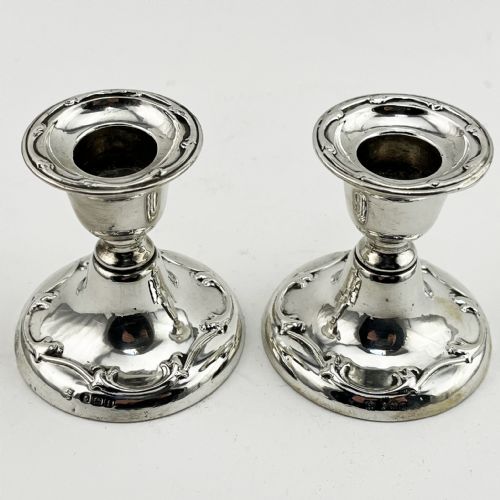
Silver table candleholders comprise candlesticks and candelabra spanning the Georgian, Victorian, and Edwardian periods, alongside later twentieth-century examples. Buyers searching this phrase typically encounter matched pairs fashioned as slender columns, dwarf pillars, or multi-light branches.
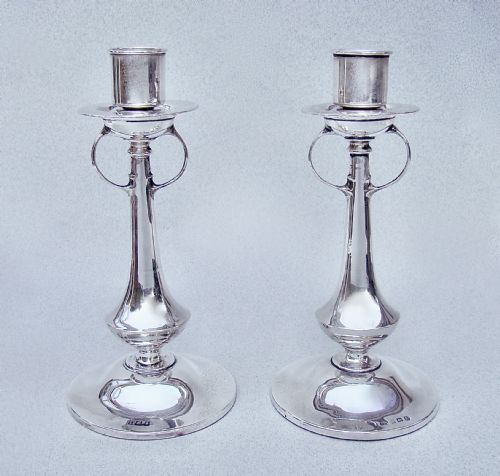
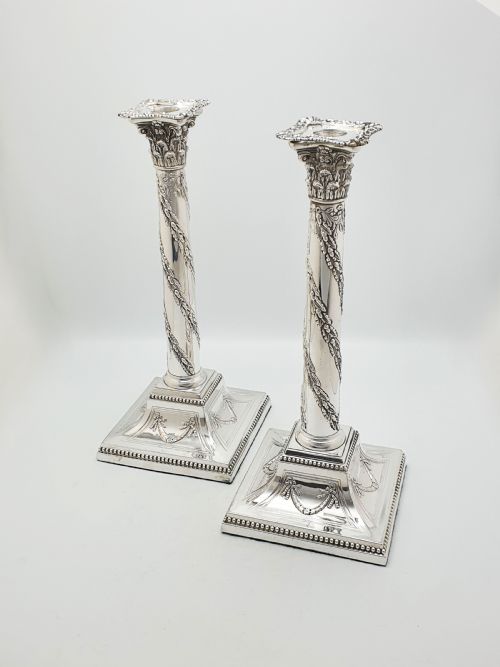
Stylistic influences across the selection draw heavily upon neoclassical columns, rococo curves, and Arts and Craft simplicity. These variations allow collectors to match specific period interiors or dining arrangements with appropriate lighting accessories.
Materials and Techniques
Makers utilised sterling silver and silver plate applied over base metals such as copper, brass, and pewter. Old Sheffield plate involved fusing a thin sheet of silver to a copper ingot before rolling and shaping the composite metal.
Silversmiths employed casting, hammering, and detailed chasing to achieve neoclassical column fluting or exuberant rococo scrollwork. Hallmarked sterling pieces required strict adherence to assay office standards, stamping marks for city, maker, and date upon the metal.
Some telescopic candlesticks double in height with a quick pull, perfect for adjusting table mood lighting on the fly.
Assessing Quality
The distinction between standard production and superior craftsmanship rests in the crispness of cast ornamentation and the weight of the metal. Finer pieces maintain substantial proportions and retain clear hallmarks or crisp plating without base metal bleeding through.
Design integrity also separates workshop output, where master makers applied thoughtful proportioning to column capitals, weighted bases, and detachable drip pans. Articulation in telescopic mechanisms and stability in multi-branch candelabra further denote superior execution.
Garrard & Co·Hawksworth Eyre·James Fenton·John Cafe·Thomas Bradbury & Sons Ltd·James Dixon & Sons
The Silver Table Candleholders Glossary
- Sterling silver
- A silver alloy containing 92.5 percent pure silver by mass, paired with other metals for durability. Hallmarks on these pieces confirm their official standard.
- Old Sheffield plate
- An early form of plated metal created by fusing a layer of silver to a copper base. This technique creates a distinctive edge where the underlying copper occasionally shows through.
- Candelabra
- A branched candleholder designed to hold multiple candles simultaneously. These pieces often feature removable arms to convert into standard single candlesticks.
- Telescopic
- A design allowing the candlestick shaft to extend upwards in height. This adjustable mechanism appeared frequently in nineteenth-century dining accessories.
- Corinthian column
- An architectural style featuring ornate capitals decorated with acanthus leaves. Makers frequently adopted this classical motif for tall candlesticks during the Victorian and Edwardian eras.
Silver Table Candleholders: Frequently Asked Questions
How do I clean silver table candleholders?
Use a soft cloth and a gentle, non-abrasive silver polish formulated for plated or solid items. Avoid harsh scrubbing that might wear away thin silver plating.
Take care around weighted bases and felted bottoms to prevent moisture damage during cleaning. Regular, light dusting preserves the finish better than heavy chemical interventions.
What is the difference between sterling and plated?
Sterling silver consists of solid precious metal throughout, marked with official assay office hallmarks. Plated pieces feature a thin layer of silver applied over a base metal like copper or brass.
Over long periods of use, plated items may show base metal through worn high points. Solid sterling retains its metallic composition completely through any surface wear.
How do I style candelabra on a table?
Position matched pairs along the centre of a dining table to create balanced illumination and visual symmetry. Ensure the height allows guests to converse across the table without obstruction.
Pair them with matching drip pans and matching taper candles to maintain a cohesive period appearance. Mixing heights adds depth if you use multiple pairs together.
How can I tell the period of a piece?
Examine the hallmarks on sterling pieces for specific date letters and assay office symbols. Stylistic cues like neoclassical columns or rococo curves also offer strong indications of the era of manufacture.
Construction methods, such as Old Sheffield plate techniques or telescopic mechanisms, help narrow down the manufacturing decade. Comparing form and weight against documented examples confirms the date.