




Silver Swan Novelty
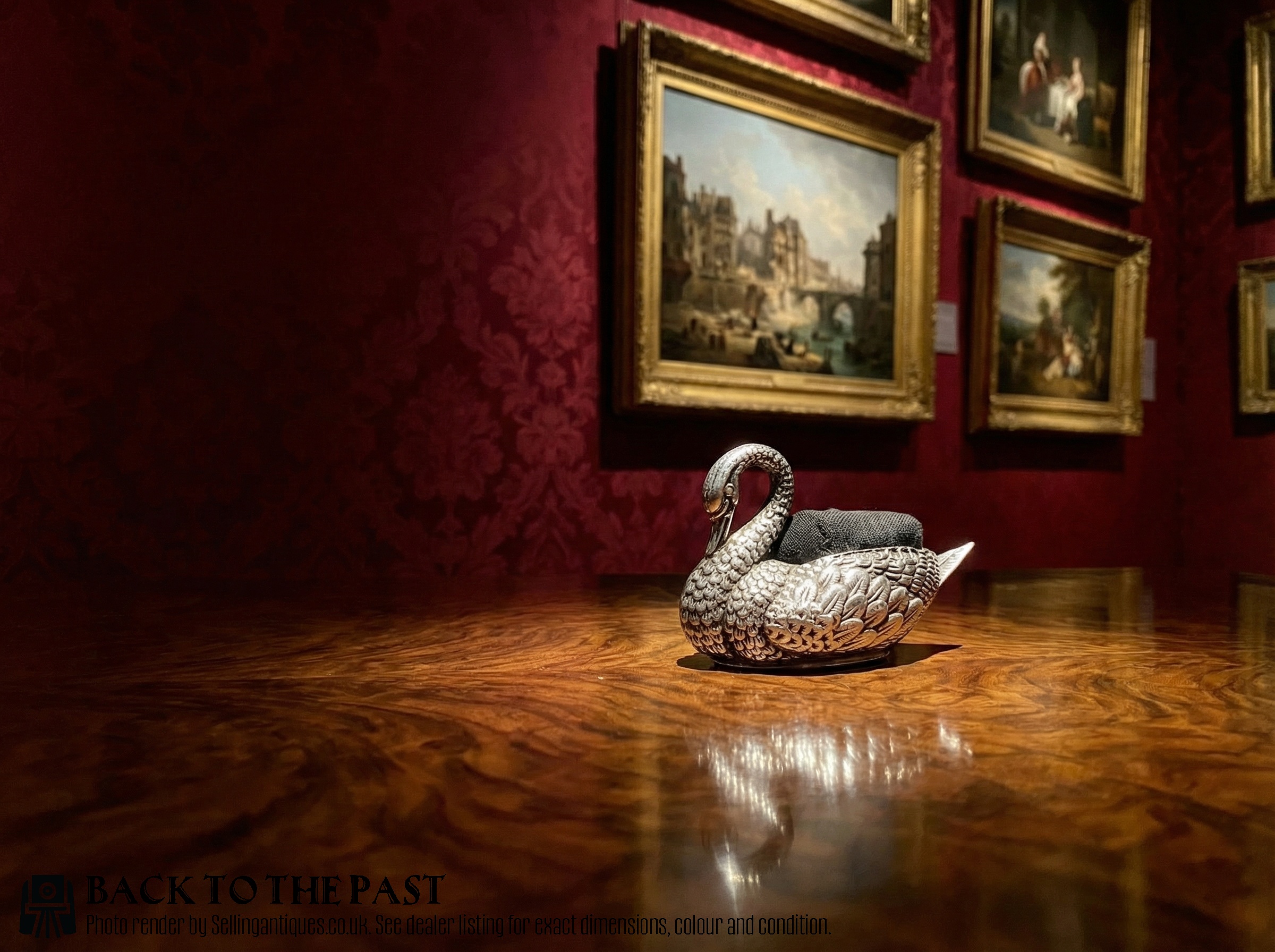
These silver swan novelty pieces combine playful animal forms with functional design, offering collectors charming Victorian and Edwardian examples for display.
Silver Swan Novelty
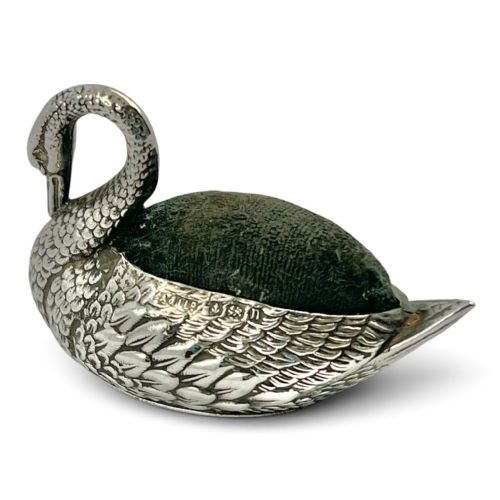
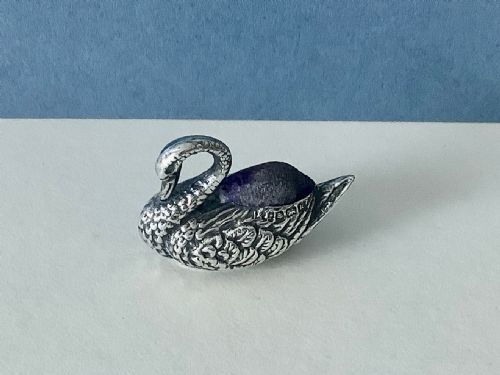
When you search for silver swan novelty items, you encounter whimsical decorative objects designed for practical domestic use during the Victorian and Edwardian periods. These pieces take the sculptural form of waterfowl, frequently appearing as miniature pin cushions, salt cellars, spoon warmers, toast racks, and walking stick handles.
The pin cushions are the most common version you will meet on this page, often upholstered in velvet and stamped with hallmarks from Birmingham and London silversmiths. Alongside these sewing accessories, table salts and toast racks demonstrate how silversmiths integrated avian subjects into everyday dining utensils.
Origins span English provincial assay offices as well as continental workshops, with some items imported and re-assayed in Britain. The aesthetic reflects a late nineteenth and early twentieth century fascination with animal forms in domestic silver.
How they were made
Silversmiths shaped sterling silver and silver plate through casting, hammering, and detailed chasing to define the feathers, wings, and arched necks of the birds. The metal components were then assembled alongside functional elements like glass inserts, metal alloy frames, or velvet pads designed for pins and needles.
Later twentieth century examples incorporate alternative industrial materials such as chrome and moulded bakelite, particularly within barware and cocktail stick sets. Hallmarks and date letters were punched directly into the silver surfaces to record the year of assay and the maker's mark.
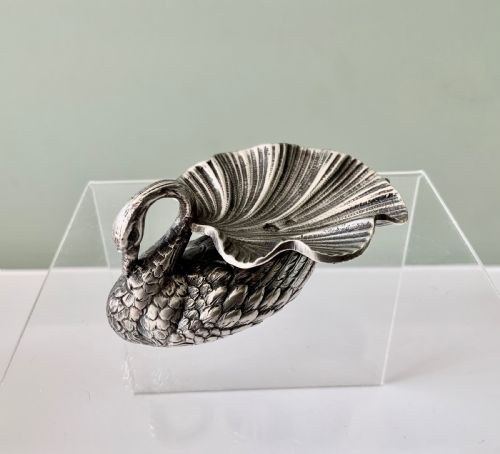
A Victorian silver swan doubles as a severe dinner table salt cellar with a removable head.
What varies in quality
The standard of modeling separates the finer pieces from simpler mass-produced items, with superior examples exhibiting crisp chasing on the plumage and naturalistic posture in the neck and head. The retention of the original velvet pad inside pin cushions or the original glass liner within salt cellars also influences the integrity of the piece.
Weight and gauge of the metal indicate the underlying substance of the object, while legible hallmarks provide reliable dating and provenance. Continental imports and pieces by known specialty makers demonstrate distinct levels of decorative finish and casting precision.
Adie & Lovekin
The Silver Swan Novelty Glossary
- Pin Cushion
- A small domestic object designed to hold sewing pins, frequently fashioned in figural silver shapes during the Edwardian era. These items often feature a stuffed velvet insert nestled within the metal body.
- Hallmark
- An official stamp applied to precious metals indicating the standard of purity, the assay office, and the date letter. British silver pieces typically display a series of small punches confirming their origin.
- Spoon Warmer
- A Victorian vessel filled with hot water to warm table spoons before serving course dishes. They are frequently encountered in novelty animal forms, including waterfowl.
- Toast Rack
- A table accessory with vertical dividers designed to hold slices of toast upright. Novelty versions often employ bird motifs where the arched wings or bodies form the framework.
- Chasing
- A metalsmithing technique where a design is hammered into the front surface of the metal to create raised relief and surface detail. This method defines the feather patterns on silver birds.
Silver Swan Novelty: Frequently Asked Questions
What were silver swan pin cushions used for?
These miniature birds served as decorative desk accessories or sewing tools, holding pins and needles within integrated velvet pads during the Victorian and Edwardian periods.
Ladies kept them on dressing tables or writing desks where their whimsical forms provided both utility and visual amusement for guests.
How do I identify the date of a silver swan?
British pieces typically feature a stamped series of hallmarks including a date letter, a lion passant for sterling silver, and an assay office mark indicating towns such as Birmingham or London.
Matching the stamped letter against standard assay office date tables reveals the exact year the metal was tested and certified.
Are all swan novelties made of solid silver?
While many pieces are struck from sterling silver, a significant number of items from the period are constructed from silver plate over a base metal alloy.
Later twentieth century examples may also incorporate modern industrial materials like chrome alongside coloured bakelite components.
What other forms do these silver swans take?
Beyond pin cushions, silversmiths adapted the swan shape into functional tableware such as double-headed salt cellars, toast racks, spoon warmers, and egg cruets.
Walking stick and cane handles were also carved or cast in the likeness of swan heads, mounted onto hardwood shafts.