
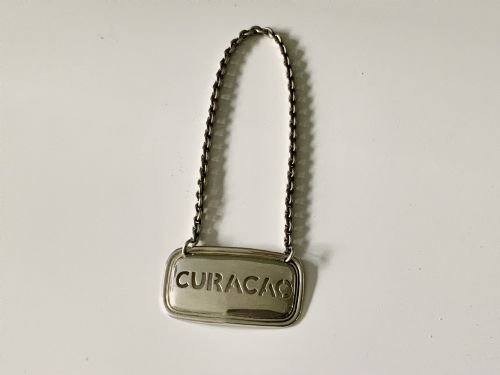
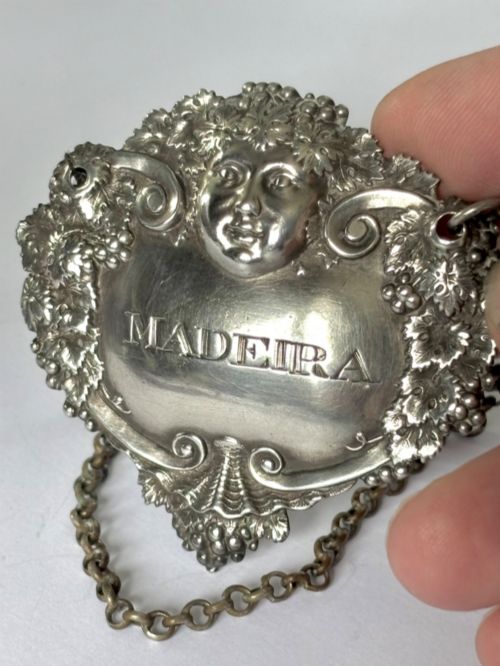
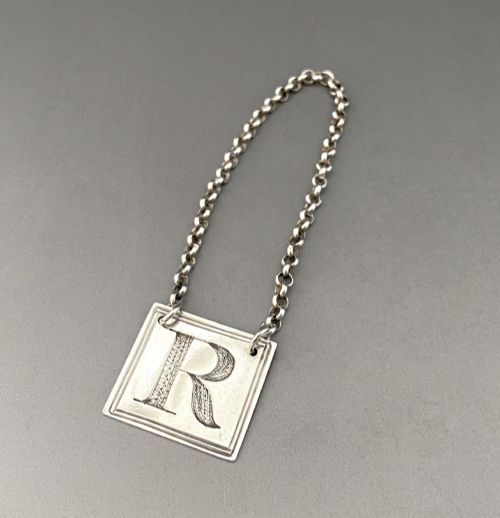


Silver Spirit Label
These silver spirit label pieces identify decanter contents with style, offering genuine period character for your sideboard.
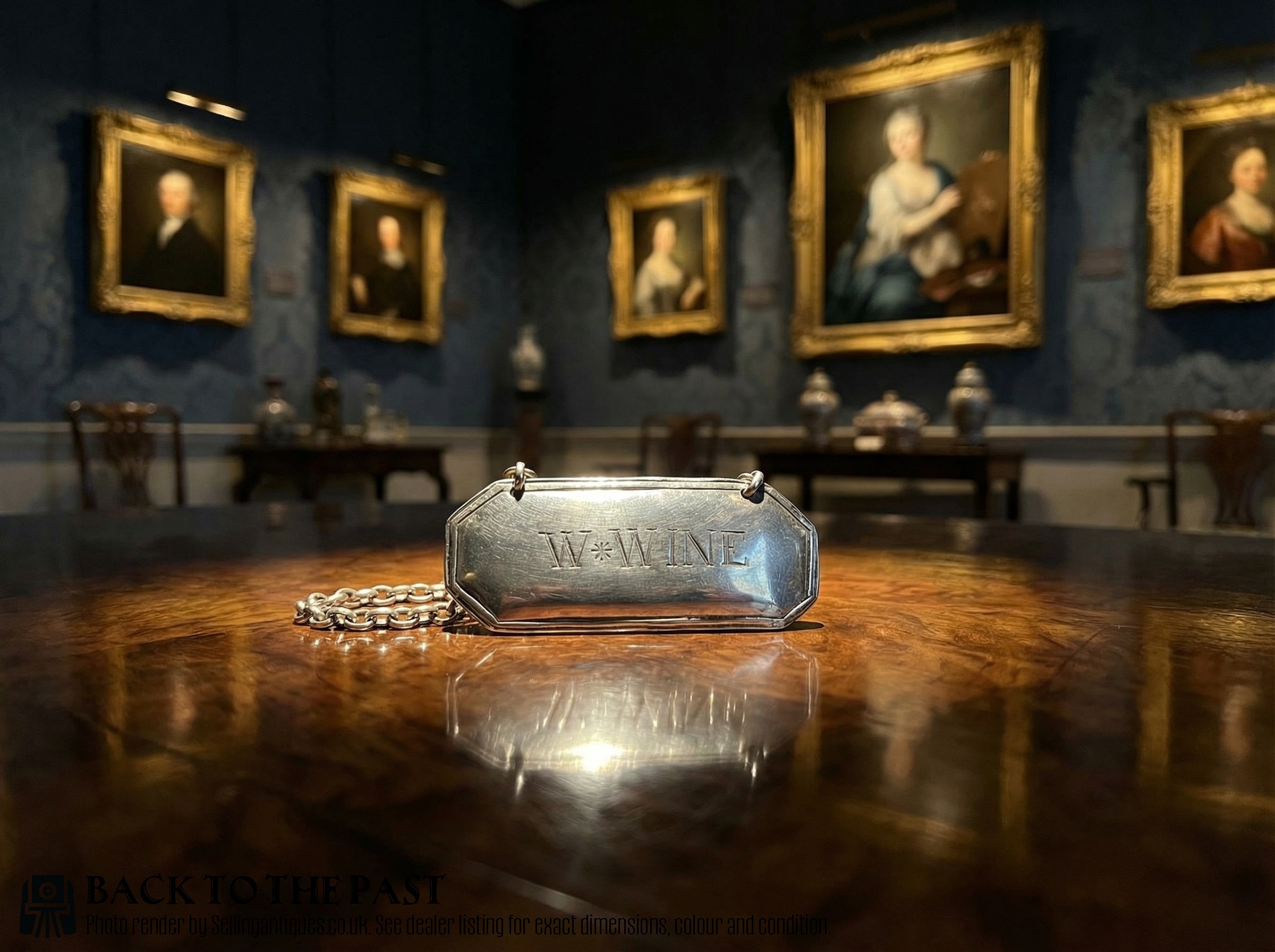
Decanter labels
A silver spirit label identifies decanted drinks such as brandy, gin, sherry, whisky, and madeira. These small tags hang around bottle necks by chains or collars to distinguish the contents.
The pieces listed span Georgian, Victorian, and mid-century periods, showing how designs shifted from traditional styles to mid-century modern and enamelled forms.
Origins include Scottish provincial towns such as Peterhead, alongside major English assay centres like Birmingham and Sheffield.
Materials and construction
Silversmiths formed these items using solid silver and sterling silver, sometimes incorporating vitreous enamel for added colour. Hallmarks stamped into the metal record the assay office, date letter, and maker.
Provincial pieces reflect regional British silversmithing traditions, while later examples utilise factory production methods established in Birmingham and Sheffield.
Retail Price Guide 2026
Typical UK retail prices for silver spirit label, calculated from the Sellingantiques database of over a million retail prices indexed since 2003. This retail price guide relies exclusively on Sellingantiques data; no external sources or auction records are used, so the figures do not describe the wider market.
Listings feature items from the Georgian and Victorian eras alongside mid-century British pieces in sterling silver and enamel.
Assessing quality
Quality rests in the crispness of the lettering, the weight of the solid silver, and the finesse of any enamel work. Pieces by notable makers command attention through superior stamping and finishing.
Earlier Georgian and provincial items often display hand-engraved details and distinct regional marks, contrasting with the structured appearance of later nineteenth and twentieth century production.
Turner and Simpson·Mappin and Webb·George Unite·Harry Atkin
The Silver Spirit Label Glossary
- Decanter label
- A small tag hung from the neck of a decanter to name the spirit inside. These items are also historically known as bottle tickets.
- Sterling silver
- An alloy consisting of silver and other metals, typically copper, meeting a specific fineness standard. Most British pieces carry hallmarks confirming this standard.
- Vitreous enamel
- A material made by fusing powdered glass to a metallic substrate through firing. This technique adds colourful decorative surfaces to silver tags.
- Assay office
- A body charged with testing the purity of precious metals and stamping them with official hallmarks. Birmingham and Sheffield are prominent examples seen on these pieces.
- Scottish provincial
- Items made by silversmiths working outside the major incorporated cities like Edinburgh or Glasgow. These often bear unique local maker marks.
Frequently Asked Questions
What is a silver spirit label?
A silver spirit label is a small tag designed to hang around the neck of a decanter to name the liquor held within. They prevent confusion at the dining table.
These objects range from early provincial examples to mid-century enamelled pieces in sterling silver.
How do I date a silver label?
Dating relies on reading the hallmarks stamped into the silver, which typically include assay office symbols, date letters, and maker marks. Stylistic clues also indicate whether a piece is Georgian, Victorian, or mid-century.
Comparing the lettering style and decorative motifs helps narrow down the period of manufacture.
What spirits do these labels name?
The labels identify traditional spirits and fortified wines including brandy, gin, sherry, whisky, and madeira. Each label matches the specific bottle served during dining.
This custom ensured guests and hosts could easily identify each decanted beverage.
How should I display them?
These items hang naturally around the necks of glass decanters using their original chains or suspension loops. They also sit well flat in display cabinets alongside other silver table wares.
Keeping them away from damp environments helps preserve the polished finish of the sterling silver.