







Silver Spirit Kettle Stand
A silver spirit kettle stand holds water above its burner, offering table service from an era of slow hospitality.
Silver Spirit Kettle Stand
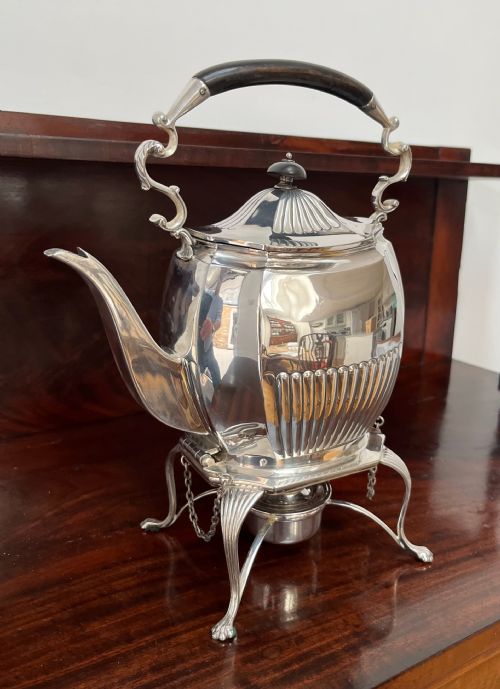
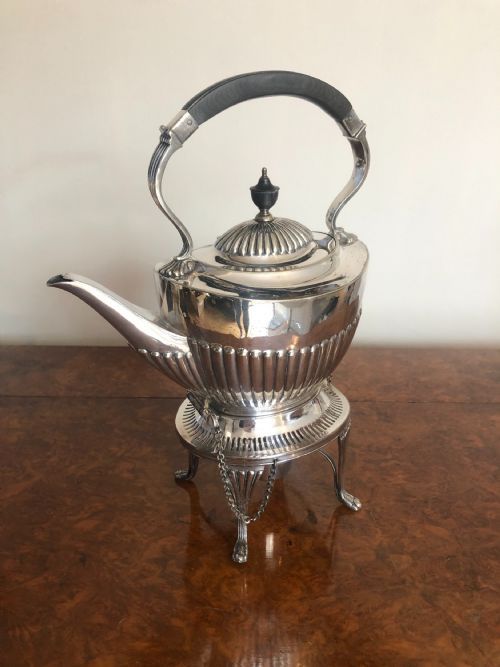
When you search for a silver spirit kettle stand, you find pieces designed to heat and dispense hot water at the tea table. These apparatuses typically combine a metal vessel, a supporting frame, and an under-mounted burner.
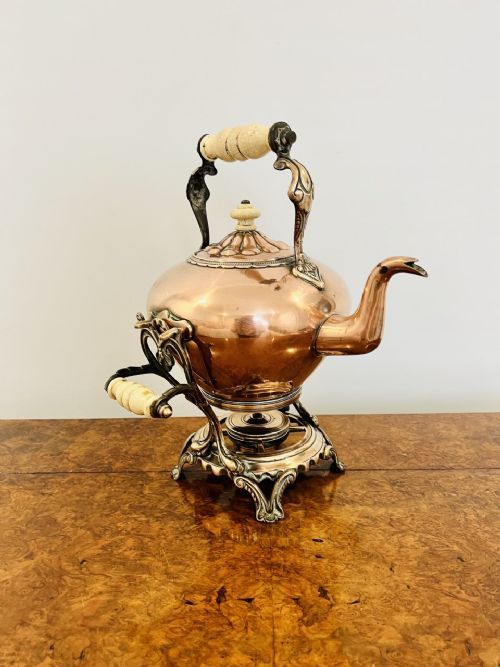
The versions you meet most frequently on this page belong to the Edwardian period and the Victorian era. They arrive in silver plate, EPNS, and copper, often elevated on tripod or four-legged stands with original spirit burners intact.
Makers styled these sets to mirror earlier aesthetics, producing Georgian Revival designs alongside Edwardian and Victorian forms. Each piece represents a social ritual where tea water remained hot throughout the drawing room gathering.
How they were made
Silversmiths and manufacturers formed the main bodies from copper or base metals before applying thick silver plating. Handles frequently incorporate insulating elements such as ebony, ebonised wood, or bone to protect the user from heat.
The stands involve complex metalwork, soldering legs, rings, and burner brackets into a stable frame that holds the heavy kettle safely above an open flame. Burners often include small wick caps and regulating mechanisms machined from brass or plated metal.
Silver Spirit Kettle Stand Retail Price Guide 2026
Typical asking prices for silver spirit kettle stand among the pieces listed under this phrase on Sellingantiques today, from the lower quarter to the upper quarter. They describe what is for sale here now, not the wider market.
Listings span from the mid-nineteenth century through the Edwardian era, incorporating materials like copper, ebony, and silver plate.
What varies in quality
Quality rests in the weight of the metal and the integrity of the silver plating over the base metal or copper. Finer examples maintain crisp proportions in the stand and retain their matching burner components without replacement parts.
The distinction between standard commercial production and superior execution lies in the handling of insulated handles and the solidity of the frame joints. Better pieces display refined surface finishing and precise fit between the kettle base and its retaining ring.
Fenton Brothers·Frederik Ellis Tim And Co
The Silver Spirit Kettle Stand Glossary
- Spirit kettle
- A water vessel mounted on a frame above a small alcohol burner. This setup kept water at boiling point during long tea services.
- Silver plate
- A layer of silver fused to a base metal such as copper or nickel brass. This technique provided the appearance of solid silver at a lower cost.
- EPNS
- Electroplated Nickel Silver. A durable base alloy coated with silver through an electrolytic process widely adopted in the nineteenth century.
- Ebonised wood
- Timber treated to imitate ebony. Makers used this dark material for kettle handles and insulators to resist heat and wear.
- Burner
- A small vessel beneath the kettle that held methylated spirit or alcohol. A wick inside produced the flame required to maintain water temperature.
Silver Spirit Kettle Stand: Frequently Asked Questions
How do I use a spirit kettle?
Fill the kettle with water and place it securely within the supporting stand over the unlit burner. Fill the burner with methylated spirit, light the wick, and adjust the flame to maintain the desired water temperature.
Extinguish the flame using the provided cap once the tea service concludes. Allow the metal to cool completely before attempting to empty or clean the interior.
Are these kettles made of solid silver?
The pieces listed here are formed from silver plate, EPNS, or copper rather than solid silver. Manufacturers applied a thin coating of silver over a durable base metal to achieve a bright finish.
Examining the metal where plating has worn or checking for maker marks reveals the underlying substrate. Silver plate allowed makers to produce large, decorative vessels at accessible costs.
How do I date an Edwardian kettle?
Edwardian examples typically date from the opening decade of the twentieth century and reflect neoclassical revival tastes. Look for clean lines, restrained ornament, and construction methods characteristic of industrial production.
Compare the style against Victorian and Georgian Revival indicators in the mounting hardware and handle insulation. Maker stamps and registry numbers can also narrow down the year of manufacture.
How should I care for silver plate?
Clean silver plate using a soft cloth and a gentle polish formulated specifically for plated metals. Avoid harsh abrasives that can wear through the thin silver layer down to the base metal.
Store the kettle in a dry environment to prevent tarnishing and corrosion of the inner surfaces. Ensure the wooden or bone insulators on the handle remain dry during cleaning.