


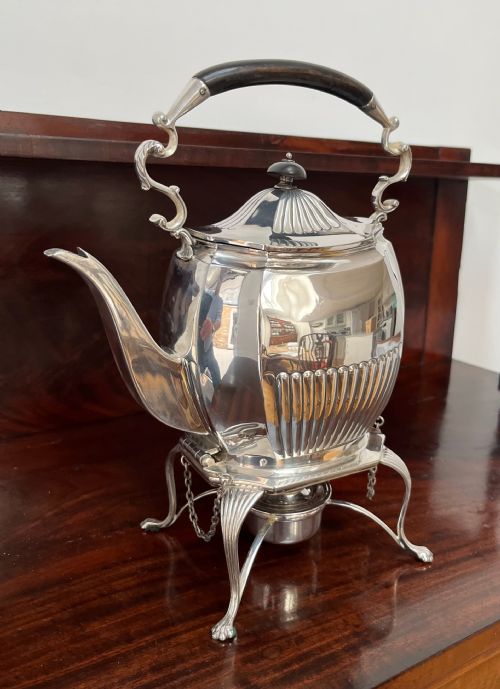


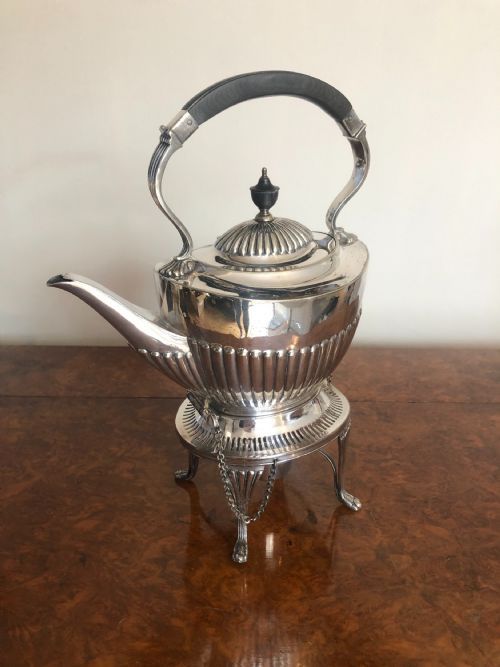

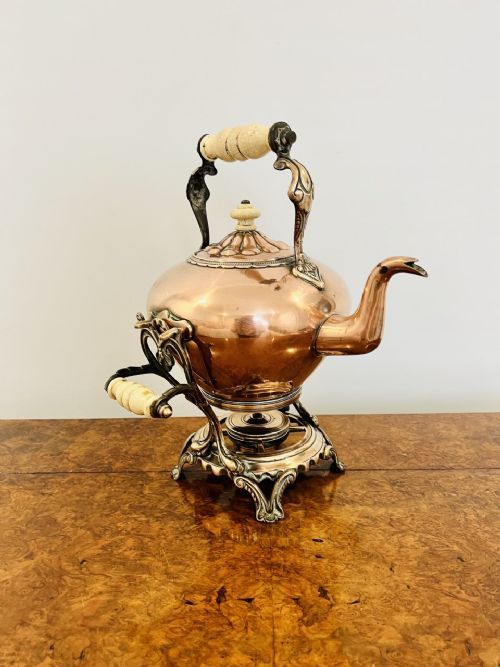


Silver Spirit Burner Urn
A silver spirit burner urn brings warmth and historic ceremony to the table, combining a vessel with its own dedicated flame.
Silver Spirit Burner Urn
A silver spirit burner urn unites a container for hot water, coffee or tea with a fitted stand and a small under-burner, designed to keep contents heated at the table. These pieces appear primarily as spirit kettles and tea urns, spanning the Georgian Revival, Victorian and Edwardian eras.
Most examples found here date from the Edwardian period and the late nineteenth century, predominantly fashioned as silver plated spirit kettles on stands. Alongside these stand larger tea urns, coffee biggins, and occasional entree dishes equipped with independent spirit burners.
The form relies on a balanced assembly of vessel, supporting frame, and burner, often incorporating handles and knobs insulated against heat. Origin styles draw heavily on Regency elegance, Victorian ornamentation, and Edwardian refinement.
Materials and construction
The dominant material across these pieces is silver plate, frequently applied over a base metal, alongside select examples executed in sterling silver or copper. Manufacturers utilised durable metal foundations to withstand the repeated heat of the internal or suspended burners.
Insulation and handling parts incorporate contrasting materials such as ebony, ebonised wood, and bone to protect the user's hand from hot metal mounts. Stands and burners involve precise metalwork, creating stable frames that securely hold the heating vessel above the flame.
Silver Spirit Burner Urn Retail Price Guide 2026
Typical asking prices for silver spirit burner urn among the pieces listed under this phrase on Sellingantiques today, from the lower quarter to the upper quarter. They describe what is for sale here now, not the wider market.
Many a Victorian afternoon tea was saved from lukewarm decline by a tiny, well-hidden flame beneath a swaying kettle.
Distinctions in craftsmanship
Superior pieces display harmonious proportions between the vessel, the stand, and the burner mechanism, ensuring the entire assembly looks balanced and intentional. Fine maker attributions and robust silver plating or heavy sterling construction mark out the higher tier of these items.
Paul Storr·Risler and Carré Paris·Fenton Brothers·Frederik Ellis Tim and Co
The Silver Spirit Burner Urn Glossary
- Spirit kettle
- A water vessel mounted on a metal stand with an integrated alcohol or spirit burner underneath. This setup keeps water hot during long tea services.
- Tea urn
- A large standing vessel fitted with a tap at the base for dispensing hot water or tea. These often incorporate internal heating chambers or external burners.
- Coffee biggin
- A tall pot designed for brewing or serving coffee, occasionally supplied with a stand and burner. It represents a specialised form of hot beverage equipment.
- Silver plate
- A layer of silver fused or electroplated over a base metal such as copper or nickel brass. This technique provided the appearance of solid silver at a lower cost.
- EPNS
- Electro Plated Nickel Silver, a common base material for silver plated wares from the nineteenth century onward. It offers durability and a bright metallic finish.
Silver Spirit Burner Urn: Frequently Asked Questions
How do you use a spirit burner?
The small under-burner is filled with methylated spirit or similar fuel and lit to maintain the temperature of the water in the kettle above. Adjusting or extinguishing the flame controls the heat.
Care must be taken to ensure the stand is stable and positioned on a heat-resistant surface before lighting the burner during use.
What is the difference between a kettle and an urn?
A spirit kettle typically tilts on a pivoted frame to pour water into a teapot, whereas an urn remains stationary and dispenses liquid via a tap at the base.
Both serve the same primary function of keeping hot water ready, but urns are generally larger and intended for self-service settings.
How should I clean silver plated items?
Clean silver plated surfaces gently with a soft cloth and a specialised silver polish to remove tarnish without wearing away the thin plating. Avoid abrasive pads or harsh chemical dips.
Parts made of ebony, bone, or wood should be kept dry and treated occasionally with appropriate oils to prevent drying out or cracking.
How can I date an Edwardian spirit kettle?
Edwardian pieces, dating from roughly the opening years of the twentieth century, often display neoclassical revival motifs combined with sturdy silver plating techniques. Maker marks and registration numbers stamped on the metal provide more precise chronological clues.
Stylistic cues include lighter frames and more restrained ornamentation compared to heavily decorated mid-Victorian designs.