



Silver Shell Dish
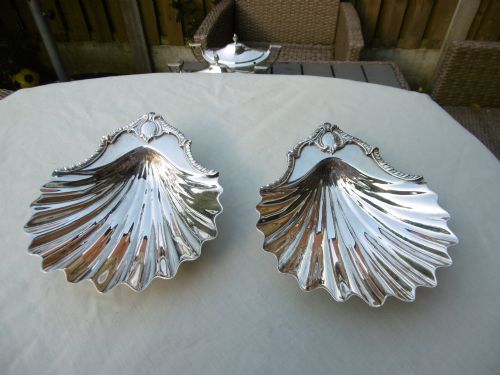
A silver shell dish brings sculptural marine form to the table, taking the natural fluting of a scallop or giant clam and rendering it in polished metal.
Identifying a silver shell dish
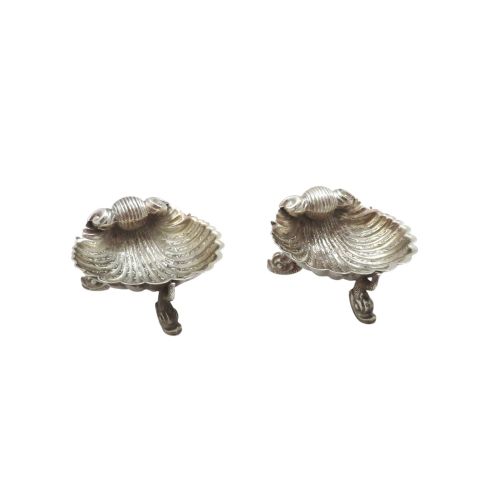
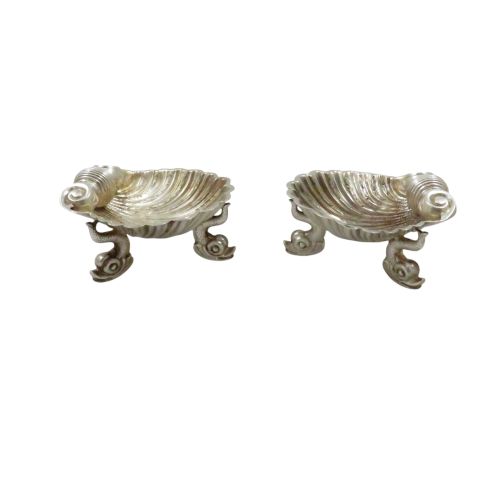
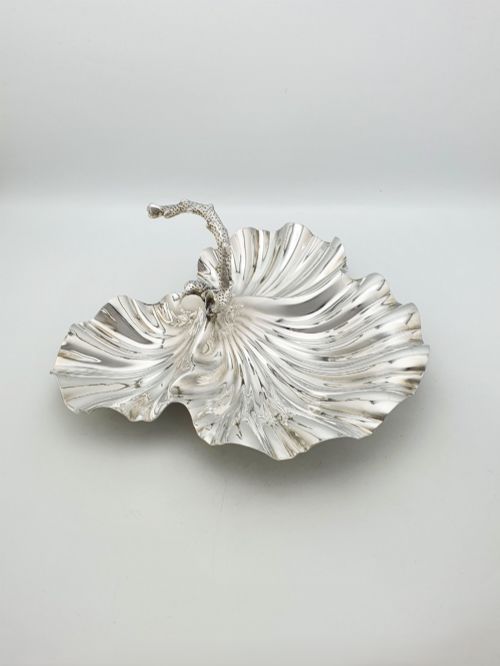
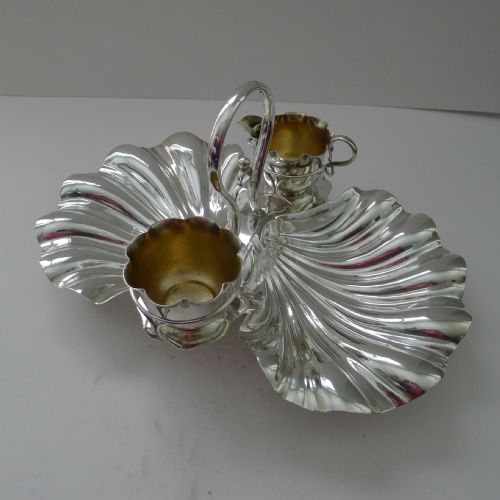
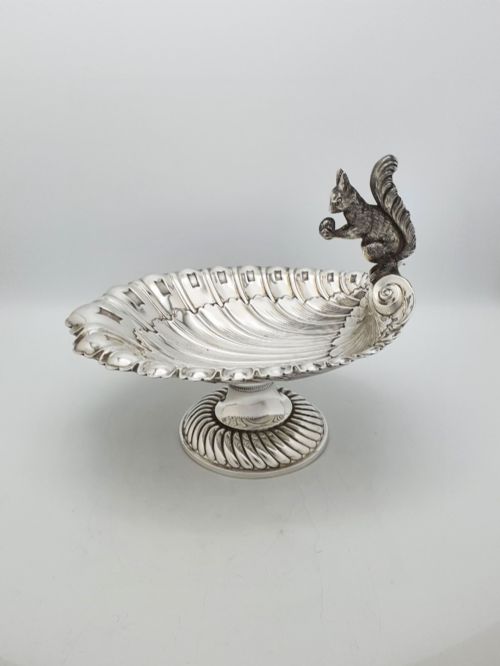
A silver shell dish takes its cue from the natural curves of scallops, clams and marine bivalves, shaped to serve butter, salt, bonbons or small nuts. These pieces range from small individual salt cellars and butter dishes resting on tiny cast feet to large serving vessels and trefoil arrangements.
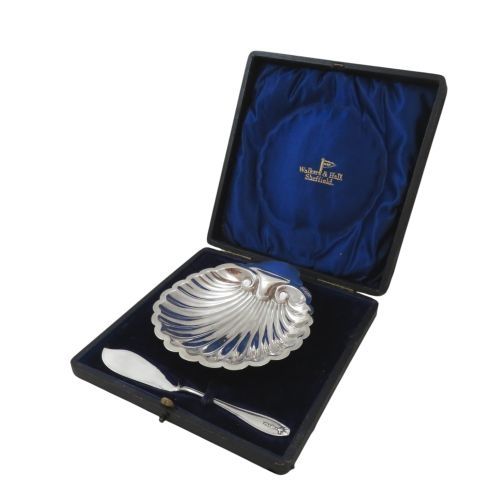
The Edwardian era and the Victorian period dominate the available selection, alongside earlier George II and George III examples from the archive. Makers often produced these items individually or in matched pairs, sometimes accompanied by dedicated knives or fitted cases lined with velvet and silk.
Materials and construction
Craftsmen worked primarily in sterling silver and silver plate, occasionally combining the metal with tortoiseshell for pin trays and small dishes. Pierced work appears alongside solid cast forms that capture the heavy ribs and hinges of natural shells.
Silversmiths utilised hammering, casting and piercing techniques to shape the fluted walls and solder small ball or bracket feet to the base, ensuring each piece balanced stability with delicate wall thickness.
The archive demonstrates that silversmiths favoured heavy cast shell designs throughout the Victorian era.
Distinguishing quality
Quality rests upon the crispness of the casting and the naturalism of the fluting, where superior pieces retain sharp radial ribs rather than softening into plain bowls. Heavy gauge metal provides a substantial feel in the hand, setting apart heavier cast salt and butter dishes from lighter pressed alternatives.
The presence of crisp hallmarks, maker marks, fitted presentation cases lined in silk or velvet, and original matching serving knives elevate certain pieces above standard table silver.
Mappin & Webb·William Comyns·Harrison Brothers & Howson·Samuel Herbert·Stephen Smith·Mary Sibley & Richard Sibley·William Plumber·Josiah Williams & Co
The Silver Shell Dish Glossary
- Sterling silver
- An alloy containing 92.5 percent silver by weight, used for the vast majority of these dishes.
- Silver plate
- A base metal coated with a thin layer of silver, common in Edwardian serving dishes.
- Butter dish
- A small vessel originally designed to hold pats of butter on the dining table.
- Trefoil
- A three-lobed decorative arrangement, often seen in larger serving dishes combining multiple shell motifs.
- Cast shell
- A manufacturing method where molten silver is poured into a mould to replicate the heavy, three-dimensional texture of a giant clam.
Frequently Asked Questions
What were silver shell dishes originally used for?
These pieces served practical dining functions, holding individual portions of butter, salt or small bonbons during formal meals.
Over time, smaller versions transitioned into dressing table trays for pins and small trinkets.
How do I care for antique silver?
Clean the metal gently with a soft microfibre cloth and specialised silver polish only when tarnish becomes heavy.
Store pieces away from direct sunlight and moisture, particularly those featuring velvet or tortoiseshell linings.
Are these dishes safe for serving food?
Sterling silver and silver plate remain safe for dry foods, nuts and wrapped items like butter pats.
Avoid leaving acidic foods in contact with the metal for extended periods to protect the surface.
How can I tell the period of a silver shell dish?
British pieces feature hallmarks stamped directly onto the metal, indicating the assay office, standard and date letter.
Stylistic cues, such as Victorian pierced work or Georgian cast feet, provide additional clues when hallmarks are rubbed.