



Silver Serving Basket
A silver serving basket brings form and purpose to the table, and these pieces span the Victorian, Edwardian, and Art Deco eras in plated and solid metals.
Silver Serving Basket
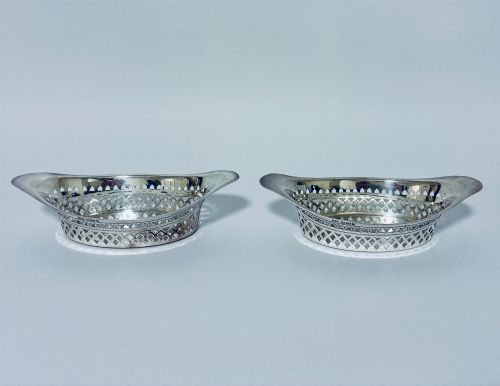
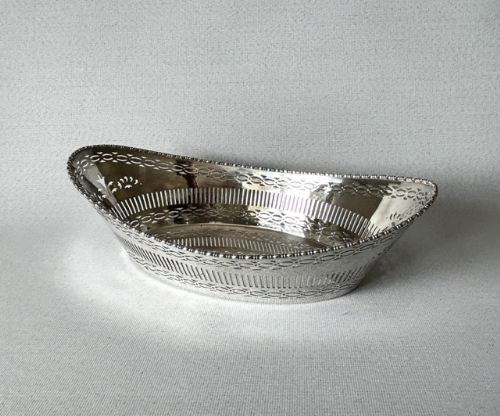
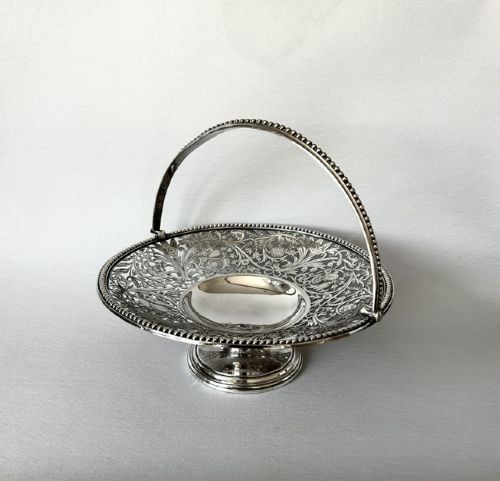
A silver serving basket is a formal table piece designed for bread, cake, fruit, or bonbons, appearing in styles from the heavy ornamentation of the Victorian period to the clean lines of Art Deco. These items function as deep bowls, shallow dishes, or swing-handle baskets meant to hold food offerings during dining.
The versions most common on this page combine silver plate, EPNS, and sterling silver with forms like bread baskets, cake baskets, and fruit bowls. Makers utilised cane and wood alongside metal in selected periods to create contrasting textures.
Origins stretch from nineteenth-century English workshops to French studios of the nineteen-thirties, showing how social dining evolved across a century. Buyers encounter everything from pierced Victorian fruit baskets to geometric French Art Deco bowls.
How they were made
Silversmiths employed techniques such as piercing, floral engraving, and casting to shape sterling silver and silver plate into intricate lattice patterns and solid walls. Piercing required meticulous hand-sawing to remove metal sections, creating light, openwork designs for fruit and bread.
Electroplating on nickel silver, often marked as EPNS, became a dominant manufacturing method alongside traditional solid sterling silver hammered or pressed into moulds. Swing-handle mechanisms relied on careful hinge construction to allow the handle to rest flat or stand upright.
Silver Serving Basket Retail Price Guide 2026
Typical asking prices for silver serving basket among the pieces listed under this phrase on Sellingantiques today, from the lower quarter to the upper quarter. They describe what is for sale here now, not the wider market.
Some swing-handle baskets double as secret fitness equipment when loaded with heavy Victorian fruit.
What varies in quality
Quality rests in the weight of the metal, the crispness of the pierced or engraved decoration, and the integrity of the underlying structure. Heavier gauge silver and thicker plating withstand decades of use without exposing base metals.
Mastery of design differentiates standard production from notable works, seen in the balance of a swing-handle or the precision of geometric French Art Deco framing. Maker execution, such as the distinctive output of Mappin & Webb, Elkington, or Dr Christopher Dresser designs realised by Roberts and Belk, elevates specific pieces.
Mappin & Webb·Elkington·Walker & Hall·John Hunt·Martin Hall·Dr Christopher Dresser·Roberts and Belk·James Dixon·Brille, Paris
The Silver Serving Basket Glossary
- EPNS
- Electroplated Nickel Silver. This designates a base metal coated in a thin layer of silver through an electrical process.
- Sterling Silver
- A standard alloy consisting of silver and other metals, usually copper, to add strength while maintaining a high purity level.
- Swing-Handle
- A movable arched handle attached to the sides of a basket via pivots. It allows the vessel to be carried easily and lowered for table presentation.
- Pierced
- A decorative technique involving cut-out patterns in the metal. It lightened the visual weight of large serving dishes.
- Sweetmeat Dish
- A small vessel intended for serving small confectionery items, nuts, or dried fruits. These pieces often feature shallow bowls and delicate proportions.
Silver Serving Basket: Frequently Asked Questions
What were silver serving baskets used for?
These vessels held bread, cakes, fruit, or sweetmeats during formal dining and afternoon tea. Households placed them centrally on tables for guests to help themselves.
Over time, the specific contents shifted from heavy Victorian fruit displays to lighter pastries and breads in Edwardian and Art Deco settings.
How do I clean a silver serving basket?
Gentle washing with warm soapy water and a soft cloth removes everyday dust and oils without harming the surface. Avoid harsh abrasive dips that strip away thin plating.
Polishing requires a dedicated silver cloth used sparingly, particularly on antique plated items where aggressive rubbing risks exposing the base metal.
Can I use an antique silver basket for food?
Solid silver and silver-plated vessels remain suitable for serving dry foods such as bread, fruit, or wrapped confectionery. Acidic foods should not sit on older metal surfaces for extended periods.
Checking the condition of the interior plating ensures the base metal does not contact food directly.
How do I tell Victorian baskets from Art Deco ones?
Victorian examples display heavy floral engraving, elaborate cast borders, and pierced scrollwork reflecting nineteenth-century ornamentation. They often carry dark patination in the recessed details.
Art Deco pieces, appearing around nineteen-thirty, favour geometric symmetry, smooth surfaces, and streamlined French profiles with minimal surface decoration.