




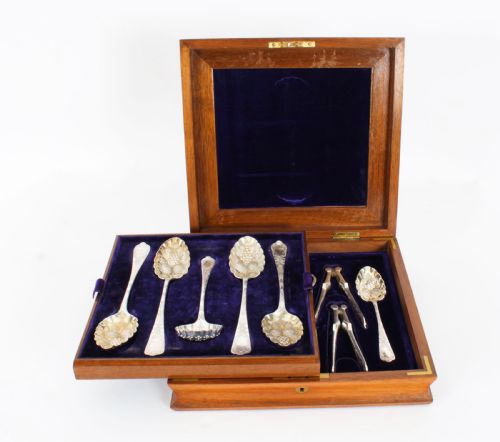

Silver Service Spoons
Silver service spoons are the heavy metal implements designed for the dining table, combining solid sterling silver construction with traditional forms.
Silver Service Spoons
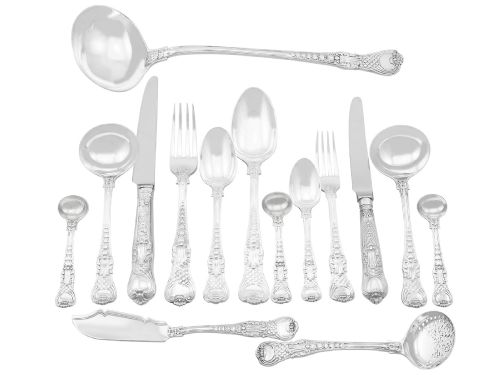
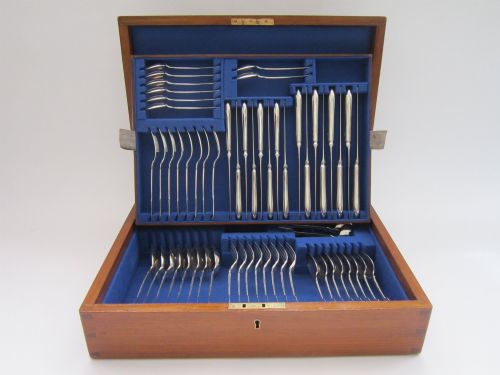
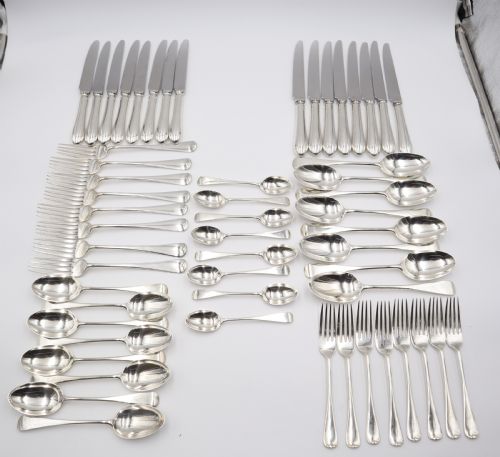
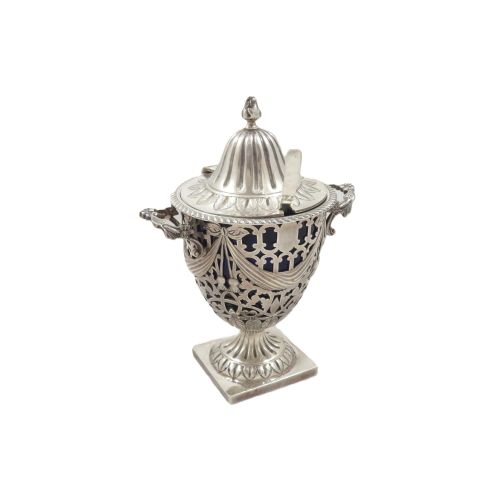
Silver service spoons represent the functional tableware used across the Georgian, Victorian, Edwardian, and later periods to portion food at the table. When searching for silver service spoons, buyers encounter a mix of individual serving implements, boxed canteens, and fitted cruet or fruit sets.
The pieces appearing on this page span the 18th, 19th, and 20th centuries, including traditional Fiddle pattern cutlery and specialised serving pieces like marrow scoops and sifter spoons. Victorian and Edwardian examples dominate the selection, alongside Art Deco flatware and Georgian items.
Materials and construction
The pieces listed utilise sterling silver and silver plate as the primary metal components, often combined with steel for cutting edges or internal mechanisms. Certain sets incorporate auxiliary materials such as wood, velvet, silk, and glass within fitted boxes, cruet frames, and coffee can holders.
Makers shaped these metals through traditional silversmithing techniques, creating durable tableware designed for regular dining use. Hallmarks stamped into the silver provide official records of the assay office, city, and year of production.
Silver Service Spoons Retail Price Guide 2026
Typical asking prices for silver service spoons among the pieces listed under this phrase on Sellingantiques today, from the lower quarter to the upper quarter. They describe what is for sale here now, not the wider market.
Listings feature sterling silver and silver plate across Victorian, Edwardian, and Art Deco styles.
Assessing quality and standard
Quality in these implements rests on the weight of the metal, the crispness of the chased or engraved decoration, and the integrity of the original form. Heavier gauges of sterling silver indicate superior manufacture compared to thinner plated alternatives.
The presence of matching fitted boxes, complete sets with associated pieces like sugar tongs or nutcrackers, and clear, legible hallmarks elevate the standing of a service set.
Tiffany·Bricks and Sons·Wilmot Manufacturing Co·Hukin and Heath
The Silver Service Spoons Glossary
- Sterling silver
- A silver alloy containing 92.5 percent pure silver and 7.5 percent other metals, usually copper, chosen for durability in tableware.
- Silver plate
- A base metal coated with a thin layer of silver, providing the appearance of solid silver at a different cost.
- Hallmark
- A series of official marks stamped onto precious metal items to guarantee the purity, maker, and year of assay.
- Fiddle pattern
- A traditional cutlery handle design featuring a distinctive narrow stem that broadens near the end into a flattened, fiddle-like shape.
- Marrow scoop
- A long, narrow silver implement with a small trough at each end, historically used for extracting marrow from bones.
Silver Service Spoons: Frequently Asked Questions
What are silver service spoons used for?
These spoons are designed to serve food at the dining table, handling portions from larger dishes or specific items like sugar and fruit.
They function as part of broader cutlery sets or as individual serving implements within traditional table settings.
How do I care for antique silver?
Antique silver requires gentle cleaning with appropriate silver polish and soft cloths to preserve the surface and any engraved details.
Storing pieces in lined boxes or dry environments helps prevent excessive tarnishing between uses.
What is a silver canteen?
A canteen is a fitted box or chest designed to hold a complete set of cutlery and serving spoons securely in designated slots.
These wooden or velvet-lined cases keep the silver organised and protected when not in use on the dining table.
How do I identify the date of silver?
Dates are determined by reading the hallmarks stamped into the metal, which include date letters corresponding to specific assay office records.
Additional clues come from the style of decoration, such as Victorian Rococo revival or Art Deco geometric lines.