


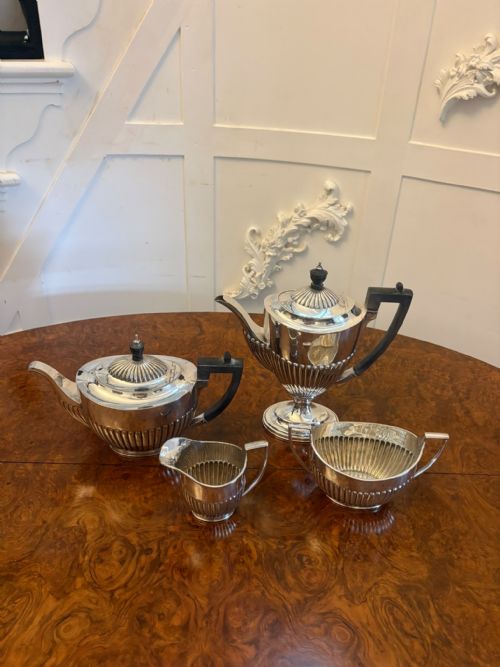


Silver Service Pot
A silver service pot brings traditional elegance to the table, offering lasting utility in sterling silver or silver plate.
Silver Service Pot
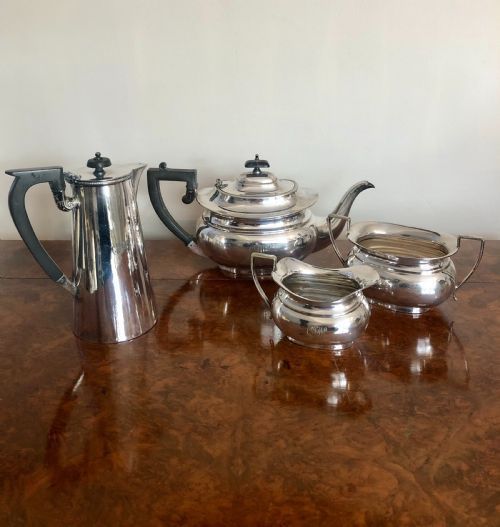
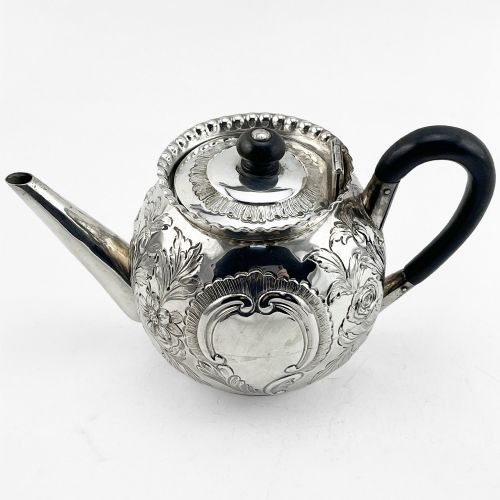
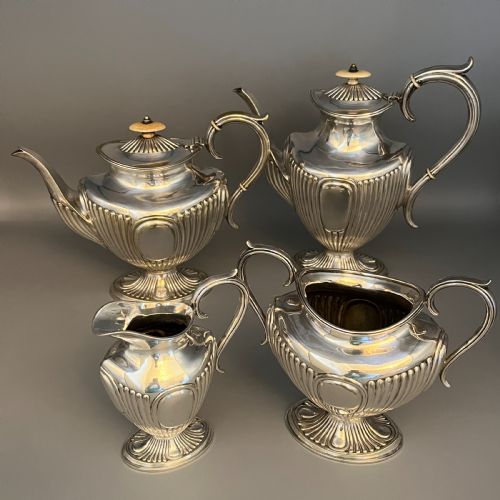
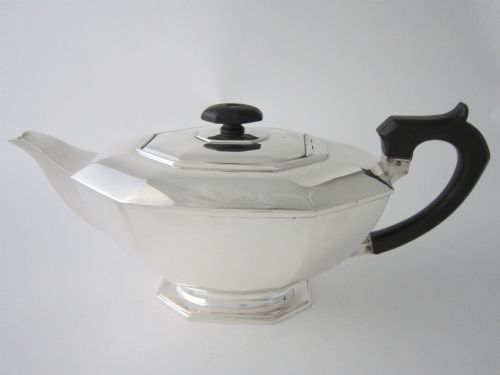
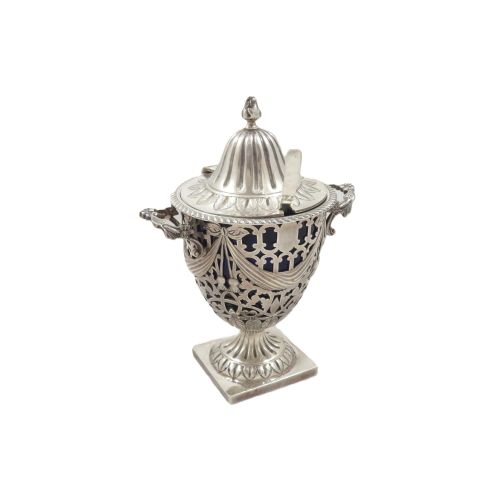
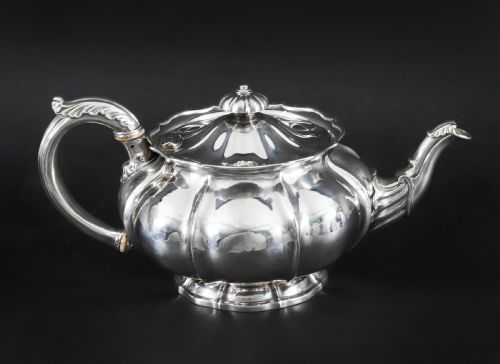
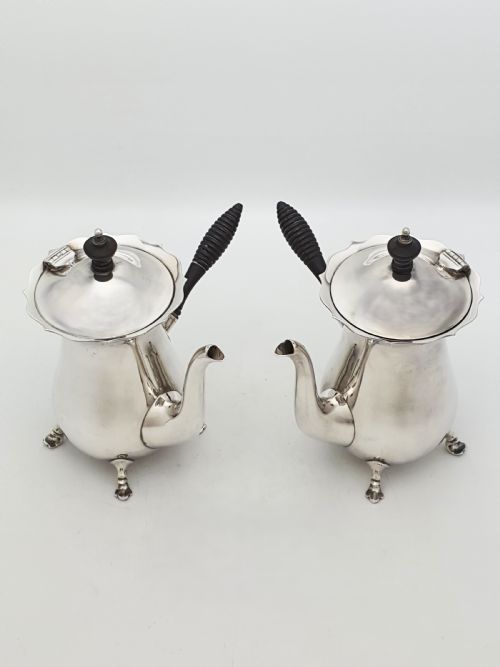
A silver service pot functions as a central vessel for pouring hot water, tea, coffee, or chocolate during formal dining and social gatherings. When you search for a silver service pot, you encounter various forms ranging from individual teapots and coffee pots to larger multi-piece tea and coffee sets, alongside related vessels like hot water pots and chocolate pots.
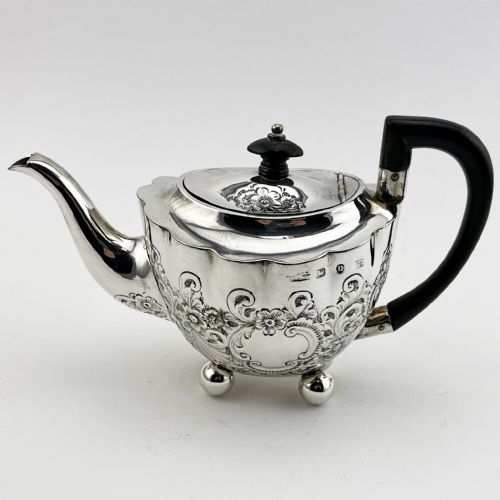
The pieces appearing on this page span several distinct eras, including the Georgian, Victorian, Edwardian, and Art Deco periods, with Edwardian and Victorian silver-plated or sterling silver examples appearing most frequently. These vessels often form part of matched sets comprising teapots, coffee pots, sugar bowls, and milk jugs, though standalone pots and cruet sets also emerge in the selection.
Materials and construction methods
Silversmiths constructed these pots primarily using sterling silver or silver plate over a base metal, frequently incorporating Sheffield plate techniques in earlier pieces. Handles and finials often utilise insulating materials such as wood, bone, ebonised wood, or ebony to protect the user's hand from heat during pouring.
Makers applied various decorative techniques, including neoclassical shaping, regency styling, and ornate Edwardian rococo revival motifs. Specialised components like cut glass bottles appear in associated cruet and condiment sets, while internal framing and hinges demonstrate precise metalworking skill.
Silver Service Pot Retail Price Guide 2026
Typical asking prices for silver service pot among the pieces listed under this phrase on Sellingantiques today, from the lower quarter to the upper quarter. They describe what is for sale here now, not the wider market.
Evaluating the standard of manufacture
Quality in a silver service pot depends upon the weight of the metal utilised and the crispness of the chased or embossed ornamentation. Substantial gauge silver or thick silver plate ensures structural integrity and durability through decades of daily use.
The precision of the handle attachment, the snugness of the lid fit, and the thermal insulation provided by bone or wooden insulators separate superior examples from standard production items. Maker signatures and clear hallmarks further distinguish pieces executed by accomplished workshops.
Paul Storr·Walker and Hall·Bricks and Sons·Harrison Brothers and Howson·Jonathan Douglas·Joseph Craddock·Wilmot Manufacturing Co
The Silver Service Pot Glossary
- Sterling silver
- An alloy consisting of pure silver and other metals, typically copper, meeting a designated standard of fineness. Items made from this material usually bear official assay office hallmarks.
- Silver plate
- A layer of silver applied to a base metal, such as copper or nickel brass, to give the appearance of solid silver. Old Sheffield plate represents an early form of this technique involving fused sheets.
- Cruet set
- A collection of small bottles or containers for condiments and seasonings, held within a metal frame or stand. These sets frequently match the style of contemporaneous tea and coffee services.
- Hallmark
- A series of official marks stamped on precious metal items in the United Kingdom, indicating the maker, assay office, purity, and year of manufacture.
Silver Service Pot: Frequently Asked Questions
What is a silver service pot used for?
These pots serve hot beverages such as tea, coffee, and chocolate during dining or social occasions. They hold and pour liquids while maintaining temperature at the table.
Individual pots often accompany matching cream jugs and sugar bowls to complete a formal beverage service.
How do I care for silver plate?
Clean silver plate gently using specialised silver polish and a soft cloth to remove tarnish without abrading the thin silver layer. Avoid harsh chemical dips that strip away the protective coating.
Store pieces in dry environments away from direct sunlight and humidity to minimise future oxidation.
How can I date my pot?
Inspect the vessel for official hallmarks, which include date letters corresponding to specific assay office records. Stylistic clues such as Art Deco geometric lines or Edwardian rococo revival curves also indicate the period.
Maker marks help narrow down the active production years of the workshop that created the piece.
What materials are used in handles?
Handles frequently incorporate organic or dark materials like ebony, bone, wood, or ebonised wood to prevent heat transfer from the hot liquid inside. These materials offer a secure grip while remaining cool to the touch.
Insulating spacers fitted near the joints further protect the user's hand during pouring.