

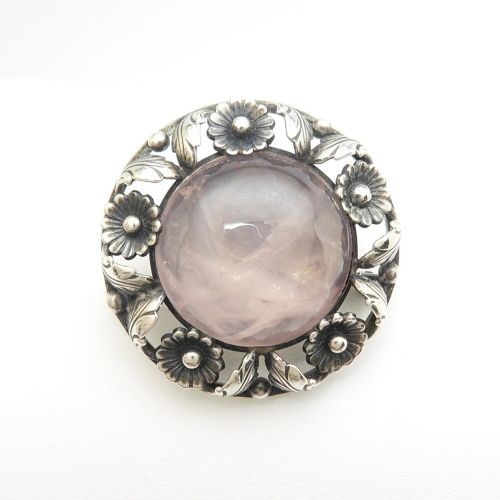


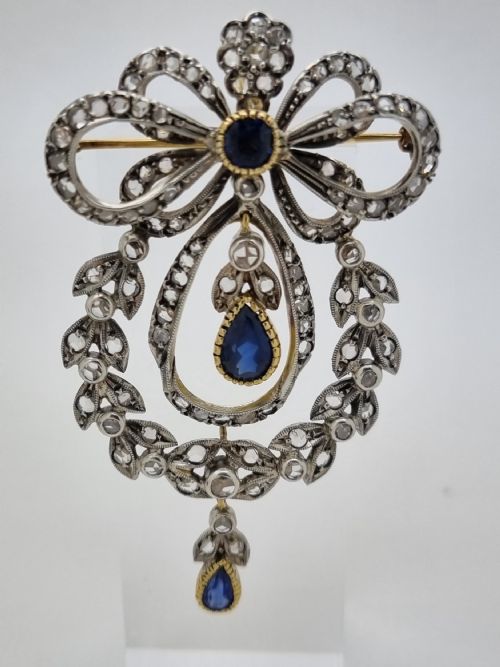


Silver Rose Brooch
These silver rose brooch pieces combine silver settings with diamonds and gold to give you a classic floral fastening.
Silver Rose Brooch
A silver rose brooch brings together floral and insect designs across the Victorian, Edwardian, and Georgian periods. You will regularly find pieces set with diamonds, rubies, sapphires, and pearls mounted in silver and gold.
The selection here includes starbursts, floral sprays, butterflies, flies, and bows. Many pieces function as both a pendant and a brooch, giving you versatile options to wear.
Most items on this page date from the nineteenth century and the early twentieth century. These include French Second Empire and Danish Sknvirke designs alongside traditional British pieces.
How they were made
Maker workshops combined silver with yellow gold, 15ct gold, and 18ct gold to mount the gemstones securely. Silver top mounts often sat over gold backing to catch the candlelight or daylight.
Goldsmiths set old cut diamonds, rose-cut diamonds, rubies, sapphires, and pearls into intricate floral and animal shapes. Labradorite and amethyst also appear as central feature stones in the antique examples.
Silver Rose Brooch Retail Price Guide 2026
Typical asking prices for silver rose brooch among the pieces listed under this phrase on Sellingantiques today, from the lower quarter to the upper quarter. They describe what is for sale here now, not the wider market.
Stones recorded in these items include diamonds, rubies, sapphires, pearls, amethysts, and labradorite.
What varies in quality
Quality rests in the delicacy of the metalwork and the uniformity of the diamond cuts. Early handmade mountings show individual hand-chased details on the leaves and petals.
The presence of precious gems alongside diamonds, such as rubies and sapphires, elevates the complexity of the piece. Convertible forms that shift between pendants and brooches demonstrate higher ingenuity in construction.
The Silver Rose Brooch Glossary
- Rose-cut diamond
- A gemstone cut with a flat base and a faceted dome resembling an unopened rosebud. This historic cut produces a soft, translucent shimmer rather than modern brilliant sparkle.
- Old cut diamond
- A hand-faceted diamond shape from the nineteenth century featuring a smaller table and larger culet. These stones were shaped individually by hand to fit specific settings.
- Convertible pendant brooch
- A dual-purpose piece featuring a hidden loop or detachable pin mechanism. This allows the item to switch between a breast ornament and a necklace pendant.
- Sknvirke
- A Scandinavian art style active during the early twentieth century. It focuses on natural motifs executed in silver.
Silver Rose Brooch: Frequently Asked Questions
How do I wear a convertible brooch?
These versatile jewels often feature a fold-down loop or a screw-in bale behind the pin mounting. You simply thread a chain through the loop to wear the piece as a pendant.
When you wish to wear it on a garment, you fold the bail down and secure the pin fastening safely through the fabric.
How do I care for antique silver settings?
Antique silver develops a natural darker patina over decades of handling, which many collectors prefer to keep intact. Avoid using harsh chemical dips that can damage softer gemstones like pearls or discolour the foil behind old stones.
Clean the piece gently with a dry microfibre cloth and store it away from moisture to protect the delicate gold and silver metals.
How can I tell a Victorian brooch from an Edwardian one?
Victorian pieces often display heavier floral spray or starburst designs with substantial silver and gold framing. They frequently utilise closed-back settings or broader old cut diamonds.
Edwardian items tend to feature lighter, airier platinum or silver work such as swallows and bows. These later pieces showcase refined millegrain edges around the diamonds.
What is a cape clip brooch?
A cape clip is a functional accessory designed to fasten heavy garments or shawls together across the chest. The Danish silver examples from the early twentieth century often combine this practical clasp with artistic silver metalwork.
They attach securely to thick wool or fabric without requiring a traditional long pin stem.