



Silver Rococo Wall Sconces
Silver rococo wall sconces bring sculptural light and movement to a room, cast and carved in curving asymmetrical forms.
Silver Rococo Wall Sconces
Silver rococo wall sconces combine the flowing, organic lines of the eighteenth-century revival with reflective metallic finishes and wall-mounted lighting. When you search for silver rococo wall sconces, you encounter pieces spanning the Victorian and Edwardian eras, through the early decades of the twentieth century, up to nineteen thirty. The selection centres on Italian and French designs, including Florentine and Louis XV styles, alongside English pieces.
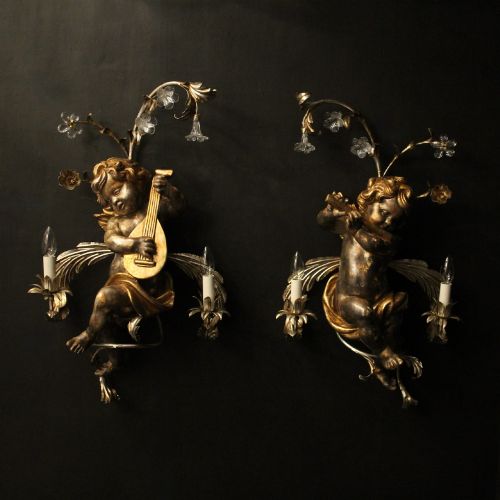
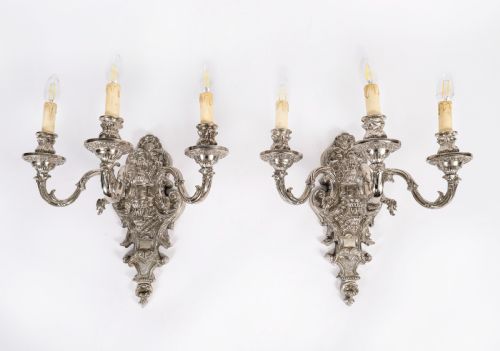
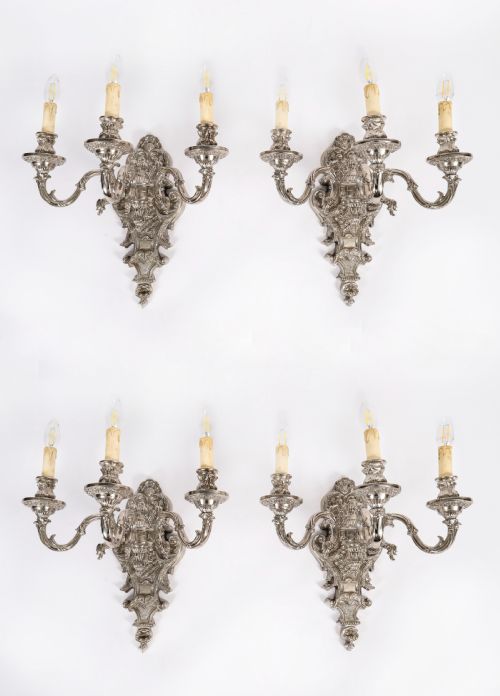
The forms on this page appear primarily as wall lights and wall sconces, featuring twin, triple, and four-arm configurations, as well as wall mirrors and appliques. Materials range from solid cast metal and brass to silver-plated and silver-gilded wood, gesso, and giltwood. Cherub motifs and grotto designs frequently appear among the ornamental details of these wall fixtures.
How they were made
The construction of these pieces relies on wood carvers, metalworkers, and gilders applying traditional techniques to shape complex, curving silhouettes. Artisans formed wooden cores from gesso and wood, finishing them with silver leaf, silver giltwood, or applied silver plate to create reflective surfaces. Cast metal and brass elements were shaped into scrolling arms and figurative motifs like cherubs.
Makers utilised glass components such as Murano elements alongside metal and wood to enhance the play of light. Surface treatments combined gilding and silvering over carved gesso or metal bases, producing the characteristic sheen associated with revival rococo lighting.
Listings span periods from the Victorian and Edwardian eras through nineteen thirty, incorporating materials such as silver leaf, gesso, giltwood, and Murano glass.
What varies in quality
Quality in these wall lights reveals itself in the depth and crispness of the carved or cast detail, particularly in intricate motifs such as cherubs, scrolling foliage, and asymmetric cartouches. Pieces showing finer hand-tooling in wood and gesso, or more substantial casting in metal, display sharper definition along the curving rococo contours.
The integrity of the finish also distinguishes examples, as the application of silver leaf, silver plating, or silver gilding ages differently depending on the underlying preparation of the wood or metal. Multi-arm configurations and paired sets demonstrate greater harmony when the matching components share consistent proportions and hand-finished details.
The Silver Rococo Wall Sconces Glossary
- Applique
- A wall-mounted light fitting designed to hold candles or electric bulbs against a panel or wall surface. These fixtures often feature decorative backplates and multiple scrolling arms.
- Gesso
- A plaster-like mixture applied to wood bases as a smooth foundation for gilding and silver leaf. This material allows artisans to carve intricate relief ornaments before applying metallic finishes.
- Giltwood
- Wood that has been coated with gold leaf or metallic powder over a prepared ground. In these listings, silver giltwood applies a silvered metal leaf to carved wooden forms.
- Rococo Revival
- A nineteenth and early twentieth century design movement that reinterprets the ornate, asymmetrical curves of the mid eighteenth century. It employs C-scrolls, shell motifs, and naturalistic asymmetry.
- Murano
- Glass manufactured on the Venetian island of Murano, known for traditional glassblowing expertise. Pieces incorporate these glass elements alongside carved wood and metal frames.
Silver Rococo Wall Sconces: Frequently Asked Questions
How do I clean silver plated wall sconces?
Dust the fixtures regularly with a soft, dry brush to prevent dirt accumulation in the carved recesses. Avoid harsh chemical polishes that can strip delicate silver plating or silver leaf finishes from the wood and metal bases.
For stubborn grime, use a damp cloth with mild soap, testing a small hidden area first. Gently dry the surface immediately with a clean microfiber cloth to protect the metal.
Are these wall sconces wired for electricity?
Many twentieth-century and late nineteenth-century wall lights have been adapted for electrical use over their lifetimes. Examining the backplate and arms reveals wiring channels or modern lamp holders fitted to original candle tubes.
Some examples retain candle-only configurations or require professional rewiring to meet current safety standards. Checking the internal components with an electrician ensures safe installation in a home.
What is the difference between French and Florentine styles?
French rococo designs, particularly those in the Louis XV style, emphasise delicate asymmetry, flowing C-scrolls, and refined gilt bronze or silver-plated surfaces. They tend to focus on light, rhythmic movement across the backplate and arms.
Florentine versions frequently utilise carved wood and gesso with silver giltwood finishes, incorporating rich textures and deep relief carving. These Italian pieces often display bolder floral or figural elements like cherubs.
How do I date a silver rococo wall sconce?
Dating relies on examining construction methods, materials, and the specific revival period indicated by the design. Pieces from the Victorian and Edwardian eras show different casting techniques and wear patterns compared to nineteen-thirties productions.
Backplates, screw types, and the composition of the underlying gesso or metal offer further clues. Comparing the stylistic markers to documented periods helps establish a reliable timeline.