



Silver Rimmed Pottery
Silver rimmed pottery combines durable earthenware or stoneware bodies with lustrous metal mounts to create striking vessels for the table.
Silver Rimmed Pottery
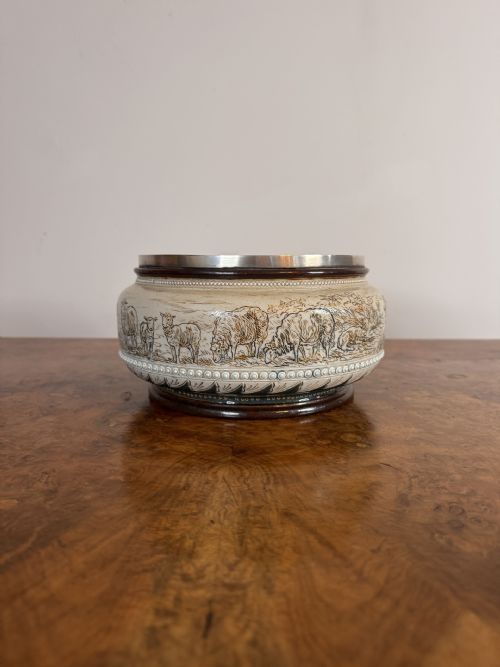
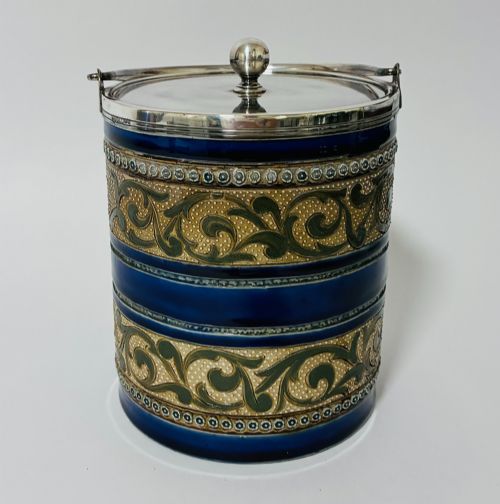
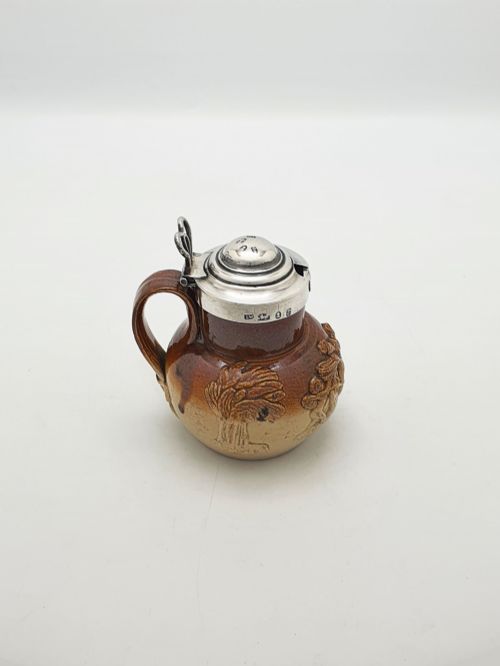
Silver rimmed pottery encompasses functional and decorative vessels produced primarily during the Victorian and Edwardian eras, uniting ceramic bodies with metal collars, mounts, and hinged lids. These pieces range from substantial biscuit barrels and salad bowls to individual beakers, mustard pots, and harvest jugs, often serving domestic dining needs.
The ceramic components draw upon established potteries such as Doulton Lambeth, Doulton Burslem, Royal Doulton, Wedgwood, Carlton Ware, and majolica production centres. Metal additions include sterling silver collars, silver plate, and hinged mounts that reinforce vulnerable rims while enhancing the overall decorative presence.
Buyers encountering this grouping will find forms spanning the late eighteenth century through to the early twentieth century, with a strong concentration of Victorian examples. Styles shift from Georgian neoclassical severity toward the rich textures of the Arts and Crafts movement and the flowing lines of Art Nouveau.
Materials and construction
The foundation of these objects relies on dense stoneware, porous earthenware, or refined ceramic bodies, often finished with salt glazes, majolica glazes, or smooth enamel surfaces. Potters threw or moulded these clays into vessels before applying specialised surface decoration, including incised decoration, applied harvest motifs, or contrasting coloured slips.
Metal mounts, collars, and hinged lids were fashioned separately from sterling silver or silver plate, then fitted securely to the ceramic rims. Silversmiths often worked in tandem with potteries or independent retailers to supply custom metalwork that protected the upper edges of utilitarian wares.
Silver Rimmed Pottery Retail Price Guide 2026
Typical asking prices for silver rimmed pottery among the pieces listed under this phrase on Sellingantiques today, from the lower quarter to the upper quarter. They describe what is for sale here now, not the wider market.
Listings feature stoneware, earthenware, and ceramic bodies combined with sterling silver and silver plate across Victorian and Arts and Crafts styles.
Distinctions in quality
The standard of a piece depends heavily on the integration between the ceramic body and the metal mount, where precise fit and secure attachment indicate skilled collaboration between potter and silversmith. Hand-executed surface decoration by named artists carries greater artistic weight than standard factory output.
The clarity of the ceramic glaze, the crispness of incised or moulded details, and the substantial weight of the silver or silver-plated collar separate standard domestic items from superior studio productions.
Hannah Barlow·Florence E. Barlow·Frank Butler·Doulton Lambeth·Wedgwood·Carlton Ware
The Silver Rimmed Pottery Glossary
- Stoneware
- A robust, vitrified ceramic fired at high temperatures until non-porous. It provides a durable ground for salt glazes and detailed incising.
- Tyg
- A large drinking vessel featuring multiple handles designed for communal passing. They frequently appear in nineteenth century stoneware productions.
- Biscuit barrel
- A covered container used for storing dry biscuits or crackers at the dining table. These vessels commonly receive protective metal rims and hinged lids.
- Majolica
- A colourful, lead-glazed earthenware style popular during the Victorian period. It utilises vibrant tinted glazes over moulded relief designs.
- Silver plate
- A layer of silver fused to a base metal substrate. It offered the visual appeal of solid silver for domestic wares at a lower cost.
Silver Rimmed Pottery: Frequently Asked Questions
What are biscuit barrels used for?
These covered containers held dry biscuits and baked goods on Victorian dining tables, keeping contents fresh beneath a fitted lid.
The metal collar and hinged lid protected the fragile ceramic rim from frequent handling and utensil impact during service.
How do I identify a Victorian piece?
Victorian examples often display characteristic dense stoneware bodies, salt glazes, or rich majolica colours combined with silver-plated or sterling collars.
Maker marks, registration numbers, and stylistic cues pointing to the Arts and Crafts movement help confirm this nineteenth-century production window.
Are silver mounts solid silver?
Mounts vary between solid sterling silver and silver plate, depending on the maker, the original cost, and the intended market.
Hallmarks stamped directly into the metal surface indicate solid sterling, whereas unmarked mounts frequently denote silver plating over a base metal.
How should I clean these items?
Careful dusting and gentle cleaning with a soft, dry cloth preserve both the ceramic glaze and the underlying metal surfaces.
Harsh chemical dips and abrasive polishes should be avoided to prevent stripping the silver plate or damaging vulnerable ceramic finishes.