

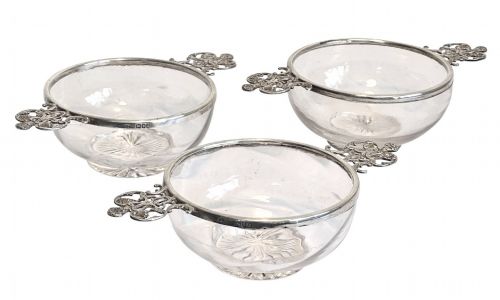
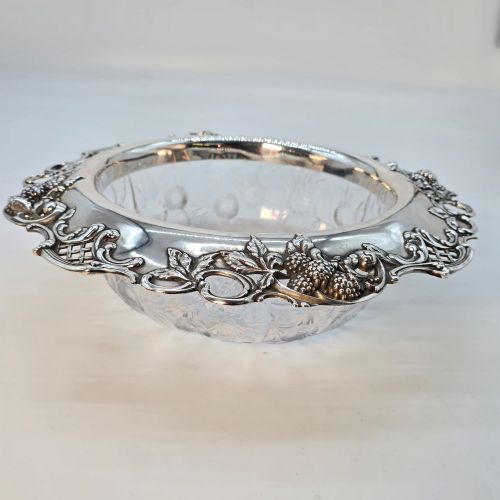

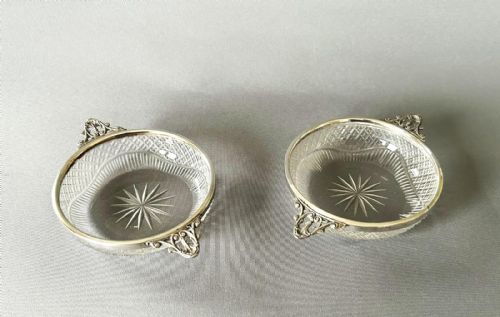


Silver Rim Glass Bowl
These silver rim glass bowl pieces combine brilliant cut crystal and coloured glass with sterling silver and plate, offering versatile table centrepieces and dressing table dishes.
Silver Rim Glass Bowl
When you search for a silver rim glass bowl, you encounter a diverse range of decorative tableware and dressing accessories dating from the Victorian and Edwardian eras through to the mid twentieth century. These vessels combine transparent or coloured glass bodies with securely mounted silver rims, collars, or pierced overlay mounts.
The selections span from large Edwardian table centrepieces and salad services down to small Victorian trinket dishes and salt cellars. Many examples feature cut crystal or green vaseline glass, whilst later twentieth century specimens introduce modernist forms and vibrant blue enamel details.
The primary forms on this page include decorative bowls, lidded containers, and matched pairs of table salts. Each piece demonstrates how makers combined heavy glass vessels with supportive silver mounts to create functional items for dining and the dressing table.
How they were made
The glass bodies are typically formed through heavy moulding or free blowing, followed by deep wheel cutting to create complex geometric patterns that catch the light. Coloured variants like vaseline glass incorporate specific mineral additives to achieve their characteristic luminous hue.
Silver mounts and rims are cast, spun, or formed from sheet sterling silver or silver plate, sometimes embellished with enamel or pierced Art Nouveau organic motifs. These metal collars are then secured to the glass rims using specialised adhesives or tight mechanical tension to ensure a flush, permanent fit.
Silver Rim Glass Bowl Retail Price Guide 2026
Typical asking prices for silver rim glass bowl among the pieces listed under this phrase on Sellingantiques today, from the lower quarter to the upper quarter. They describe what is for sale here now, not the wider market.
Listings feature sterling silver, silver plate, and crystal across Edwardian, Victorian, and Art Nouveau periods.
What varies in quality
The distinction between standard domestic wares and top tier items rests upon the weight and clarity of the glass, alongside the thickness of the silver mount. Heavy crystal with crisp, deep wheel cutting paired with substantial sterling silver rather than thin plate elevates a piece significantly.
Artistic execution also dictates quality, with pieces bearing distinct maker marks or complex decorative techniques like blue enamel and organic Art Nouveau metalwork standing apart from plain utilitarian vessels. The harmony of proportions between the glass body and the metal rim determines the overall visual balance.
Tiffany & Co.·William Comyns·WMF
The Silver Rim Glass Bowl Glossary
- Sterling silver
- An alloy consisting of 92.5 percent silver and 7.5 percent other metals, usually copper, used for the rims and mounts. This standard ensures durability whilst maintaining a bright metallic lustre.
- Vaseline glass
- A type of glass containing uranium dioxide that produces a distinct yellow or yellowish green colour. It exhibits a strong fluorescent glow under ultraviolet light.
- Cut glass
- Glassware shaped and patterned by holding it against rotating abrasive wheels. This technique produces sharp facets and deep decorative incisions across the vessel.
- Silver plate
- A base metal substrate coated with a thin layer of pure silver. This method offered an accessible alternative to solid sterling silver during the Victorian and Edwardian periods.
- Hallmark
- A series of official stamps applied to silver items indicating the maker, assay office, and year of manufacture. These marks provide definitive historical provenance for British pieces.
Silver Rim Glass Bowl: Frequently Asked Questions
How do I clean the silver rim?
Use a soft cloth and a dedicated silver polish, taking care to avoid getting abrasive creams onto the glass or enamel surfaces. Gentle application preserves both the metal shine and the security of the mount.
Keep polishing cloths away from any adhesive joins where the metal meets the glass. Regular light dusting prevents tarnish from accumulating in detailed decorative crevices.
How do I date an Edwardian bowl?
Examine any stamped hallmarks on the silver mount to find exact assay office symbols and date letters. Stylistic clues such as flowing organic floral motifs also point towards the Edwardian era.
Compare the weight and thickness of the glass against known period manufacturing standards. Edwardian pieces often balance ornate metal mounts with deep brilliant cut patterns.
What is vaseline glass?
Vaseline glass contains trace amounts of uranium dioxide that give the material a translucent yellow or greenish tint. It glows intensely under ultraviolet or black light.
Victorian and Edwardian makers frequently paired this striking glass with silver plated or sterling mounts. The combination creates a high contrast decorative effect popular in turn of the century interiors.