

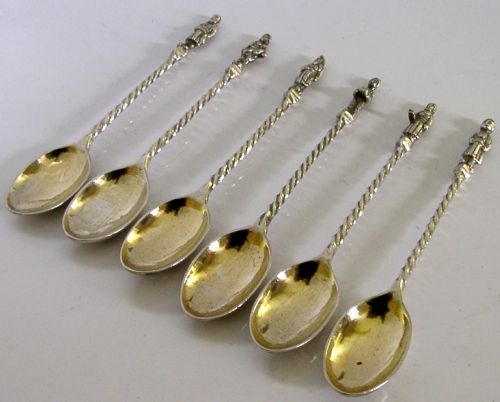
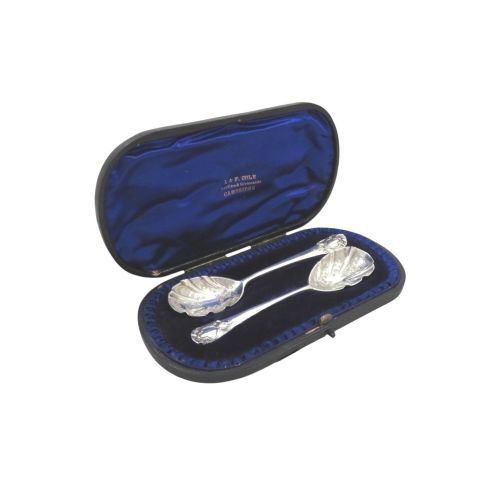


Silver Preserving Spoon
A silver preserving spoon is a specialist utensil designed for serving sticky fruits and jams, combining fine metalwork with practical utility.
Silver Preserving Spoon
A silver preserving spoon is a dedicated implement for serving fruit preserves, jams, and condiments at the dining table. The selection spans the Victorian and Edwardian eras, alongside pieces from the 1910s, 1920s, 1960s, and circa 1900.
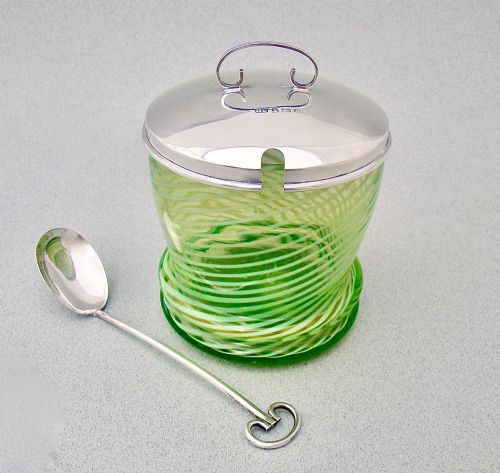
Most examples appear alongside fitted glass containers such as cranberry glass bowls, vaseline glass jars, and cut glass pots. Some occur as part of matched sets or combined with pickle forks and butter knives.
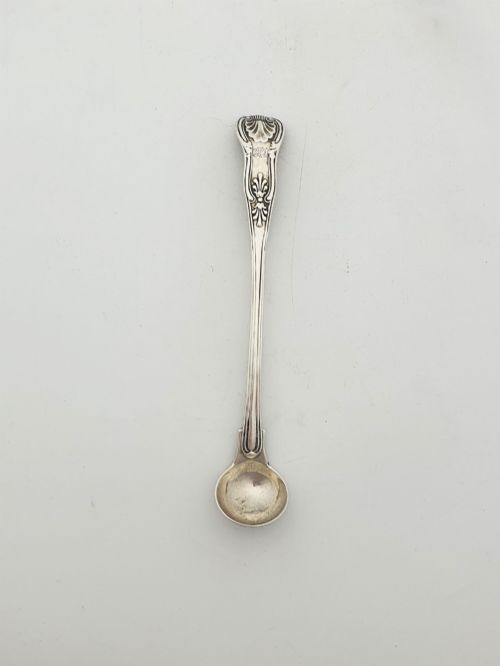
Forms include traditional Kings pattern and Palm pattern flatware, figural ottoman designs, and Arts and Crafts creations. Certain pieces feature pierced bowls or shell-shaped bowls intended to drain syrup from the fruit.
How they were made
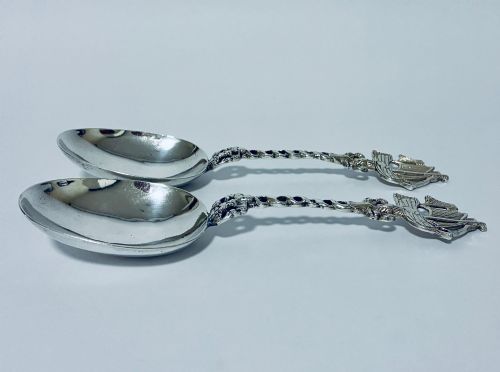
Makers utilised sterling silver, solid silver, and silver plate for the metal components, often shaping them into distinct patterns like Kings, Palm, and King Edward. Individual pieces incorporate specialist metalworking techniques such as piercing the bowl or casting figural handles.
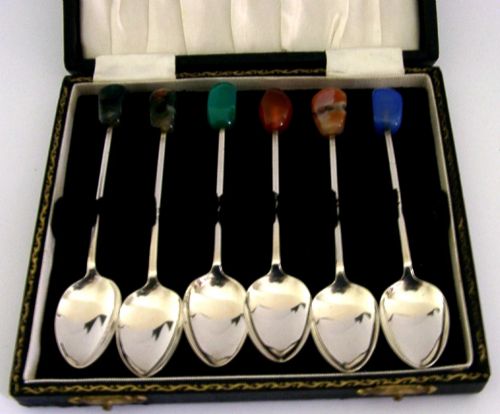
Glass elements in cranberry, vaseline, and cut varieties were blown or moulded to fit alongside the spoons, sometimes housed within velvet or silver mounts. Agate settings and presentation engravings further demonstrate the combination of silversmithing and lapidary skills.
Silver Preserving Spoon Retail Price Guide 2026
Typical asking prices for silver preserving spoon among the pieces listed under this phrase on Sellingantiques today, from the lower quarter to the upper quarter. They describe what is for sale here now, not the wider market.
Listings feature sterling silver, silver plate, cranberry glass, and vaseline glass across Victorian, Edwardian, and mid-century periods.
What varies in quality
The standard of a silver preserving spoon depends upon the weight of the metal utilised and the crispness of the pattern stamped or cast into the handle. Heavier solid silver pieces and documented maker attributions elevate the standing of an individual item.
The integration between the silver spoon and its accompanying vessel defines another tier of distinction. Examples featuring undamaged cranberry glass, vaseline glass, or cut glass containers with fitted mounts represent a higher level of execution than standalone spoons.
George Unite·Amy Sandheim·Whiting Co.
The Silver Preserving Spoon Glossary
- Sterling silver
- An alloy containing 92.5 percent silver by mass, widely utilised for durable domestic tableware.
- Cranberry glass
- A rich red glass coloured with gold chloride, frequently paired with silver preserve spoons in Victorian dining sets.
- Vaseline glass
- A yellowish-green glass containing uranium dioxide, popular for decorative preserve jars during the late nineteenth and early twentieth centuries.
- Kings pattern
- A traditional ornate flatware design featuring a shell motif and a central rib, common on nineteenth-century spoons.
- Pierced bowl
- A spoon bowl perforated with decorative cut-outs designed to allow syrup or liquid to drain away from fruit preserves.
Silver Preserving Spoon: Frequently Asked Questions
What is a silver preserving spoon used for?
A silver preserving spoon is designed specifically for serving fruit preserves, jams, and marmalades from a central pot to individual plates.
The shape of the bowl, often pierced or shell-formed, helps drain excess syrup as the fruit is lifted from the jar.
How do I clean an antique silver spoon?
Cleaning requires a soft cloth and a gentle silver polish formulated to remove tarnish without abrading the metal surface.
Harsh chemical dips should be avoided, particularly on pieces with fitted glass inserts or velvet components.
How can I tell a Victorian spoon from an Edwardian one?
Victorian spoons frequently display heavier ornamentation such as Kings pattern or intricate engraving associated with nineteenth-century dining customs.
Edwardian and later twentieth-century examples often lean towards simpler lines or distinct stylistic movements like Art Nouveau and Arts and Crafts.
Are these spoons safe to use with food?
Solid silver and sterling silver items are suitable for serving food items like jams and condiments during regular dining.
Care should be taken with older silver-plated items to ensure the underlying base metal is not exposed through worn plating.