


Silver Plated Preserve Pot
These silver plated preserve pot examples bring rich coloured glass and bright metal mounts to the table, offering a practical touch of period dining elegance.
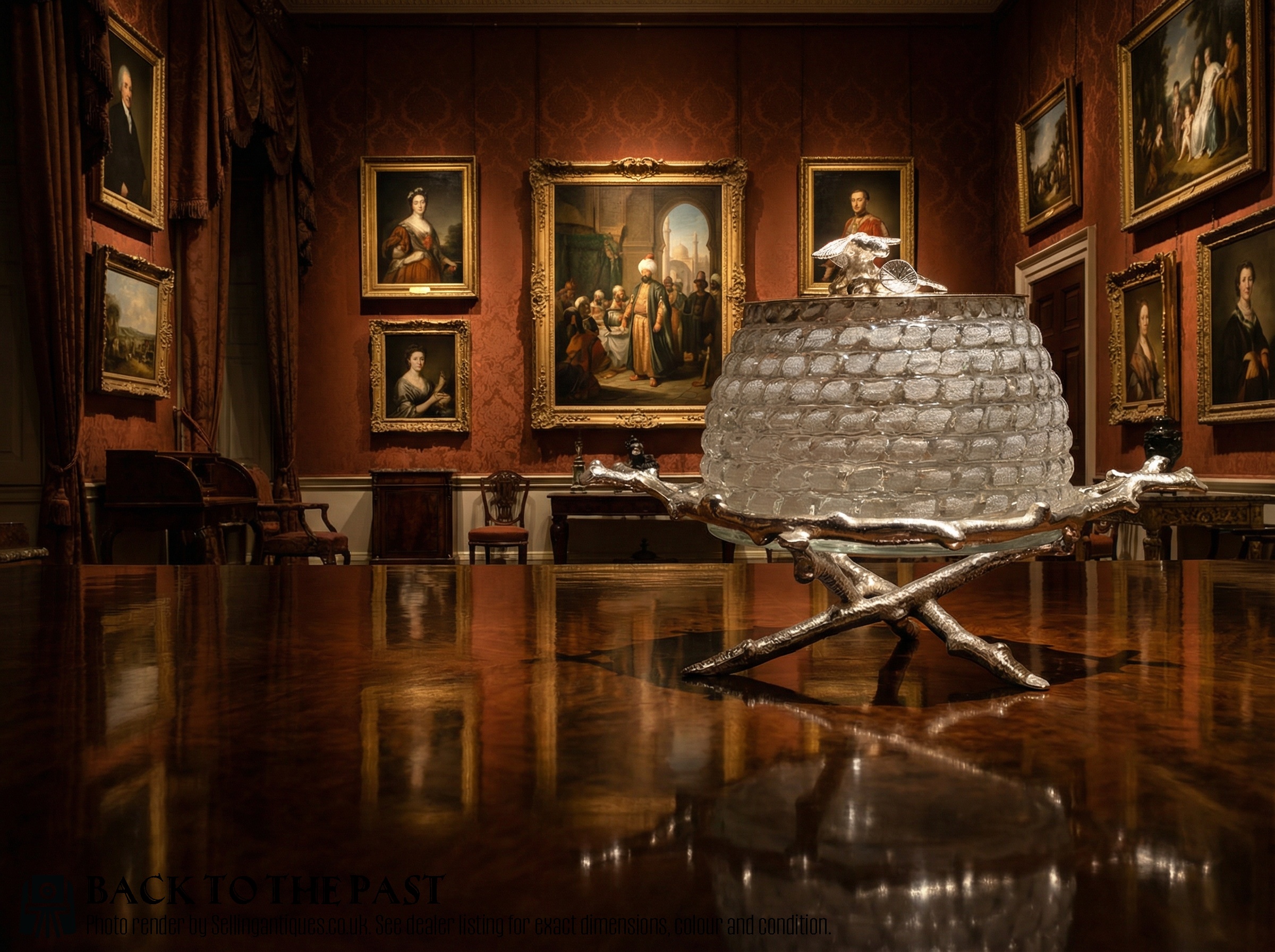
Silver Plated Preserve Pot
When you search for a silver plated preserve pot, you find table vessels designed to hold jam, marmalade or honey for the dining table. These pieces combine a glass liner with a metal stand, frame, or lid, often accompanied by a matching spoon.
The versions most commonly met on this page date from the late Victorian and Edwardian eras through to the Art Deco period. They span simple standalone dishes to elaborate condiment stands and biscuit barrels with silver-plated mounts.
The glass liners range from plain cut glass and frosted glass to striking cranberry glass and vaseline glass. These vibrant colours create a strong visual contrast against the polished silver plate of the stands and mounts.
How they were made
The metal components rely on silver plating over a base metal foundation, creating a bright reflective surface that mimics solid silver without the heavier cost. Stands frequently feature pierced metalwork or cast mounts that securely hold the removable glass vessels.
Glass liners were blown, moulded, or deeply cut to catch the light, with specialised glasshouses producing distinctive hues like cranberry and vaseline. Craftsmen fitted the glass precisely into the metal frames, often adding hinged lids and swing handles.
Materials paired with silver plate across these listings include standard clear glass, cut glass, frosted glass, vaseline glass, and cranberry glass.
What varies in quality
The standard of a silver plated preserve pot depends heavily on the crispness of the glass cutting and the depth of the colour in pieces like cranberry glass. Thicker, heavier glass liners and more substantial metal gauge weight indicate finer manufacture.
Finishing details separate standard domestic items from superior examples, particularly the intricacy of pierced metal patterns on the stands and the inclusion of original matching spoons. The harmony between the glass vessel and its metal mount defines the overall aesthetic success.
The Silver Plated Preserve Pot Glossary
- Silver Plate
- A base metal coated with a thin layer of silver through electroplating or older fusion methods. This technique allowed Victorian and Edwardian makers to produce affordable tableware with the bright appearance of solid silver.
- Cranberry Glass
- A rich red-pink glass coloured by the addition of gold chloride to the molten batch. It became exceptionally popular during the Victorian period for tableware and decorative vessels.
- Vaseline Glass
- A yellowish-green glass containing small amounts of uranium dioxide, which gives the material a distinct fluorescent glow under ultraviolet light. It appears frequently in decorative glass items from the late nineteenth and early twentieth centuries.
- Biscuit Barrel
- A covered container used for storing and serving dry biscuits or crackers at the tea table. These often mirror the form of preserve pots on this page by combining glass bodies with silver-plated mounts and lids.
- Pierced Work
- A decorative technique where metal is cut through or pierced to create openwork patterns such as lattices or scrollwork. Stands and mounts often utilise this method to lighten the visual weight of the silver plate.
Silver Plated Preserve Pot: Frequently Asked Questions
What is a silver plated preserve pot used for?
These vessels were originally placed on the dining or breakfast table to serve jams, marmalade, or honey cleanly and elegantly. The glass insert kept the sticky contents contained while the metal spoon served each portion.
Over time, many of these pieces transitioned into decorative table accessories. Today they function equally well holding small items or serving condiments during modern meals.
How do I date a silver plated preserve pot?
Dating relies heavily on the overall design style, such as the heavier ornamentation of late Victorian pieces or the geometric lines of Art Deco examples from around nineteen thirty. The materials can also offer clues, as cranberry glass liners are particularly characteristic of the nineteenth century and the Edwardian period.
Maker marks stamped onto the underside of the metal base sometimes provide exact registration numbers or manufacturer ciphers. Comparing the mounting style and glass form against dated examples helps narrow down the production era.
Can I use cranberry glass everyday?
Cranberry glass is durable enough for careful everyday use, provided it is treated with the respect due to antique glassware. Hand washing in warm soapy water keeps the glass bright and protects the silver-plated surfaces from harsh chemicals.
Avoid sudden temperature changes, such as pouring boiling water directly into a cold glass liner, to prevent thermal shock. Gentle handling ensures these vintage items remain intact for continued domestic service.
What is the difference between a jam dish and a honey jar?
Jam dishes typically consist of an open glass bowl resting in a silver-plated stand, paired with a small spoon for scooping. They are designed for easy access to thicker preserves during breakfast or afternoon tea.
Honey jars often feature a covered glass body with a notched lid designed to accommodate a specialised dipper or spoon handle. Both forms share similar silver-plated mountings but cater to the specific consistency of the preserve inside.