





Silver Plated Martini Shaker
A silver plated martini shaker brings period elegance to home mixing, spanning geometric Art Deco designs and clean Mid-Century Modern forms.
Silver Plated Martini Shaker
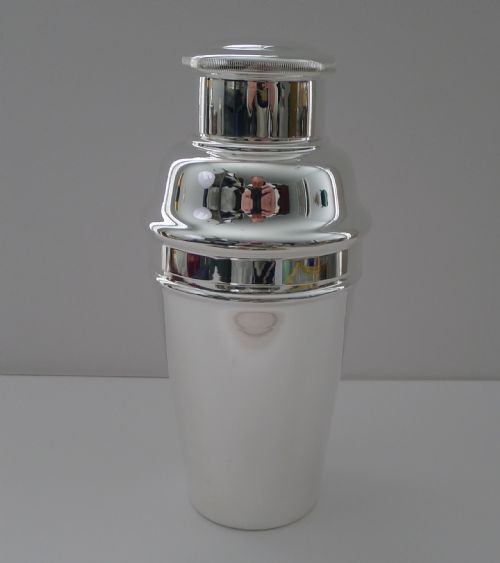
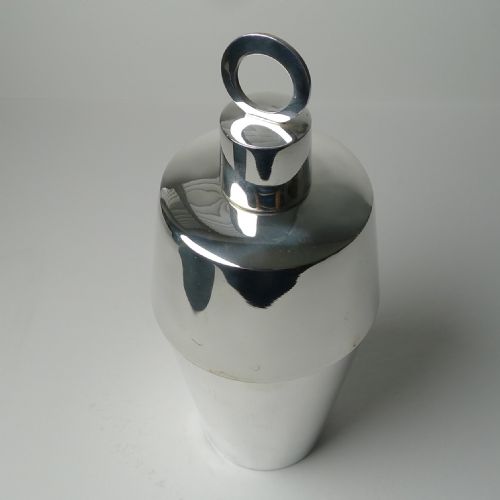
A silver plated martini shaker represents essential barware designed for mixing chilled drinks, originating primarily from the 1920s through to the 1960s. These pieces take the form of cocktail shakers and mixers, often adopting striking bottle shapes or streamlined silhouettes.
The version most frequently encountered on this page is the Art Deco design originating from English and French makers during the 1930s. Such examples frequently incorporate functional elements like integral lemon squeezers, reamers, rolling mixer recipes, or built-in ice breakers.
Originating across England, France, Germany, and Switzerland, these vessels combine practicality with distinctive period styling. Buyers encounter both plain polished surfaces and intricate engine turned or hammered finishes.
Materials and construction
Makers constructed these vessels using base metal, electroplated nickel silver, or standard silver plate, often stamped with designations like EPNS. Artisans applied thin layers of silver over durable base metals to achieve a brilliant metallic lustre without solid silver costs.
Detailed manufacturing techniques included engine turning to create precise geometric patterns across the body, alongside hand hammering for textured visual depth. Certain models integrate wood components or specialised internal mechanisms for squeezing citrus and breaking ice.
Materials documented across the inventory include silver plate, electroplated nickel silver, base metal, and wood.
Evaluating the range
Quality diverges between standard production pieces and those designed by notable silversmiths or produced by prominent firms. Objects bearing maker marks from established houses command attention for their heavier gauge metal and superior plating durability.
Refinement in mechanical utility also separates the grades, such as the precision fit of a removable lid or the clever integration of internal lemon reamers and recipe drums. The crispness of engine turned patterns and the integrity of the underlying base metal further distinguish finer examples.
J. B. Chatterley & Sons·Asprey·Christofle·William Suckling·Adie Brothers·Maison Barra·William Hutton·Mappin & Webb·St. Medard·Kingsway Silver Plate·Lutz & Weiss
The Silver Plated Martini Shaker Glossary
- EPNS
- Electroplated Nickel Silver. This acronym denotes a base metal of nickel, copper, and zinc coated with a layer of silver.
- Engine turned
- A mechanical decoration technique producing intricate geometric patterns engraved into metal surfaces. This precise ornamentation characterises many French and English pieces.
- Base metal
- The underlying alloy beneath the silver plating, typically consisting of brass, copper, or nickel-based compounds. It provides structural strength to the vessel.
- Integral lemon squeezer
- A built-in citrus reamer fitted into the top section of the shaker. It allows users to juice fruit directly into the mixing chamber.
Silver Plated Martini Shaker: Frequently Asked Questions
How do I clean a silver plated cocktail shaker?
Wash the interior gently with warm soapy water and a soft cloth, avoiding abrasive pads that might strip the plating. Dry thoroughly immediately after cleaning to prevent water spots.
Use a specialised silver polish sparingly on the exterior if tarnish appears. Protect any wooden elements or mechanical parts from excess moisture during the cleaning process.
Are these vintage shakers still usable for mixing drinks?
Many examples remain entirely functional for preparing cocktails provided the internal seals and fits remain secure. Testing the lid fit with cold water helps confirm whether the vessel holds liquid properly.
Keep in mind that vintage plating benefits from gentle handling and hand washing rather than automated dishwashers. Regular use simply adds to the long history of these functional barware pieces.
How can I tell an Art Deco shaker apart from later styles?
Art Deco pieces from the 1920s and 1930s rely on geometric symmetry, stepped motifs, and precise engine turned textures. They often incorporate clever built-in accessories like rolling recipe rings or lemon squeezers.
Later Mid-Century designs from the 1950s and 1960s favour clean, unadorned silhouettes and smoother, minimalist contours. Maker attributions and stylistic markers help narrow down the decade of production.