



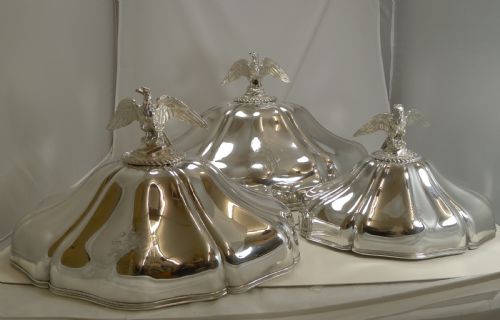


Silver Plated Dome Covers
Silver plated dome covers are substantial serving pieces that keep grand roasts and cheeses warm at the table.
Silver Plated Dome Covers
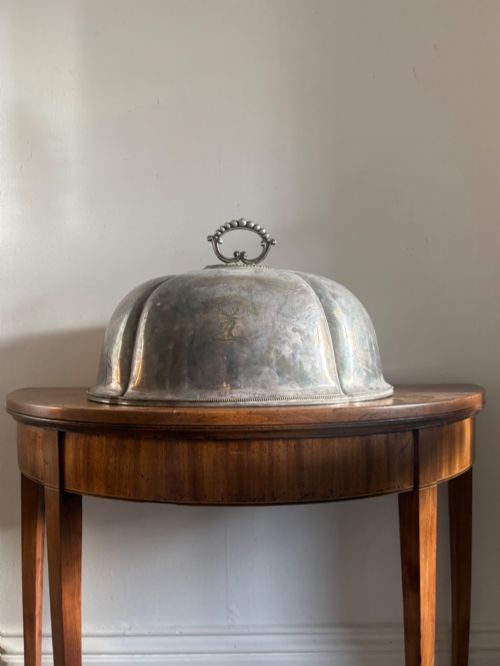
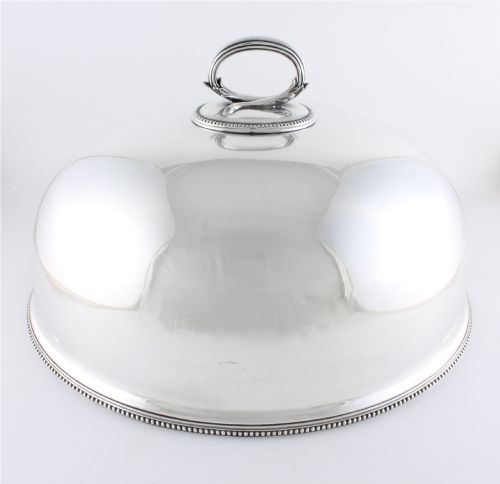
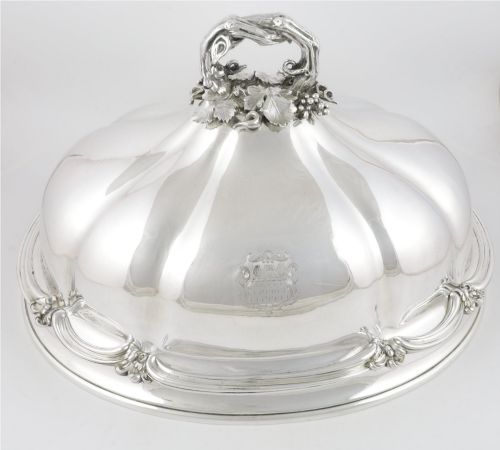
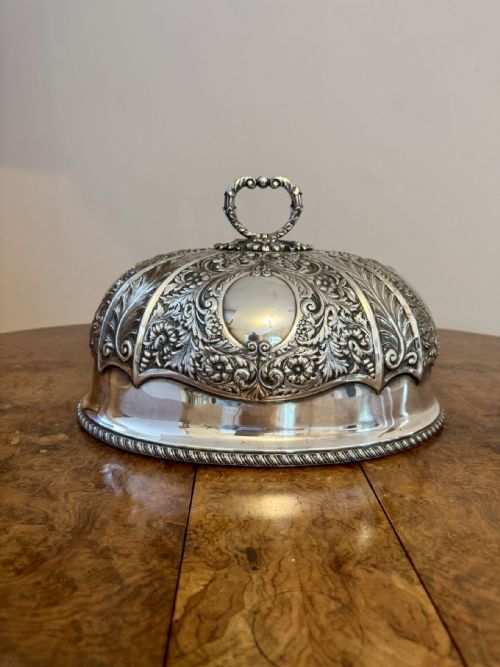
When you search for silver plated dome covers, you find heavy serveware designed to protect large joints of meat, game, and cheese on the dining table. These pieces take the form of meat domes, meat covers, cloches, and dish covers, often paired with matching entree dishes or platters.
You are most likely to meet Victorian and Edwardian examples on this page, alongside earlier Georgian and Regency pieces. The selection includes individual items as well as graduated sets and pairs spanning from the nineteenth century into the early twentieth century.
The assortment reaches back through the 1850s and 1830s to earlier Old Sheffield Plate methods, capturing forms that originated for formal domestic hospitality. Makers and workshops from Britain and continental Europe shaped these metal and glass covers to serve elite dining rooms.
How they were made
Makers formed these items using copper, base metal, and electroplated nickel silver, alongside traditional Old Sheffield Plate techniques. Artisans fused silver to copper sheets before shaping the metal into curved domes.
Later pieces utilise electroplating, abbreviated as EPNS, depositing a layer of silver over a base metal core. Some specialised cheese dishes also incorporate clear glass bases beneath the metal covers.
Silver Plated Dome Covers Retail Price Guide 2026
Typical asking prices for silver plated dome covers among the pieces listed under this phrase on Sellingantiques today, from the lower quarter to the upper quarter. They describe what is for sale here now, not the wider market.
A Duke once had his dinner guarded by a Boulton dome.
What varies in quality
The weight of the metal and the crispness of applied handles or crests distinguish the heavier domestic pieces from lighter production. Substantial gauge copper and thick silver plating endure decades of polishing better than thinner alternatives.
Proportion and decorative detail separate standard serving vessels from distinguished sets. Pieces bearing maker marks or heraldic engraving demonstrate greater attention during manufacture.
Roberts Cadman·Henry Wilkinson·Boulton·WMF·Durand
The Silver Plated Dome Covers Glossary
- Old Sheffield Plate
- An early method of fusing a thin sheet of silver to a thicker copper core before shaping. This technique creates a distinct warm tone as the underlying copper occasionally shows through high points.
- EPNS
- Electroplated nickel silver, a common base metal composition introduced in the nineteenth century. Manufacturers used an electrical current to bond a silver coating to a nickel brass alloy.
- Cloche
- A bell shaped cover traditionally used to trap heat over individual plates or serving dishes. The term derives from the French word for bell.
- Entree dish
- A shallow serving vessel accompanied by a fitted cover for presenting courses between the main joints. These often appear in matched pairs on dining tables.
- Base metal
- The underlying alloy beneath the silver coating, usually comprising copper, nickel, or brass. Over time, heavy use reveals this core where the outer silver layer wears thin.
Silver Plated Dome Covers: Frequently Asked Questions
What were silver plated dome covers used for?
These large domes kept roasted meats, game, and specialty cheeses warm while being brought from the kitchen to the dining table. They trapped heat and protected food from drafts in large country houses.
Hosts used them during formal dinners to preserve the temperature and presentation of the main courses before carving began in front of guests.
How do I clean silver plated domes?
Clean these pieces with a mild silver polish and a soft cloth to avoid removing the delicate plating. Avoid abrasive pads that scratch the underlying metal surface.
Wash them in warm soapy water and dry them thoroughly immediately after use to prevent tarnishing and moisture spots.
How do I date an old dome cover?
Examine the manufacturing technique, such as whether the piece uses Old Sheffield Plate or later electroplating methods. Marked maker stamps and registration numbers also help pinpoint the production era.
Stylistic cues like Regency handles or Art Nouveau decorative motifs provide further clues to the decade of manufacture.
Can I use them for everyday dining?
These covers function well for serving warm dishes during dinner parties or family meals. Their robust metal construction handles regular placement on dining tables.
Care must be taken with antique plating during washing and storage to preserve the original finish over years of use.