


Silver Plated Caster
A silver plated caster brings gleaming silver plate and cut glass to the dining table for dispensing sugar and condiments.
Silver Plated Caster
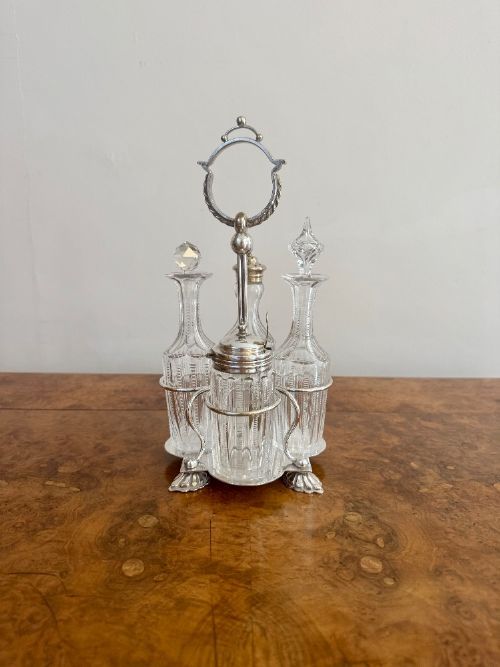
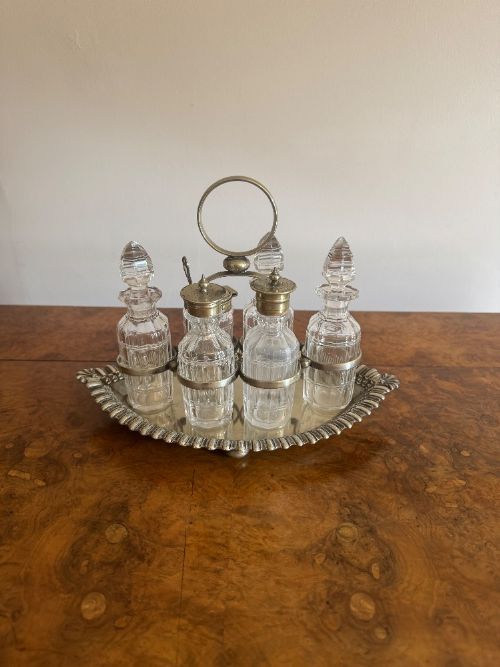
A silver plated caster is a table accessory designed for shaking sugar or condiments over food, appearing frequently in forms such as individual shakers, larger sugar casters, and multi-bottle cruet sets. These pieces range from compact bachelor sets to grand seven-bottle and eight-piece frames holding glass bottles.
The selections span several eras, with Edwardian and Victorian pieces dominating alongside Georgian styles, Art Deco examples, and 1930s designs. Buyers encounter everything from simple stands to elaborate novelties shaped like farmyard scenes or butlers' trays.
How they were made
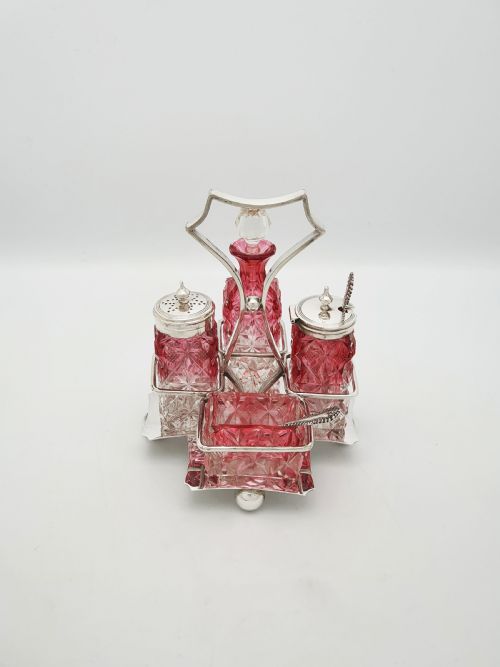
Maker workshops produced these items using silver plate and electroplated nickel silver over base metal foundations, frequently incorporating cut glass, cranberry glass, and gilt highlights. Glass bodies were deeply cut or flashed to catch the light, while metal stands and mounts received durable silver plating.
Craftsmen also integrated oak frames and figural castings for novelty pieces, combining metals and glass securely to withstand regular dining use.
What varies in quality
Quality rests upon the crispness of the casting work, particularly in novelty designs such as farmyard or equestrian figures, and the depth of the cut glass. Substantial metal weight and intact silver plating without thinning distinguish superior examples from simpler production.
The complexity of the set also dictates standing, where multi-bottle cruet frames with matching, undamaged glass bottles represent higher tiers of craftsmanship than single basic shakers.
Mappin Brothers·Walker & Hall·Wade Wingfield Wilkins·Mappin & Webb·William Batt & Sons
The Silver Plated Caster Glossary
- Cruet set
- A matched collection of condiment bottles or casters held together in a metal stand or frame. These sets typically contained bottles for oil, vinegar, mustard, pepper, and sugar.
- Sugar caster
- A tall container with a perforated dome top used for sprinkling castor sugar over desserts or pastries. They appear in both standalone shaker forms and as part of larger dining services.
- Electroplated nickel silver
- A base metal alloy of copper, nickel, and zinc coated with a thin layer of pure silver through electrolysis. This technique became the standard method for producing affordable silver-plated wares from the mid-nineteenth century onward.
- Cranberry glass
- A rich red-pink glass created by adding gold chloride to the molten glass batch. It appears frequently in Victorian and Edwardian tablewares.
- Novelty cruet
- A condiment set or caster formed into a whimsical figurative shape, such as a farmyard animal, a hunting scene, or a butler's tray. These items combine playful design with functional dining utility.
Silver Plated Caster: Frequently Asked Questions
How do I clean a silver plated caster?
Use a soft cloth with a mild silver polish specifically formulated for silver plate to remove tarnish gently.
Avoid abrasive materials that can wear away the thin silver layer over the base metal.
Can I use these for daily dining?
Many people use antique condiment sets and casters on their dining tables for serving sugar and seasonings.
Hand wash the glass inserts and wipe the metal frames carefully after use to preserve the finish.
How do I identify an Edwardian set?
Edwardian pieces generally date from the period between 1901 and 1910, reflecting lighter and more refined proportions than heavier Victorian designs.
Look for hallmarks, registration numbers, and stylistic cues like neoclassical revival motifs.
What is a bachelor cruet set?
A bachelor set is a smaller, compact version of a standard cruet set designed for one person or small households.
These typically feature fewer bottles and take up less space on the dining table.