


Silver Plated Carving Set
A silver plated carving set brings heft and period presence to the dining table, pairing durable steel blades with tactile handles.
Silver Plated Carving Set
A silver plated carving set comprises matched implements designed for joint meat preparation at the dining table, combining sharp cutting edges with decorative metal mounts. These utensils emerge across the nineteenth and twentieth centuries, reflecting the changing social rituals of formal dining across the Victorian and Edwardian eras. Buyers searching this phrase encounter substantial serving cutlery equipped for everyday service or ceremonial presentation.
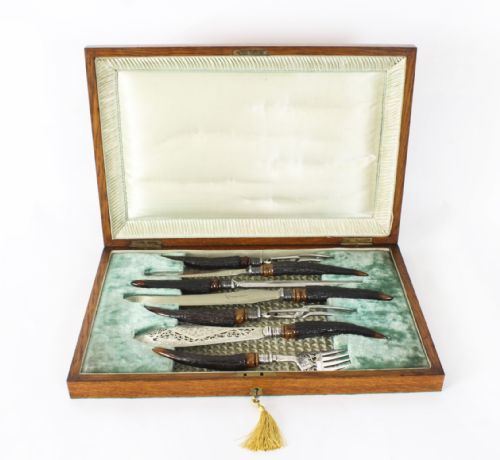
The material profile bridges sturdy utility with ornamental display, featuring robust steel components housed alongside silver plating. Examples span from the late nineteenth century into the early decades of the twentieth century, aligning with Victorian and Edwardian domestic habits. Such pieces frequently survive inside fitted presentation cases, preserving the original relationship between knife, fork and sharpener.
How they were made
The construction relies on bonding silver to a base metal core, creating the appearance of solid precious metal while maintaining structural rigidity. Steel forms the functional cutting edges and tines, chosen for its capacity to hold a working edge during service.
Handles incorporate organic and timber materials such as stag antler, mother of pearl and burr walnut, secured to the metal tangs with pins. These elements demand careful shaping and fitting by hand to ensure a balanced weight and a secure grip for the user.
Listings span the nineteenth and twentieth centuries, incorporating Victorian, Edwardian and later periods alongside silver plate, steel, antler and mother of pearl.
What varies in quality
Quality depends upon the thickness of the silver deposit over the base metal and the preservation of the underlying steel edge. Superior sets demonstrate tight joints between the handle and the bolster, avoiding looseness caused by repeated use and washing.
The choice of handle material dictates the tier of the piece, with select carved antler and iridescent mother of pearl marking out finer presentation versions. Complete sets retaining their original fitted boxes reflect higher manufacturing investment than loose, unmatched implements.
Elkington and Co
The Silver Plated Carving Set Glossary
- Silver plate
- A thin layer of silver applied over a base metal core such as copper or nickel silver. This technique offered the visual appeal of solid silver at a lower cost for domestic dining wares.
- Stag antler
- The shed horn of a deer utilised for knife and fork handles. It provides a textured, durable surface with a natural grip.
- Mother of pearl
- The iridescent internal layer of certain mollusc shells used for decorative handle scales. This material brings a luminous quality to nineteenth-century cutlery.
- Tang
- The continuation of the metal blade or fork extending into the handle. A robust tang ensures the implement remains rigid during heavy use.
Silver Plated Carving Set: Frequently Asked Questions
How do I date a silver plated carving set?
Dating relies on stylistic markers within the handle design, the shape of the blade, and any accompanying hallmarks or manufacturer stamps. Victorian examples often display naturalistic antler or ornate engraving, while later Edwardian versions favour simpler geometries.
Examining the construction of the bolster and the typography of any maker marks helps narrow the decade of production. Surviving fitted presentation boxes can also provide clues regarding the original retail period.
Are these sets suitable for modern use?
Many sets remain robust enough for occasional carving duties at seasonal feasts and formal dinners. The steel blades retain functional utility when properly maintained and sharpened by hand.
Hand washing is essential to protect organic handle materials like mother of pearl and stag antler from moisture damage. Avoiding the dishwasher preserves both the silver plating and the structural integrity of the handle joints.
What materials are used for the handles?
Handles incorporate organic substances including stag antler and mother of pearl, alongside timber varieties like burr walnut. These materials were chosen for both tactile comfort and visual distinction.
Natural horn offers a textured grip suited to carving meat, while iridescent shell marks higher-tier dining implements. Each material ages differently, acquiring a subtle patina over decades of handling.
Why do some sets include a sharpener?
A steel sharpener accompanied carving knives to maintain an effective cutting edge between uses. Carving roasted joints required regular steeling to keep the blade performing correctly at the table.
Including the matching sharpener ensured the host could prepare meat smoothly in front of guests. Complete combinations with sharpening steels indicate a higher level of original service provision.