


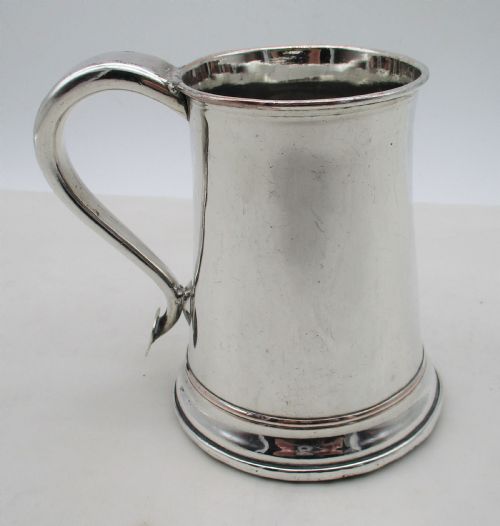


Silver Plated Beaker
These silver plated beaker selections bring tactile weight and historic barware charm to a modern table, offering centuries of drinking vessel heritage.
Silver Plated Beaker
A silver plated beaker is a drinking vessel designed for barware use, spanning forms like tankards, mugs, stirrup cups, and cocktail sets. When you search for this phrase, you encounter drinking vessels originating from the eighteenth, nineteenth, and early twentieth centuries.
The pieces you meet most often on this page include Victorian and Georgian examples, alongside Art Deco cocktail beaker sets and collapsible travel versions. These items function as practical barware or display pieces with distinct historic utility.
Makers and periods range from early nineteenth century Old Sheffield Plate child's tankards to French Art Deco cocktail shaker and beaker sets. Each piece reflects the drinking habits and metalworking techniques of its specific era.
How they were made
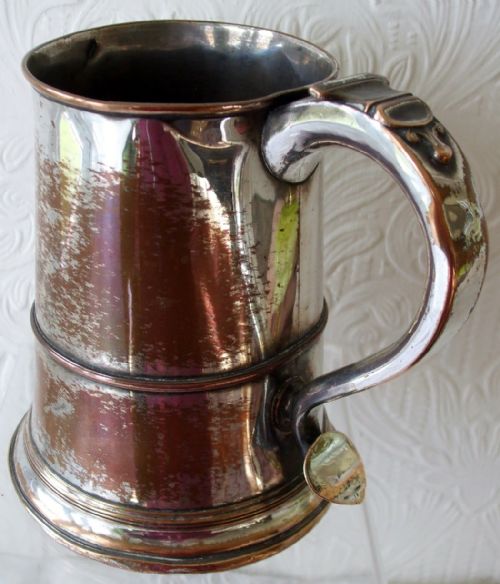
Many early pieces utilise Old Sheffield Plate, a technique fusing a layer of silver onto a copper base, visible along cut edges and wear spots. Later nineteenth-century items employ electrotyping and standard silver plating over white metal or copper bases.
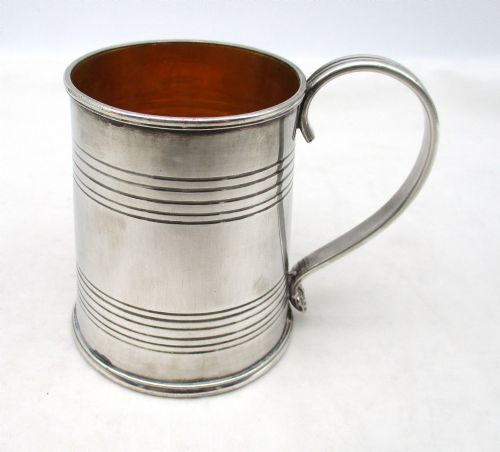
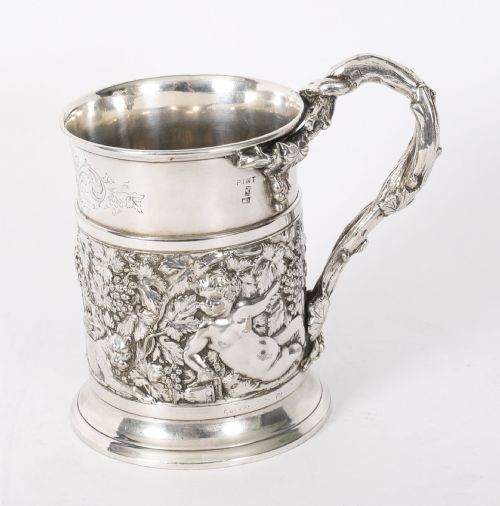
Decoration involves hand engraving, embossing, and relief bands depicting game birds, alongside leather coverings on campaign spirit flasks and gold gilt interiors. Construction methods range from heavy cast handles on pint tankards to thin collapsible metal sections for travel.
Materials across these listings include silver plate, Old Sheffield Plate, copper, leather, and gold gilt across Georgian and Art Deco periods.
What varies in quality
Quality separates through the integrity of the base metal method, such as the distinction between fused Old Sheffield Plate and later electroplate. The crispness of hand-engraved or embossed relief details on game bird bands and heraldic motifs also dictates standard.
Survival of original interior gold gilt surfaces and fitted leather cases alters the desirability of a piece. Maker attributions, from workshops like those of Henry Bourne or G R Collis, add distinct manufacturing pedigree.
G R Collis·Henry Bourne·Maison Barra·Briggs
The Silver Plated Beaker Glossary
- Old Sheffield Plate
- A method of fusing a thin sheet of silver to a thick copper ingot before rolling them into sheets. This technique predates nineteenth-century electroplating and shows copper peeking through at high-wear edges.
- Electrotype
- A replica or vessel created by depositing silver through an electrolytic process onto a mould. This nineteenth-century method allowed for deep, highly detailed relief work such as figural scenes.
- Stirrup cup
- A ceremonial drinking vessel offered to mounted riders before a hunt. These often feature rounded or conical bottoms so they cannot be set down until emptied.
- Campaign spirit flask
- A portable drinking set designed for travel by officers or explorers. These sets typically include nesting beakers and leather-covered containers.
- Gold gilt
- A thin layer of gold applied to the interior of a silver or silver-plated vessel. This protected the metal from acidic contents like wine.
Silver Plated Beaker: Frequently Asked Questions
What is Old Sheffield Plate?
Old Sheffield Plate is an early composite material made by fusing silver and copper together under heat. This predates modern electroplating.
Items made this way show a subtle line of copper beneath the silver layer, particularly around rims and high friction points.
How do I clean a silver plated beaker?
Cleaning requires a soft cloth and a gentle silver polish formulated for plated items. Avoid harsh abrasives that wear through the thin silver layer.
Wash by hand in warm soapy water and dry immediately to preserve the historic finish and any interior gold gilt.
Were collapsible beakers used for travel?
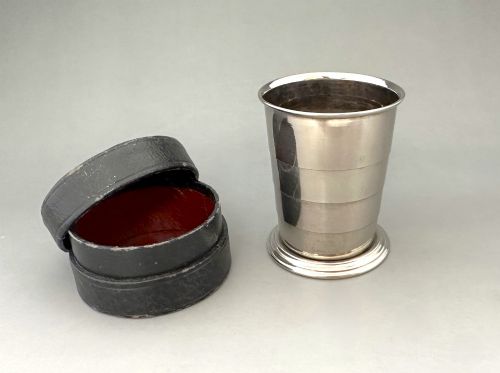
Collapsible beakers served Victorian travellers, hunters, and military officers on campaign. Their nesting or telescoping segments saved space in waistcoats and picnic hampers.
Many survive alongside their original leather cases designed to protect the thin metal walls during transit.
How do I date a silver plated beaker?
Dating relies on manufacturing techniques, styles such as Georgian, Victorian, or Art Deco, and maker marks. Old Sheffield Plate points toward the eighteenth or early nineteenth century.
Electroplated items and specific aesthetic movements like Art Deco indicate later nineteenth and twentieth-century production.