



Silver Plate Rack
These pieces of silver plate rack range from practical breakfast toast holders to grand bottle stands and umbrella storage.
Silver Plate Rack
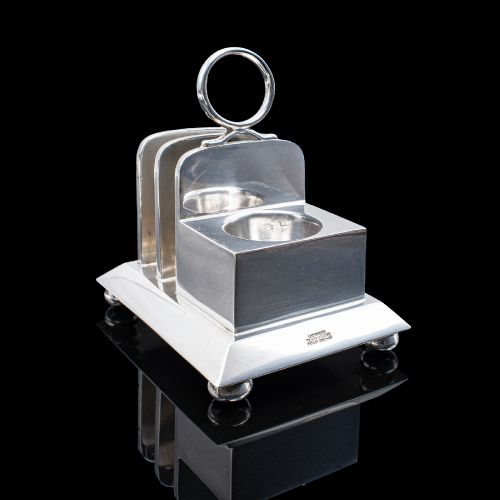
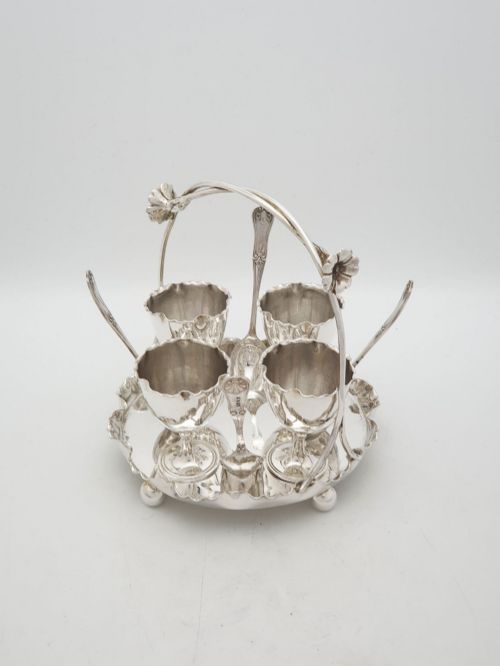
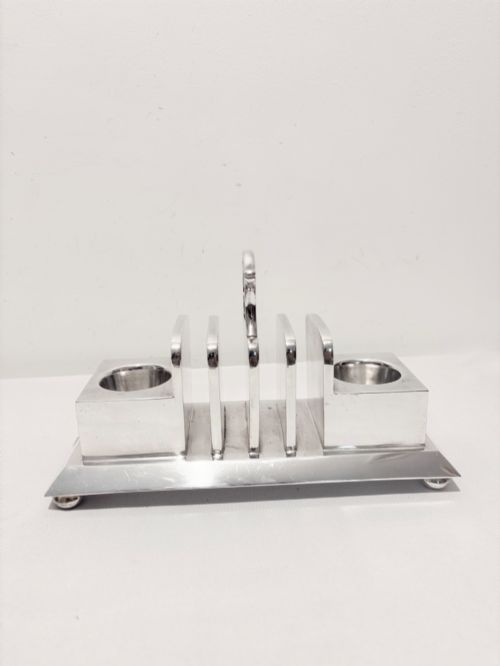
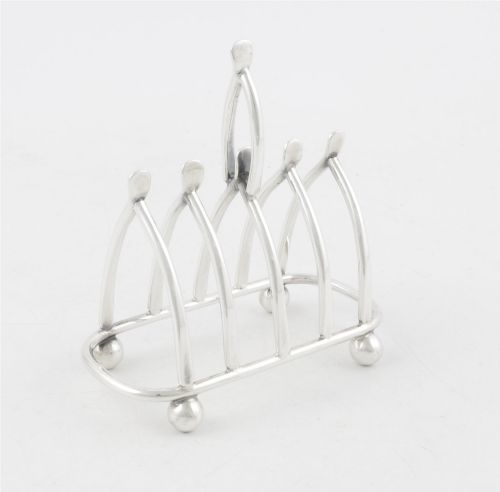
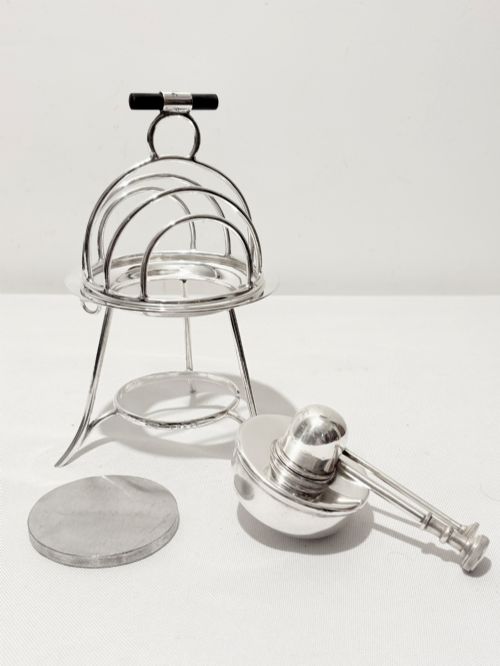
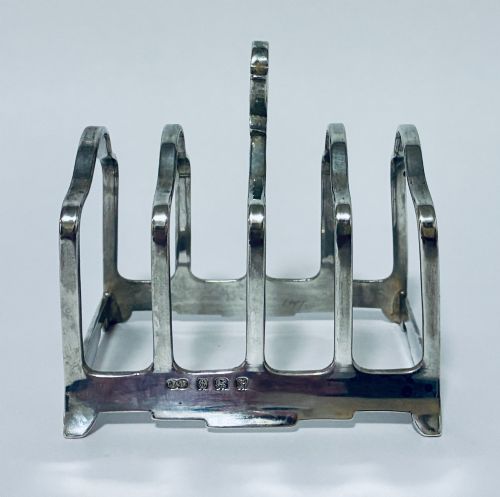
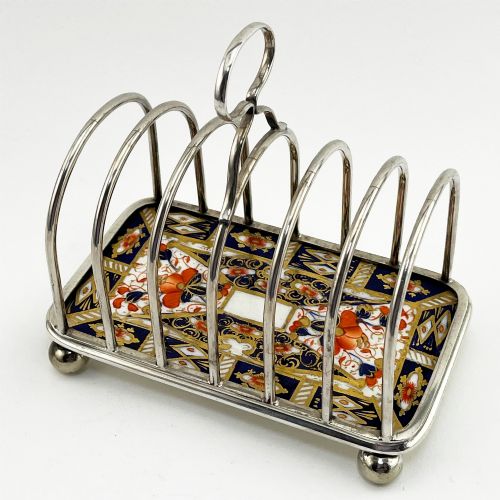
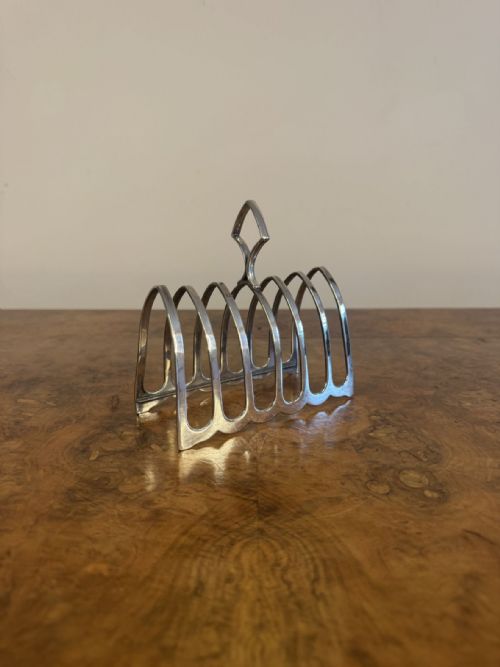
A silver plate rack groups domestic utensils and serving items, most frequently encountered as toast racks designed with vertical divisions for breakfast tables. Beyond breakfast wares, the category encompasses bottle stands, umbrella stands, and hat racks finished in gleaming metal.
The selection spans from Georgian and Victorian pieces through Edwardian examples to Art Deco designs, reflecting changing dining and hallway habits. Toast racks dominate the offerings, appearing alongside multi-bottle cruet sets, decanter frames, and asparagus dishes.
Makers utilised various forms such as trefoil designs, extending frames, and novelty caravan shapes to add character to functional items. Each object serves a specific domestic purpose, whether holding condiments at the dining table or organising coats in the hallway.
Materials and construction
Metalworking techniques of the nineteenth and early twentieth centuries relied on silver plate, electroplated nickel silver, and standard nickel silver over base metals. Workshops combined these plated surfaces with contrasting materials like oak, cut glass, and Davenport china to build sturdy frames and dishes.
Plating methods evolved to apply thin layers of silver efficiently onto base metals, creating durable items for everyday household use. Artisans incorporated embossed details, central shields, and distinct divisions soldered or bolted securely to the main body.
Silver Plate Rack Retail Price Guide 2026
Typical asking prices for silver plate rack among the pieces listed under this phrase on Sellingantiques today, from the lower quarter to the upper quarter. They describe what is for sale here now, not the wider market.
Distinctions in craftsmanship
The standard of a piece depends heavily on the precision of the metalwork, the weight of the plating, and the crispness of any embossed decoration. Better examples display balanced proportions in their vertical divisions and secure joints that withstand daily handling.
Makers who invested time in refined finishes and sturdy handles produced objects that retain their structural integrity and surface lustre over generations. Simpler utilitarian items show more straightforward construction without the decorative flourishes found on luxury tableware.
Elkington·Walker and Hall·Hukin and Heath·Mappin and Webb
The Silver Plate Rack Glossary
- Electroplated nickel silver
- A base metal alloy of copper, nickel, and zinc coated with a thin layer of pure silver through an electrical process. This technique became widespread in the nineteenth century for producing affordable tableware.
- Cruet set
- A matched group of bottles, cruets, or jars mounted in a metal frame for holding condiments at the dining table. They frequently include receptacles for oil, vinegar, mustard, and pepper.
- Tantalus
- A locking wooden or metal frame that holds decanters securely while allowing their contents to remain visible. The locking mechanism prevented servants from sampling the spirits.
- Mazarine
- A decorative ceramic or metal draining plate placed inside a larger dish to keep food elevated above its juices. They appear often in serving sets for asparagus or fish.
- Demi-lune
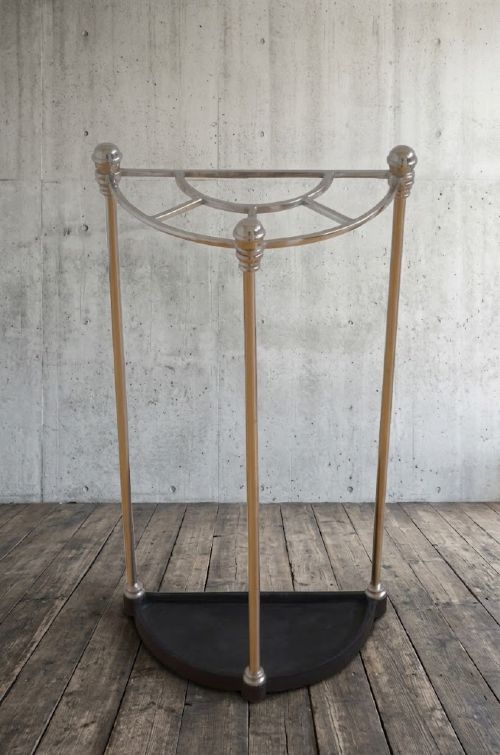
- A half-moon shape utilised in the design of furniture and umbrella stands to fit neatly against flat walls. This profile saves floor space in narrow hallways.
Silver Plate Rack: Frequently Asked Questions
What is a silver plate rack used for?
These racks hold toast upright on the breakfast table to keep the slices crisp and prevent them from becoming soggy. Other variations serve as stands for bottles, decanters, or umbrellas.
Each form was tailored to a specific room, from the dining table to the hallway entrance.
How do I clean a silver plate rack?
Use a soft cloth and a gentle silver polish specifically formulated for plated items to remove tarnish. Avoid abrasive pads or harsh chemical dips that can wear away the thin silver layer.
Regular, light wiping preserves the bright finish without damaging the underlying metal.
How do I identify Victorian pieces?
Victorian examples often feature heavier ornamentation, embossed botanical motifs, and traditional forms like the trefoil toast rack. Makers' marks and registration numbers stamped into the metal provide further clues.
Stylistic cues such as Aesthetic Movement influences also point toward the nineteenth century.
Are these items suitable for daily use?
Sturdy construction makes many of these pieces robust enough for contemporary dining and entertaining. Toast racks and bottle holders function just as well today as they did a century ago.
Careful hand washing ensures they remain in good condition through regular use.