

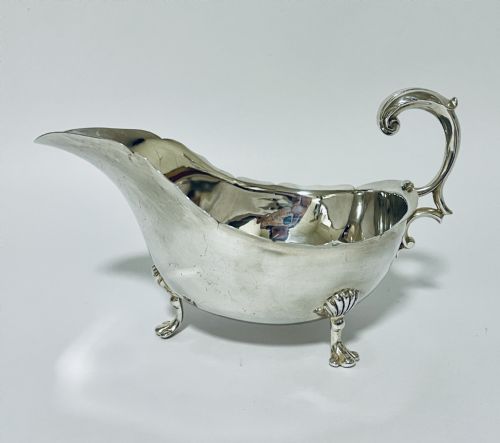


Silver Plate Gravy Boat
A silver plate gravy boat brings proper ceremony to the Sunday joint, holding sauces and gravies in style.
Silver Plate Gravy Boat
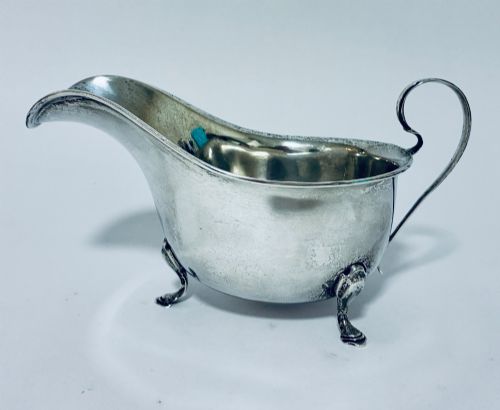
A silver plate gravy boat is a table vessel designed specifically for serving warm gravies, sauces and pan juices. When you search for a silver plate gravy boat, you are looking at hollowware spanning from the eighteenth century through to the mid-twentieth century.
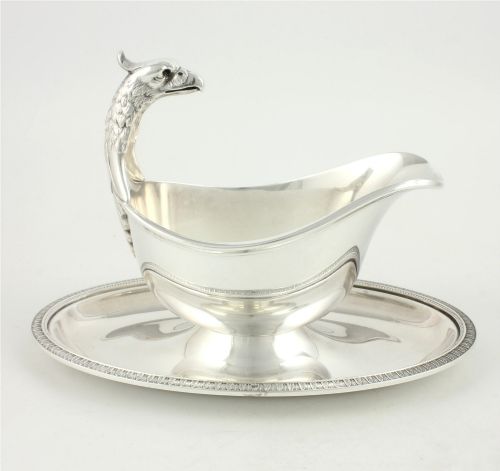
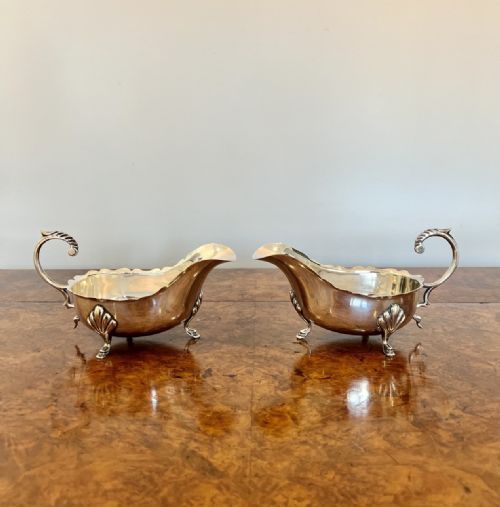
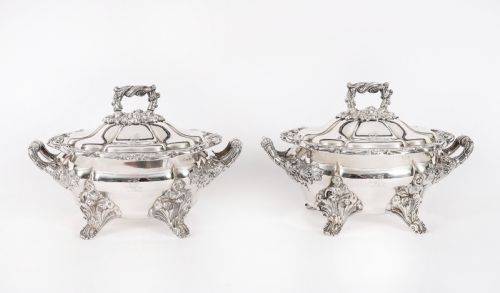
The pieces on this page encompass simple single sauce boats, matched pairs, lidded sauce tureens and heated argylls. You will encounter forms that range from plain Georgian and Regency iterations to ornate Edwardian vessels and French saucieres.
Makers utilised various silhouettes, occasionally placing the boat upon an integrated stand or pairing it with a matching spoon warmer. The selection covers diverse periods including the Victorian era, the Edwardian years and the nineteen-fifties.
Materials and construction
These vessels rely on a base metal core of copper, metal or electroplated nickel silver, which is then plated with a layer of silver. Older pieces utilise Old Sheffield Plate or Sheffield Plate techniques, fusing silver to a copper substrate.
Makers shaped the metal through hammering, casting and soldering, applying handles and decorative borders separately. Certain pieces incorporate cane wrapped around the handle for heat insulation, while others feature double walls designed to hold hot water and keep the gravy warm.
Silver Plate Gravy Boat Retail Price Guide 2026
Typical asking prices for silver plate gravy boat among the pieces listed under this phrase on Sellingantiques today, from the lower quarter to the upper quarter. They describe what is for sale here now, not the wider market.
Listings feature items from the eighteenth century to the mid-twentieth century, spanning Georgian, Victorian and Edwardian periods.
Assessing quality and craftsmanship
Quality rests in the weight of the metal and the crispness of the chased or engraved detail. Heavier pieces show thicker base metal and deeper silver application, whereas lesser items feel thin in the hand.
The integrity of the plating layer defines the standard of the piece, with better examples retaining their silver coat smoothly across handles and feet. The subtlety of the applied borders and the balance of the handle separation also distinguish superior workshop production.
Padley Parkin And Staniforth·Christofle Gallia
The Silver Plate Gravy Boat Glossary
- Old Sheffield Plate
- An early fusing technique where a sheet of silver is fused to a copper ingot before rolling. This method leaves a characteristic thin line of copper visible on cut edges.
- Electroplated Nickel Silver
- A modern plating process introduced in the nineteenth century where silver is electrically bonded to a nickel alloy base. This method replaced older fusing techniques for many commercial workshops.
- Argyll
- A heated gravy pot featuring an internal central cylinder or jacket filled with hot water. This design kept sauces warm during long meals before the advent of modern kitchen appliances.
- Sauciere
- A French term for a sauce boat, often seen in continental silver plate production. These vessels typically sit on fixed or separate matching stands.
- Hollowware
- A collective term for tableware items such as pots, tureens, kettles and gravy boats. It distinguishes vessels that hold contents from flatware such as plates and trays.
Silver Plate Gravy Boat: Frequently Asked Questions
How do I clean a silver plate gravy boat?
Wash the vessel gently in warm, soapy water using a soft cloth, avoiding harsh abrasive pads that might strip the thin silver layer. Dry thoroughly with a lint-free cloth to prevent water spots.
Apply a dedicated silver polish sparingly only when necessary, working with the grain of the metal. Rinse well and buff softly to maintain the natural sheen.
Can I use an antique gravy boat for dinner?
These vessels are entirely suited for serving hot sauces and gravies at the dining table. Ensure you pour gently and avoid using metal ladles that could scratch the interior plating.
Do not put antique silver plate into an automatic dishwasher. Hand washing preserves both the structural joints and the historical plating.
What is an argyll gravy warmer?
An argyll is a specialised pot designed with a central chamber meant to hold boiling water. This internal heat source prevents the gravy from cooling or separating during long meals.
Fill the internal cylinder with hot water just before serving your sauce. Pour the gravy into the outer compartment to maintain its temperature throughout the meal.
How do I tell Old Sheffield Plate from later electroplate?
Old Sheffield Plate pieces often reveal a subtle line of copper showing where the base metal meets the edge. This handmade fused technique produces a warm, deep glow distinct from later methods.
Electroplated nickel silver usually presents a uniform white metal appearance beneath any worn spots. These later pieces typically date from the Victorian period onward.