



Silver Plate Glass Server
A silver plate glass server brings sparkle to the table, combining polished metalwork with clear or coloured vessels.
Silver Plate Glass Server
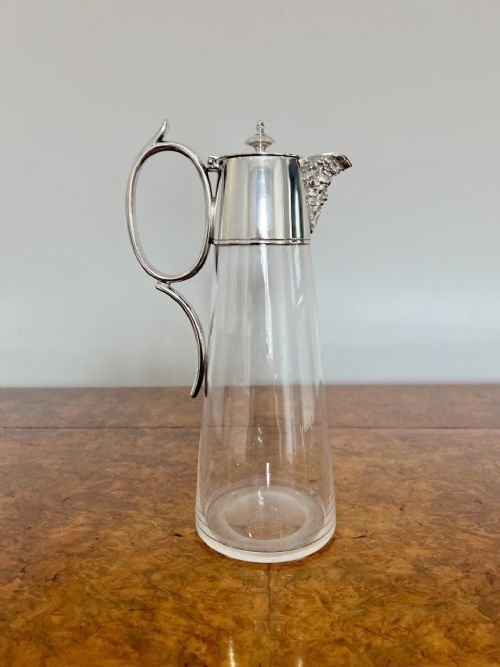
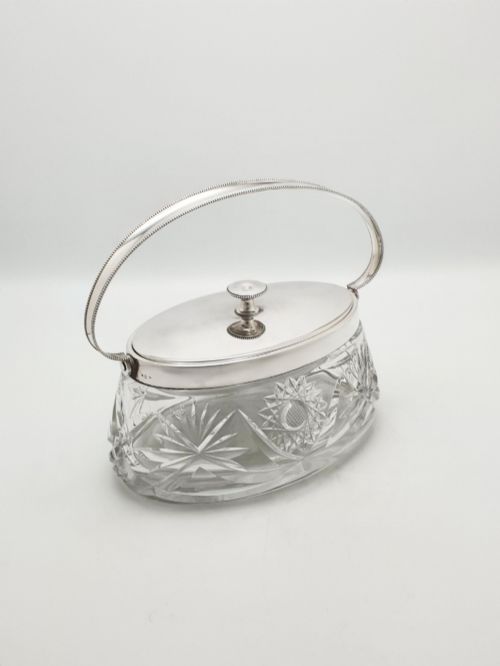
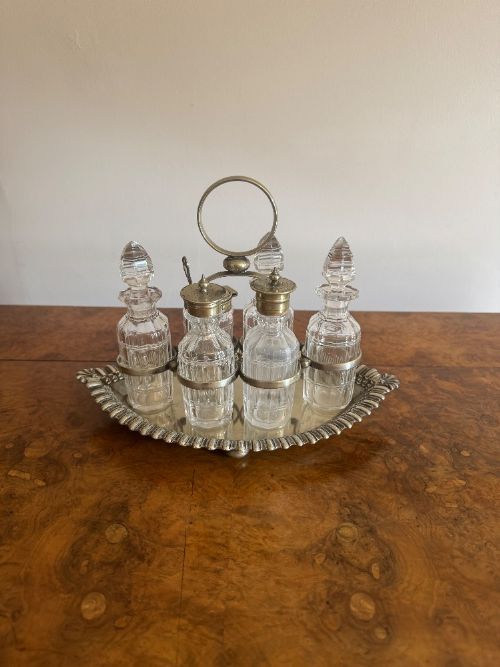
When you examine a silver plate glass server, you are looking at domestic tableware designed for dining, hospitality, and serving during the nineteenth and twentieth centuries. These objects typically take the form of claret jugs, biscuit barrels, cruet sets, butter dishes, relish caddies, caviar ice server sets, and cheese dishes.
The most common versions met on this page date from the Victorian and Edwardian eras, alongside pieces from the Art Nouveau, Jugendstil, Art Deco, and Scandinavian Modern movements. They combine functional glass containers with metal mounts, stands, handles, and covers.
What varies in quality
The standard of these items is determined by the depth and clarity of the glass cutting, the weight of the metal framework, and the crispness of any chased or cast ornamentation. Pieces originating from prominent continental workshops and domestic makers often display superior proportions and more intricate handle and hinge construction.
Preservation of the original surface plating and the integrity of the glass liners or inserts heavily influence the overall character of a piece. Finer examples retain unblemished glass rims and robust mounts that securely hold the vessels without movement.
Listings feature items from the 1850s through the 1930s, spanning Victorian, Edwardian, Art Nouveau, Jugendstil, Art Deco, and Scandinavian Modern styles.
Walker & Hall·WMF
The Silver Plate Glass Server Glossary
- Silver Plate
- A base metal coated with a thin layer of silver. This technique allowed makers to achieve the appearance of solid silver at a lower cost for domestic dining wares.
- Cranberry Glass
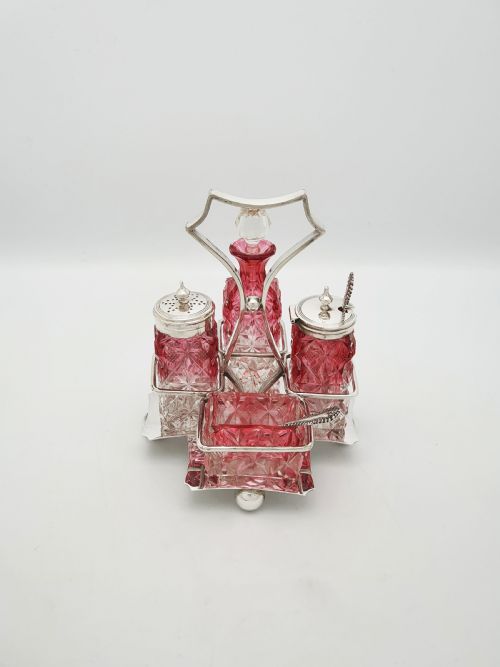
- A rich red glass coloured by the addition of gold chloride to the molten batch. It appears frequently in nineteenth and early twentieth-century tableware.
- Cruet Set
- A collection of glass bottles or jars mounted in a metal frame for holding condiments, oils, and sauces at the table.
- Claret Jug
- A vessel specifically shaped for serving red wine, featuring a glass body paired with a hinged metal lid, handle, and collar.
- Jugendstil
- The continental European manifestation of Art Nouveau, prevalent around the turn of the twentieth century. It emphasises organic lines and stylised natural motifs in metalwork.
Silver Plate Glass Server: Frequently Asked Questions
What is a silver plate glass server used for?
These servers held food and beverages at the dining table, accommodating items such as wine, biscuits, cheese, butter, caviar, and condiments during formal meals.
The glass liner protected the silver-plated metal from acidic foods while allowing the contents to remain visible to guests.
How do I clean my silver plate glass server?
Wash the glass liner or vessel in warm soapy water using a soft cloth, taking care to remove it from the metal mount if the construction allows. Avoid submerging weakened hinges or jointed metalwork for extended periods.
Polish the silver-plated sections gently with a specialised metal cream to maintain the reflective shine without wearing through the thin silver layer.
How can I tell a Victorian server from an Edwardian one?
Victorian examples often feature heavier, ornate decoration with deep floral chasing and robust cast mounts. The glass cutting tends to be deeply faceted and intricate.
Edwardian pieces frequently display lighter, more refined frames and cleaner silhouettes, sometimes incorporating Art Nouveau influences or brighter cranberry glass tones.
Are the glass liners usually original to the pieces?
Many surviving servers retain their original fitted glass inserts, which match the precise contours and collar dimensions of the metal frames. Replacements do occur due to accidental breakage over decades of domestic use.
Check whether the glass sits flush within the mount and shares the same degree of wear as the surrounding metalwork.