




Silver Plate Glass Jar
A silver plate glass jar combines heavy glass bodies with metal mounts, offering a practical yet decorative vessel suited for biscuits, preserves, and the dining table.
Silver Plate Glass Jar
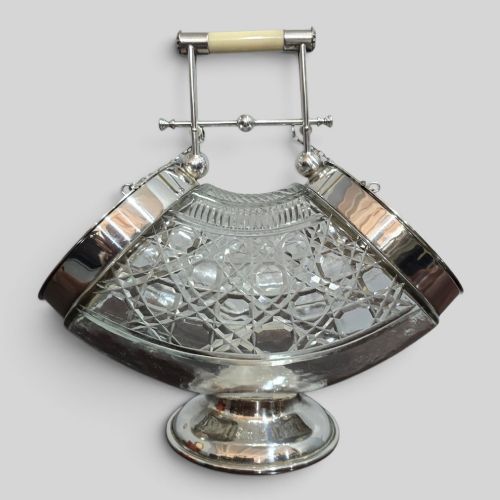
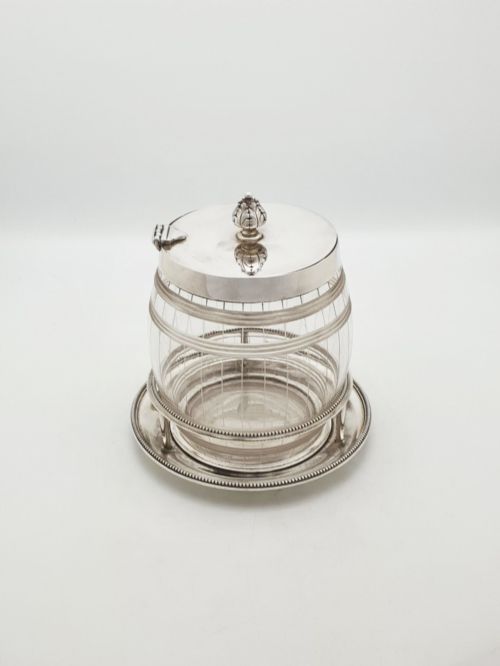
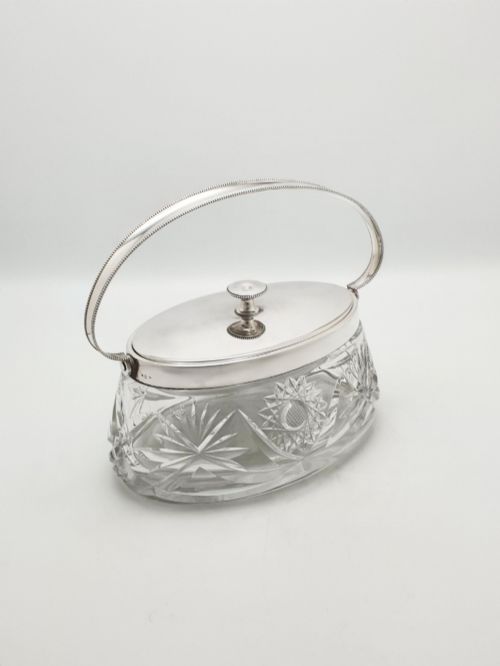
A silver plate glass jar primarily manifests as a biscuit barrel, preserve dish, or cruet set designed for domestic use during the Victorian and Edwardian periods. These vessels combine clear or coloured glass liners with metal lids, mounts, handles, and occasional stands.
The most frequent iteration on this page is the biscuit barrel, often rendered in cut glass or vibrant cranberry glass fitted with hinged silver-plated lids and swing handles. Such pieces date from the late nineteenth century through to the early decades of the twentieth century, reflecting formal dining customs of the era.
Alongside tablewares, the listings include related forms utilising glass and metal housing, such as mantel clocks encased within bell-jar housings and multi-bottle cruet sets. These varied objects share a reliance on metal plating and glass construction to achieve their decorative effect.
Materials and construction
The fabrication relies on pairing moulded or hand-cut glass bodies with metal components shaped through casting, piercing, and plating. Glass techniques range from deep hobnail cutting and faceting to blown coloured vessels in cranberry and vaseline glass.
Metal mounts utilise base metals coated via silver plating, alongside specialised modern finishes like rhodium-plated metal seen on mid-century items. These mounts often feature applied details such as heraldic dragon finials or twisted three-handled frames secured around the glass liner.
Silver Plate Glass Jar Retail Price Guide 2026
Typical asking prices for silver plate glass jar among the pieces listed under this phrase on Sellingantiques today, from the lower quarter to the upper quarter. They describe what is for sale here now, not the wider market.
The listings span from Victorian and Edwardian periods through to Mid-Century Modern, utilising silver plate, cut glass, and cranberry glass.
Distinctions in quality
Quality rests upon the crispness of the glass cutting, the depth of the colour in tinted pieces like cranberry glass, and the weight of the metal mount. Heavier gauge silver plating and substantial cut crystal or deep hobnail patterns indicate superior manufacture.
Design complexity further separates standard items from finer examples, visible in pierced metal galleries, automated mechanisms, or bespoke stands. The integration between the glass vessel and its metal frame dictates the overall structural integrity.
Elkington·Walker And Hall·WMF·Jaeger Le Atmos·Le Coultre
The Silver Plate Glass Jar Glossary
- Biscuit Barrel
- A covered ceramic or glass container designed for storing biscuits on the dining table. They frequently feature silver-plated mounts and swing handles.
- Cranberry Glass
- A red-pink transparent glass produced by adding gold chloride to the molten metal. It is commonly seen in Victorian and Edwardian tablewares.
- Cruet Set
- A collection of glass bottles or jars held in a metal stand for condiments and sauces. They often incorporate silver-plated frames and cut glass.
- Hobnail Cut
- A raised, faceted pattern cut into the surface of glassware resembling the head of a hobnail. This technique catches the light and adds texture.
- Rhodium-Plated Metal
- A hard, corrosion-resistant metallic coating applied to base metals for a bright finish. It appears on mid-century pieces within the selection.
Silver Plate Glass Jar: Frequently Asked Questions
What were silver plate glass jars used for?
These vessels served functional roles on the Victorian and Edwardian dining table for storing dry biscuits, preserves, or condiments.
Their lidded design kept contents fresh while the decorative glass and silver plate provided an attractive centrepiece for afternoon tea or formal meals.
How do I clean a silver plate glass jar?
Wash the glass liner gently in warm soapy water, removing it from the metal mount whenever possible to prevent moisture trapping.
Use a dedicated non-abrasive silver polish on the plated mounts, taking care to avoid harsh chemicals near the glass surface.
How can I tell a Victorian jar from an Edwardian one?
Victorian examples often display heavier, more ornate ornamentation such as heraldic finials, deep hobnail cutting, and robust cast mounts.
Edwardian pieces frequently transition towards lighter forms, simpler faceted glass, and refined silver-plated frames reflecting changing domestic tastes.
Are the glass liners removable?
Most biscuit barrels and preserve jars feature loose glass liners designed to lift out of the fixed or swing-handled metal stands.
This construction allowed for easy washing and refilling without needing to immerse the entire plated framework in water.