



Silver Plate Dome
These silver plate dome items bring monumental presence to the table, and finding the right one transforms a dining room.
Silver Plate Dome
A silver plate dome serves to keep large roasts, game, and breakfast dishes warm on the sideboard before carving. These pieces span periods from Georgian Old Sheffield Plate and Regency examples through Victorian and Edwardian iterations up to mid-century designs.
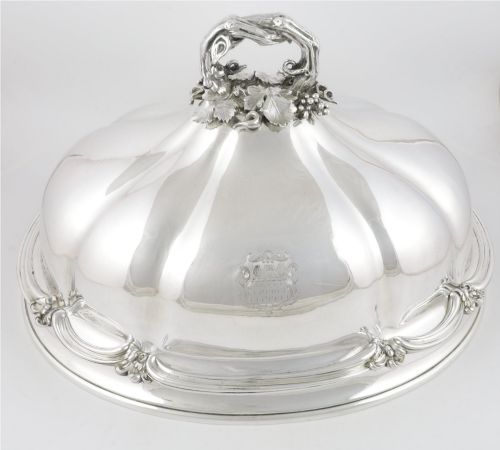
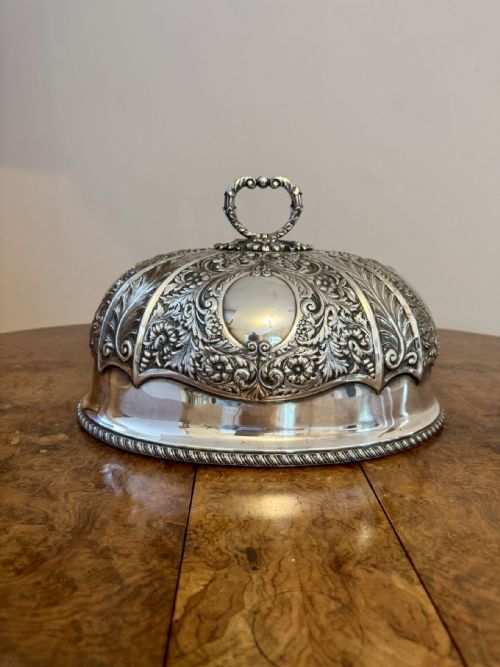
Buyers will most frequently encounter substantial meat covers and serving dishes in silver plate, electroplated nickel silver, and Old Sheffield Plate. These items often feature oval shapes designed to sit neatly over platters and entree dishes.
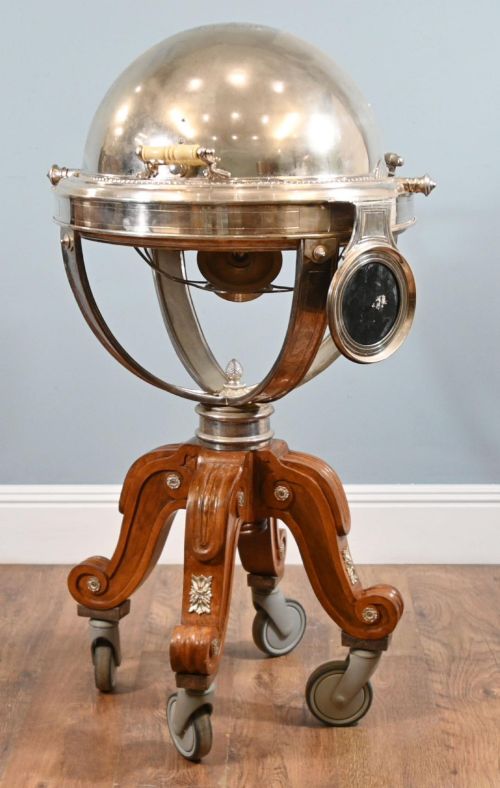
The selection ranges from grand nineteenth-century meat domes bearing maker marks to smaller revolving breakfast dishes and cheese covers. Many incorporate decorative handles or finials shaped as eagles or horse heads.
Materials and construction methods
Early examples utilise Old Sheffield Plate, a technique fusing a thin sheet of silver to a thicker copper core by heat and pressure. This method often reveals faint traces of copper showing through along high points and edges.
Later pieces rely on electroplating, depositing a layer of silver onto a base metal such as copper or electroplated nickel silver (EPNS). Manufacturers sometimes combined these plated domes with glass liners for cheese and preserve dishes.
Silver Plate Dome Retail Price Guide 2026
Typical asking prices for silver plate dome among the pieces listed under this phrase on Sellingantiques today, from the lower quarter to the upper quarter. They describe what is for sale here now, not the wider market.
Listings feature items spanning the Georgian, Victorian, and Edwardian eras, constructed from Old Sheffield Plate, copper, and silver plate.
Distinctions in craftsmanship and weight
Quality rests in the thickness of the original plating and the substantial weight of the underlying metal base. Thinner plate wears down to the base metal over decades of cleaning, while heavier gauges retain their structural integrity and crisp chasing.
Design execution separates standard production from exceptional pieces. Superior items display well-cast handles, balanced proportions, and detailed engraving or armorial crests rather than plain, stamped surfaces.
Roberts Cadman·Henry Wilkinson·Mappin and Webb·Durand
The Silver Plate Dome Glossary
- Old Sheffield Plate
- An early method of fusing silver and copper together before the invention of electroplating. It produces a rich appearance where the underlying copper subtly telegraphs through the surface.
- EPNS
- Electroplated Nickel Silver, a common base material introduced in the nineteenth century. Manufacturers used nickel silver as a strong foundation for the chemical deposition of silver.
- Cloche
- A bell-shaped cover used for food service. These items shield dishes on the table or keep plated portions warm.
- Revolving Dish
- A serving vessel featuring a roll-over or rotating lid mechanism. This engineering allows diners to access butter, breakfast items, or preserves without removing the cover entirely.
Silver Plate Dome: Frequently Asked Questions
How do I clean a silver plate dome?
Use a gentle, non-abrasive silver cream and a soft cloth to preserve the plating. Avoid harsh dips that strip away remaining silver, particularly on older copper-core pieces.
Buff the surface lightly after cleaning to maintain the soft lustre without wearing down the high points of the design.
What is the difference between Old Sheffield Plate and EPNS?
Old Sheffield Plate involves physically fusing silver sheets to copper using heat, producing a distinct edge where the base metal shows. EPNS uses electricity to bond silver to a nickel-silver alloy.
Pieces made with Old Sheffield Plate generally date from the eighteenth and early nineteenth centuries, while EPNS became widespread later.
How were these domes used historically?
Servants used these heavy covers to transport roasted meats and poultry from the kitchen to the dining table while keeping the food hot. They were lifted right before carving.
Smaller versions housed butter, cheese, or breakfast dishes on the sideboard for guests to serve themselves during long morning meals.
How can I tell the period of a meat dome?
Georgian and Regency pieces often employ Old Sheffield Plate with visible copper seams and restrained neoclassical lines. Victorian and Edwardian versions typically feature heavier electroplating, bolder ornamentation, and more complex mechanisms.
Examining any maker marks, style cues, and base materials helps narrow down the decade of manufacture.