

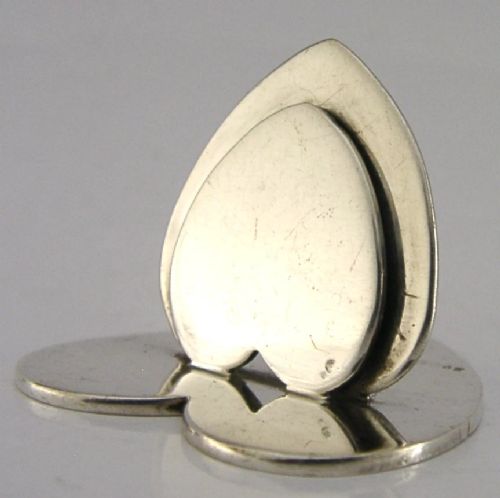




Silver Place Setting Holder
These silver place setting holder pieces organise dining tables with miniature sculpture and crests, and you want them for their witty detail and formal table-setting history.
Silver Place Setting Holder
A silver place setting holder serves to steady a menu, place card, or table number on a dining table, combining practical utility with miniature decorative art. The form appears as a menu holder or a place card holder, designed to sit upright and display identification or meal choices to guests during formal dining.
The versions you are most likely to meet on this page come primarily from the Edwardian period and the 1930s, often formed as matched sets rather than single pieces. These examples range from compact figural models representing animals or military themes to decorative designs rooted in Scottish, Celtic, and Arts and Crafts aesthetics.
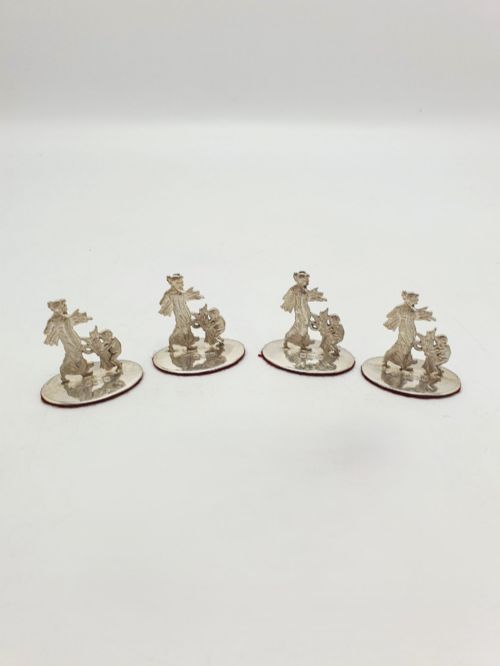
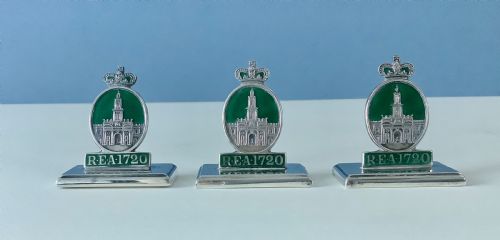
Makers and designers of the period applied these holders to specific military, equestrian, and literary subjects, such as regimental badges, horses' heads, and Alice in Wonderland figures. Such pieces reflect the elaborate tables of their era, where every accessory carried a specific theme or heraldic connection.
How they were made
Makers fashioned these pieces primarily from solid sterling silver or silver plate over base metal, utilising casting and stamping techniques to achieve detailed miniature forms. Enamel work frequently appears on specific items, adding vibrant colour to flags, crests, and decorative motifs.
Figural elements such as birds, horses' heads, and military insignia required skilled moulding and hand-chasing to define feathers, fur, and uniform details after the initial cast. Artisans soldered weighted bases or stands to the back or bottom of each subject to ensure stability when supporting cards.
Silver Place Setting Holder Retail Price Guide 2026
Typical asking prices for silver place setting holder among the pieces listed under this phrase on Sellingantiques today, from the lower quarter to the upper quarter. They describe what is for sale here now, not the wider market.
Alice in Wonderland characters occasionally guard the menu, reminding diners that small silver creatures once presided over very peculiar tea parties.
What varies in quality
The standard of modeling separates the finer examples from simpler production, visible in the crispness of feathers on birds, the expression in figural heads, and the clean lines of heraldic or military badges. Superior pieces maintain sharp detail across every item in a set, whereas lesser examples show softness in hand-chasing and casting.
Completeness within a set and the integrity of applied enamel strongly influence the character of surviving pieces. Sets that retain their original fitted presentation cases and matching numbers across all components demonstrate greater care through their history.
Asprey·Christofle·Liberty
The Silver Place Setting Holder Glossary
- Menu holder
- A small upright stand designed to support a printed menu card on a dining table. These items often feature decorative figural or heraldic terminals.
- Place card holder
- A compact desk or table accessory intended to hold a guest's name card upright. They share similar manufacturing techniques and forms with menu holders.
- Sterling silver
- An alloy consisting of pure silver and other metals, usually copper, meeting a specific fineness standard. This material provides the primary medium for higher-grade table accessories.
- Silver plate
- A layer of silver applied to a base metal core, such as brass or copper. This technique offered an accessible alternative to solid silver for larger table sets.
- Enamel
- A vitreous substance fused to the surface of metal through firing, used to add coloured decoration to flags and insignia on table items.
Silver Place Setting Holder: Frequently Asked Questions
What is a silver place setting holder used for?
These items support menu cards, place names, or table numbers upright during formal meals so that guests can read them easily.
They act as both functional dining accessories and decorative table ornaments, often matched to the theme of a dinner party or a host's regiment.
How do I date an Edwardian menu holder?
Edwardian examples usually date from the early twentieth century and often feature hallmarks indicating the year of assay and the maker's mark.
Stylistic clues such as naturalistic bird figures, Arts and Crafts influences, or specific Edwardian motifs also help determine the period.
Why do sets vary in size?
Makers produced these holders in varying set sizes depending on the intended scale of the dining table, ranging from pairs up to large sets of twenty-four.
Smaller sets of two, three, or four were common for domestic dining, while larger collections served grander banquets or military messes.
How should I clean silver table holders?
Maintenance requires gentle cleaning with a soft cloth and appropriate silver polish to preserve the fine details and any applied enamel work.
Avoid harsh abrasives, particularly on enamelled surfaces or delicate cast elements like bird feathers and figural heads.