

Silver Pedestal Dishes
Silver pedestal dishes elevate fruit, sweets and small dining items upon raised feet, bringing form and proportion to the table.
Silver Pedestal Dishes
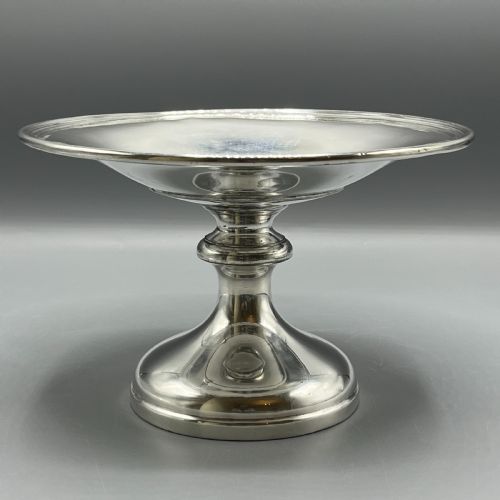
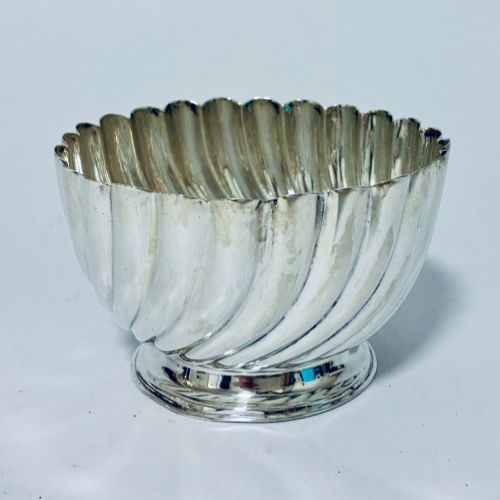
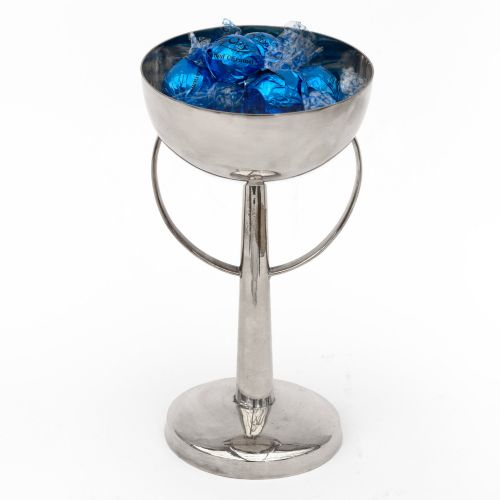
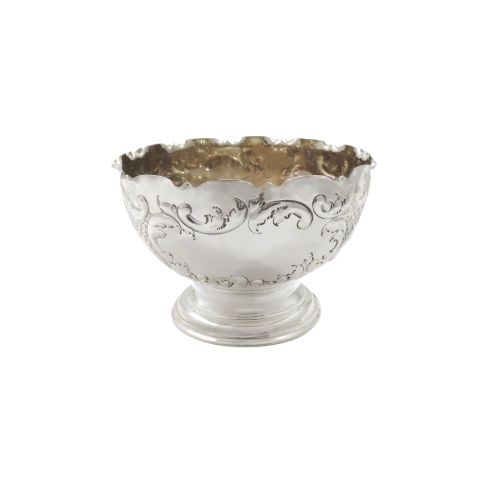
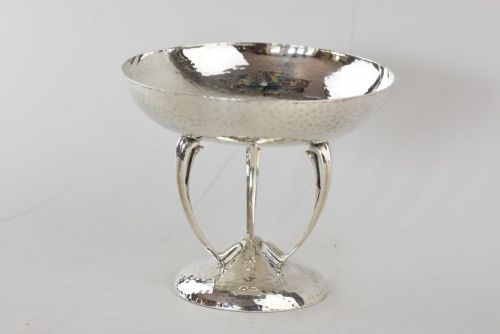
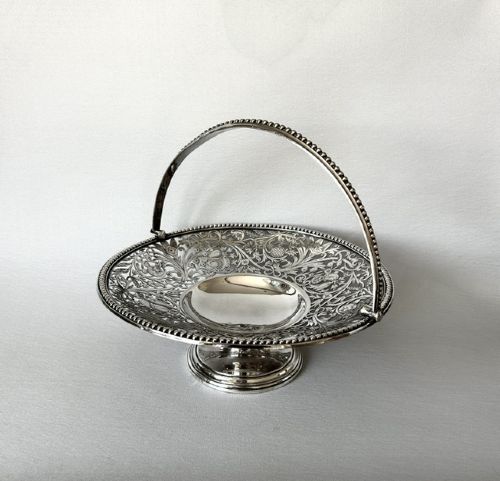
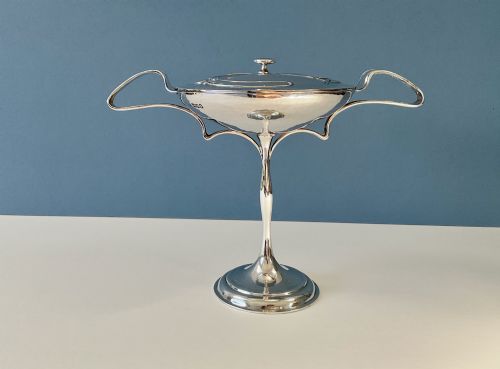
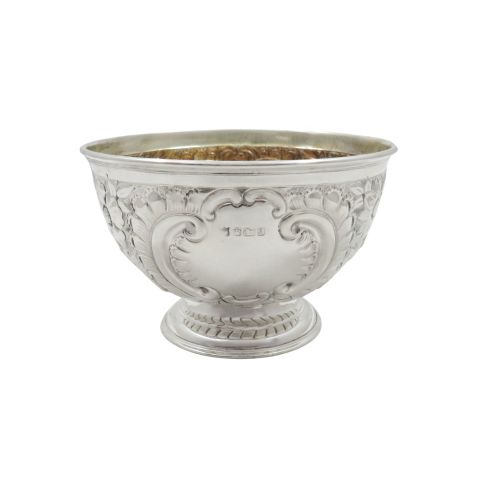
Silver pedestal dishes encompass footed bowls, tazzas, sugar baskets, fruit baskets and centrepieces raised above the table surface on a base or foot. You will frequently encounter Victorian and Edwardian examples alongside pieces from the 19th century, George III period and the 1920s and 1930s.
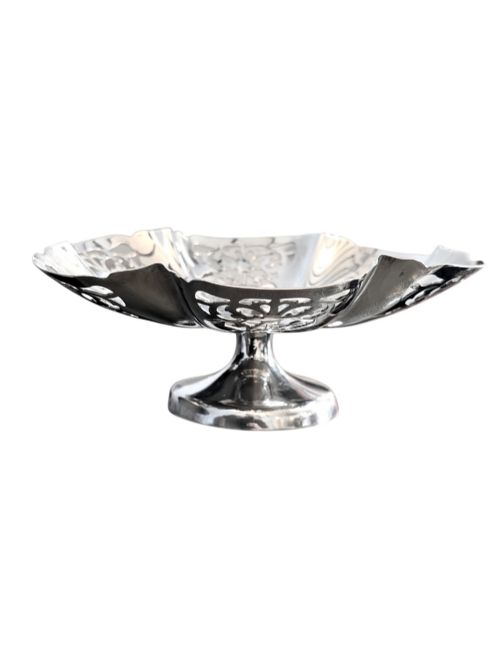
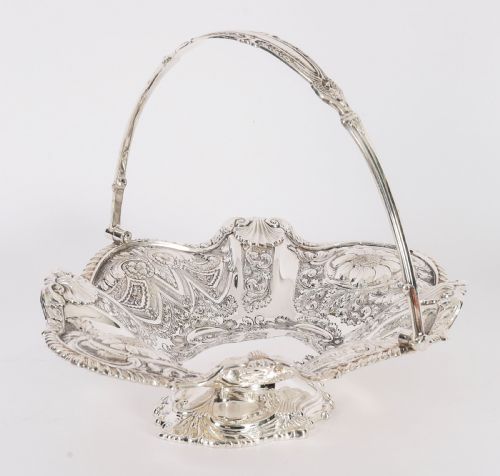
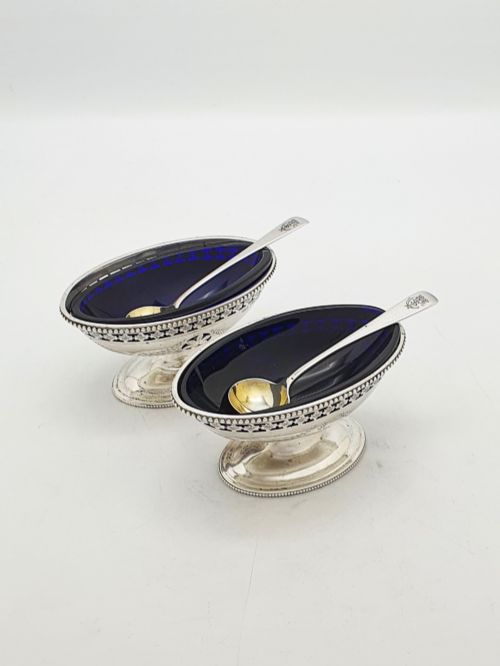
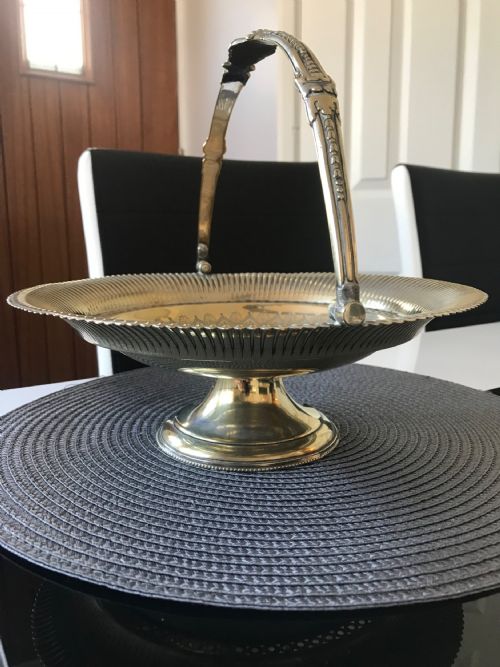
The forms range from pierced lattice fruit baskets and swing-handled sweetmeat dishes to heavy grape bowls, handled tureens and compact bonbon dishes. Many incorporate contrasting materials like cobalt blue glass liners or gilt interiors within the silver or silver-plated structure.
Originating across English, Scottish, German, Thai, Indian and Anglo-Indian workshops, these footed vessels serve both decorative and functional dining roles. They anchor a table setting by adding vertical dimension to ordinary bowls and flat tableware.
Materials and Construction
Makers utilised solid sterling silver, silver plate, electroplated nickel silver, pewter and bronze alongside auxiliary materials such as glass and copper. Solid silver items carry hallmarks for assay offices like Sheffield, Birmingham and London, while plated wares employ base metals beneath substantial silver coatings.
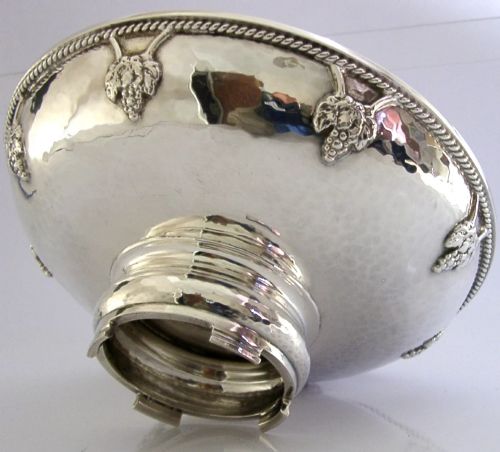
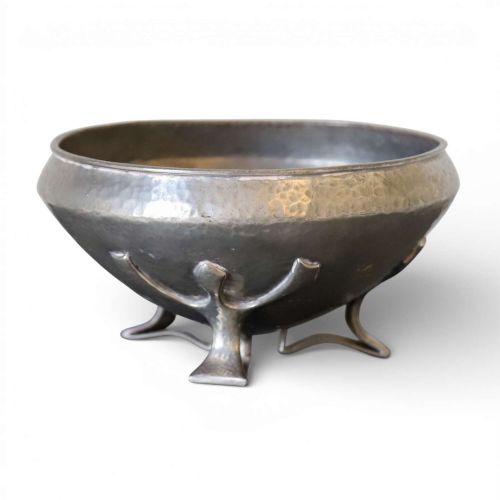
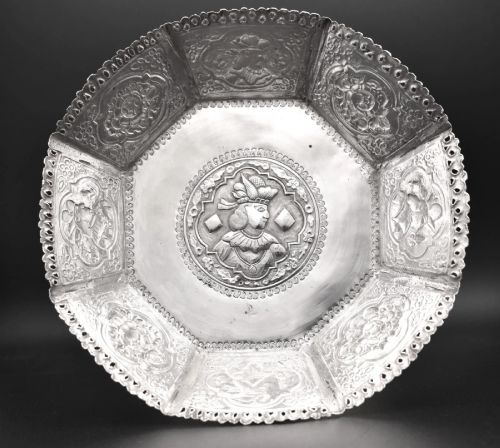
Techniques varied from hand-hammered Arts and Crafts shaping and intricate repoussé and wirework to pierced lattice piercing and embossed detailing. Elements like swing handles, pedestal feet and cast decorative borders were soldered or riveted to the main bowl bodies.
Silver Pedestal Dishes Retail Price Guide 2026
Typical asking prices for silver pedestal dishes among the pieces listed under this phrase on Sellingantiques today, from the lower quarter to the upper quarter. They describe what is for sale here now, not the wider market.
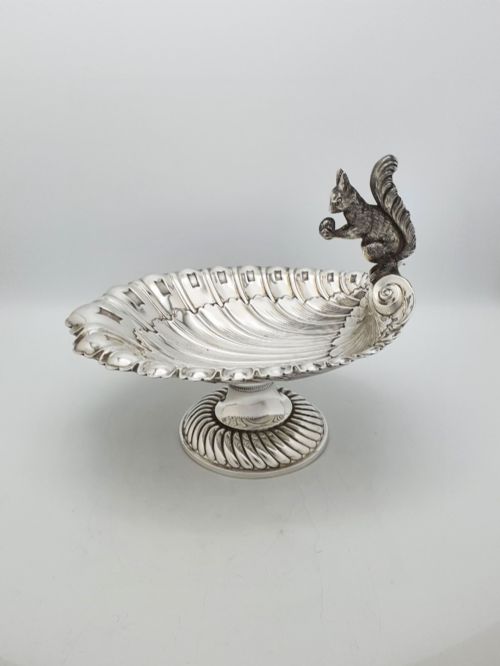
Among the footed tableware hides a charming silver-plated squirrel nut dish, proving that formal Victorian dining kept a sense of woodland humour.
Judging Quality and Execution
Quality rests upon the crispness of the chasing, the precision of pierced lattice work and the structural integrity of the pedestal foot. Heavier gauge metal resists warping and maintains stability when the dish holds fruit or glass liners.
The harmony of proportion between the raised foot and the bowl separates utilitarian vessels from finer decorative centrepieces. Maker attribution and clear hallmarking further distinguish standard production items from distinguished studio pieces.
Viners and Co·A E Jones·Goldsmiths and Silversmiths Company·George W Scott and Sons Ltd·Liberty and Co·Charles Boyton·William Bennett·Mappin and Webb·Walker and Hall·James Deakin and Sons·Elkington and Co
The Silver Pedestal Dishes Glossary
- Tazza
- A shallow bowl or plate mounted upon a stem and foot. This form frequently displays decorative piercing or repoussé motifs along the rim.
- Repoussé
- Metalworking technique where the design is hammered into relief from the reverse side. This creates textured, three-dimensional patterns across the bowl surface.
- Sugar Basket
- A small footed basket, often featuring a swing handle and an inner glass liner. These pieces held loose sugar for tea service.
- Old Sheffield Plated
- An early plating method fusing a thin sheet of silver to a copper core. Items made this way reveal hints of copper wear along high points.
- Gilt Interior
- A thin layer of gold applied to the inside of a silver bowl or salt cellar. This coating protected the silver from corrosion caused by acidic foods.
Silver Pedestal Dishes: Frequently Asked Questions
What is a silver pedestal dish used for?
These vessels served a variety of dining purposes, from presenting fresh fruit and bonbons to holding sugar baskets and sweetmeats during formal meals.
Today, they function well as decorative table centrepieces or for holding small daily items while displaying period craftsmanship.
How do I identify a tazza?
A tazza is characterised by a broad, shallow bowl raised on a central foot or pedestal base, distinguishing it from flat plates and standard deep bowls.
They often feature detailed handles, pierced rims or embossed borders designed to catch the light on a dining table.
Why do some bowls have glass liners?
Glass liners were inserted into open-work baskets and salt cellars to protect the silver from moisture and acidic contents like fruit juices or salt.
Cobalt blue glass is particularly common in Edwardian and Victorian designs, creating a striking visual contrast against the surrounding silver lattice.
How can I tell the age of a piece?
Age is typically determined by examining the hallmarks stamped into the metal, which denote the assay office, standard of silver and year letter.
Stylistic markers such as Art Nouveau curves, Georgian proportions or Arts and Crafts hammering also point toward specific manufacturing decades.