



Silver Novelty Table Accessories
Silver novelty table accessories bring wit and function to the dining room, taking the form of animals, hunting horns and everyday objects from past decades.
Silver Novelty Table Accessories
When searching for silver novelty table accessories, collectors encounter items designed to entertain diners while serving a practical purpose at the table. These pieces range from menu holders and spoon warmers to salt cellars, pepper pots, and table lighters.
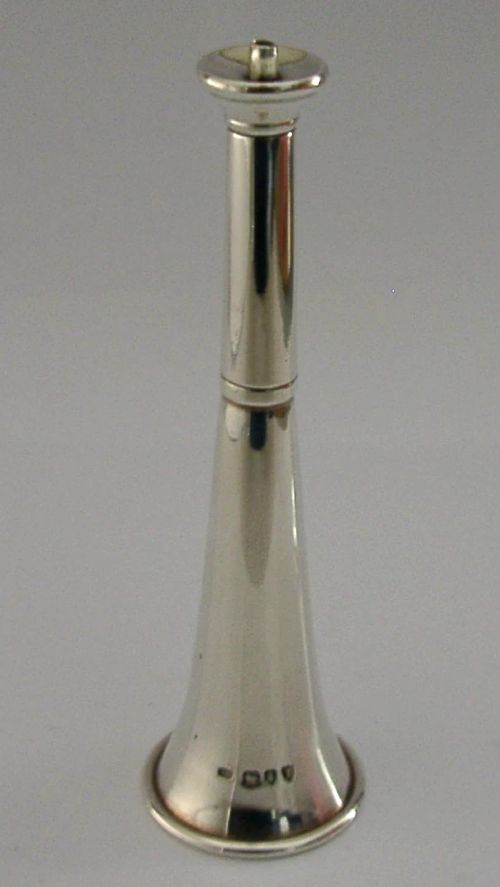
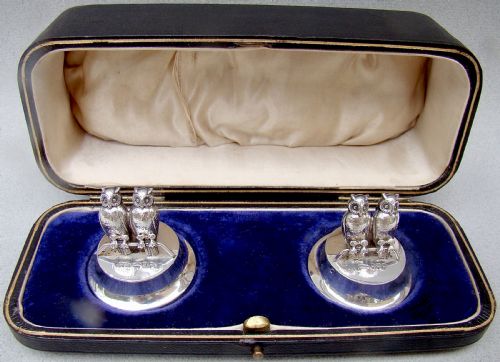
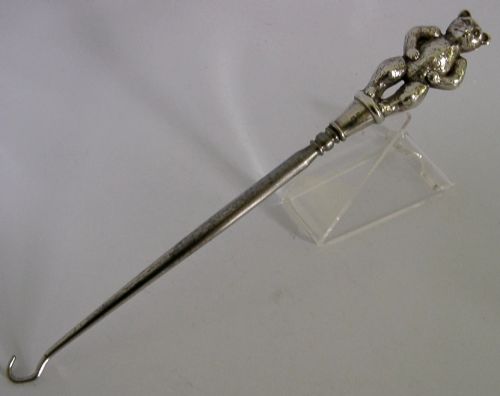
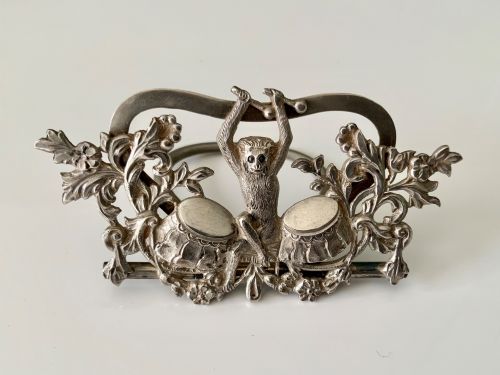
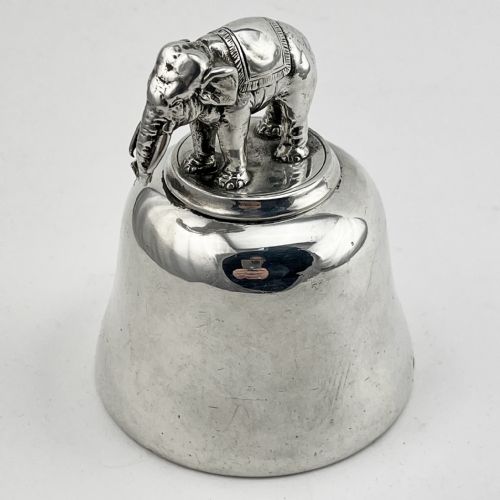
The selection on this page draws heavily from the Victorian and Edwardian eras. Animal forms such as owls, monkeys, and bears appear frequently, alongside sporting motifs like golf clubs, hunting horns, and equestrian gear.
How they were made
Maker's workshops utilised sterling silver and silver plate over base metals, shaping the metal through casting, repoussé, and engraving to achieve realistic textures like feathers, fur, and woven straw.
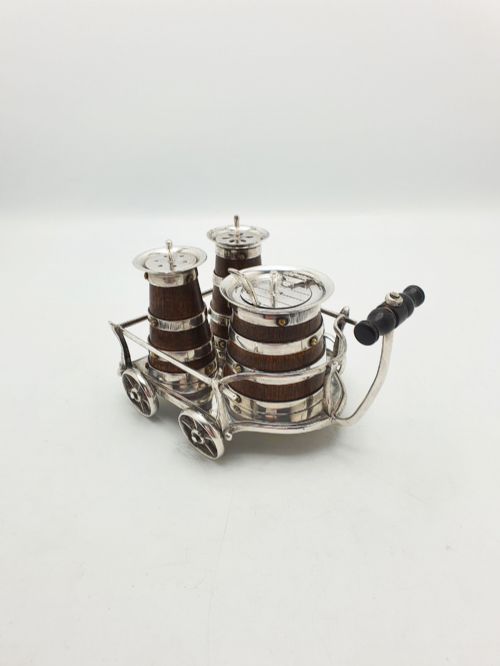
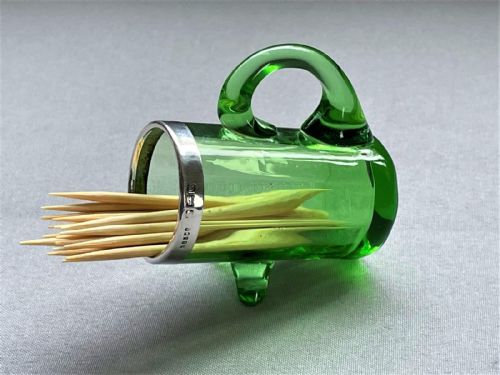
Many items incorporate auxiliary materials to complete the design, including glass inserts for cruet sets, velvet and silk linings in presentation boxes, leather components, and steel for button hooks.
Listings feature items from the Victorian and Edwardian periods, utilising sterling silver, silver plate, glass, and leather.
What varies in quality
Quality rests in the fidelity of the casting and the crispness of the detail across the surface. Items where feathers, fur, or facial expressions remain sharp and distinct demonstrate superior silversmithing compared to softer, worn casts.
Design ingenuity and the complexity of mechanical elements also separate standard items from exceptional ones. Pieces with articulating parts, such as mechanical bells or wheels, rely on precise engineering that preserves smooth movement.
Levi & Salaman·Joseph Braham·Thomas Johnson·Sampson Mordan
The Silver Novelty Table Accessories Glossary
- Menu holder
- A small desk or table stand designed to hold printed dinner menus upright for guests. They often take sculptural forms relating to the theme of the meal.
- Spoon warmer
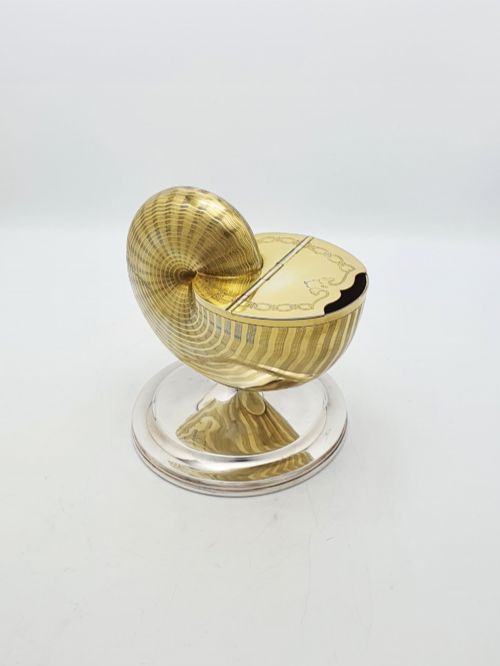
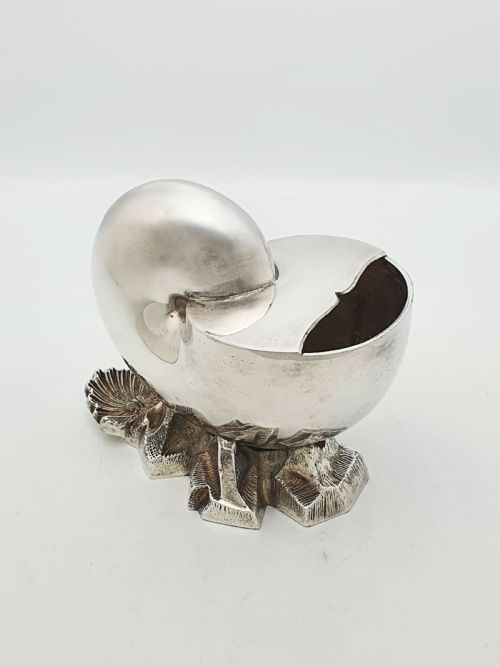
- A Victorian vessel shaped like a nautilus shell or oak barrel, filled with hot water to warm silver spoons before serving soup or pudding.
- Cruet set
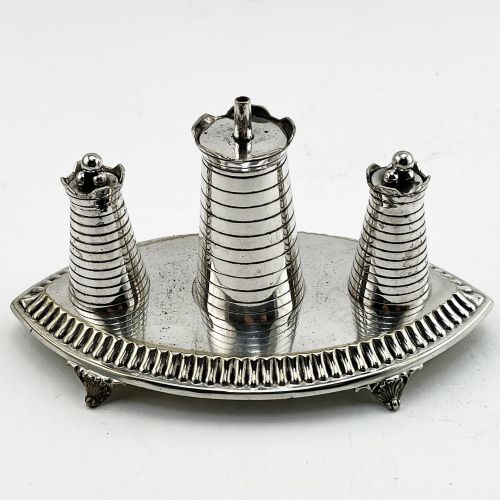
- A collection of small bottles or shakers for condiments, held in a fitted frame. Novelty versions arrange these containers into farmyard scenes or castle models.
- Table lighter
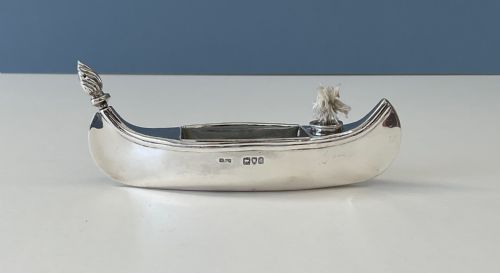
- A functional flame source styled as an oil lamp, canoe, or hunting horn for guests to light cigars after dining. They sit directly on the table surface.
- Repoussé
- A metalworking technique where the silversmith hammers the metal from the reverse side to form a raised design in relief on the front.
Silver Novelty Table Accessories: Frequently Asked Questions
What are silver novelty table accessories?
These pieces are functional dining items shaped to resemble animals, buildings, or everyday objects. Silversmiths created them to amuse guests during formal meals.
They combine utility with sculptural wit, turning salt cellars, menu cards, and lighters into conversation pieces.
How were spoon warmers used?
Victorian diners filled these vessels with hot water from the sideboard. The heated water warmed the silver spoons so they felt comfortable to hold.
They often took whimsical shapes like shells or barrels to blend decorative novelty with dining etiquette.
How do I identify Edwardian pieces?
Edwardian items typically date from the start of the twentieth century up to the First World War. Hallmarks stamped into the silver provide exact assay office and year markers.
Stylistically, these pieces often share the playful animal themes of the late Victorian era but reflect lighter, airier manufacturing trends.
How should I clean silver novelty items?
Use a soft microfiber cloth and a mild silver cleaning paste designed for antiques. Avoid abrasive brushes that can wear away fine engraved details on fur or feathers.
Take care around hinged components, moving parts, and glass inserts to prevent moisture damage to delicate mechanisms.