


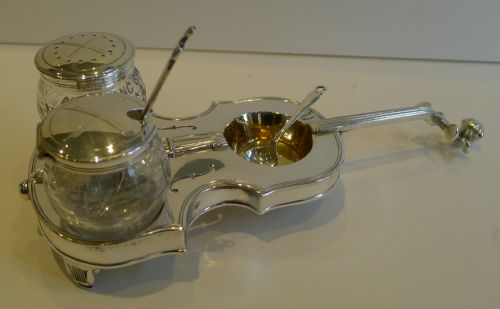

Silver Novelty Cruet
A silver novelty cruet turns a dining table into a stage for animals, vehicles and everyday objects that hold your salt, pepper and mustard.
Silver Novelty Cruet
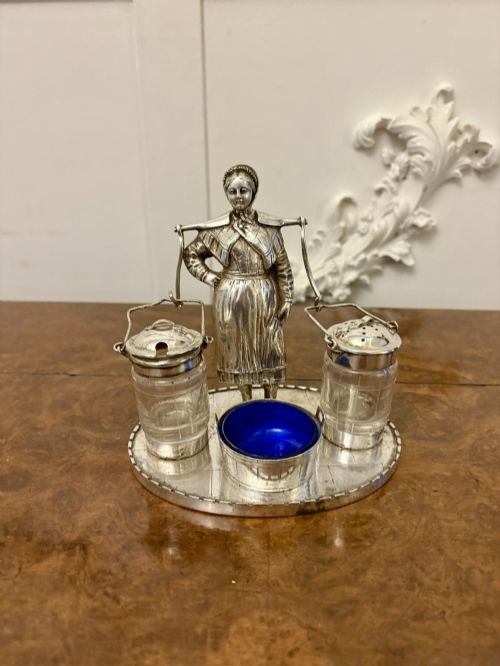
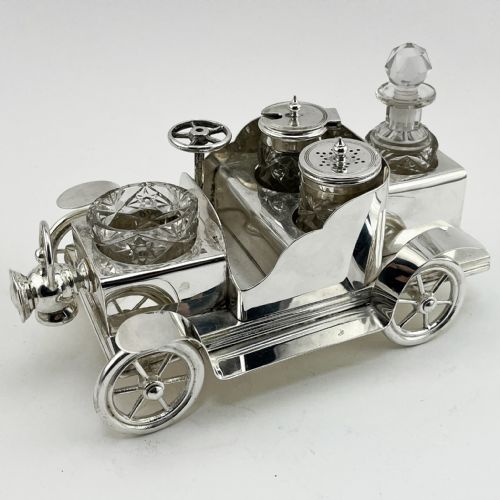
A silver novelty cruet brings together functional condiment containers and playful figural or thematic design. When searching for a silver novelty cruet, collectors encounter miniature animals, carriages, boats and household items made to hold salt, pepper, mustard and oil on the dining table.
The pieces appearing on this page span the Victorian era, the Edwardian period and mid-century British production. Common forms include birds, farmyard animals, horse-drawn carts and sporting equipment modelled in silver plate, sterling silver and 800 silver.
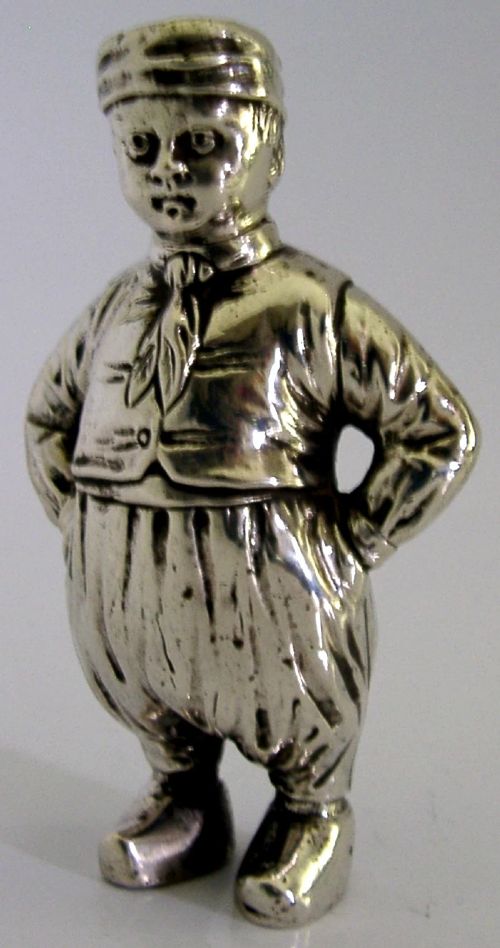
Cruet sets range from single pepper pots shaped like boys or owls to complex multi-bottle stands configured as butlers' trays, barrels or Egyptian-style vessels. The makers combine utility with elaborate narrative scenes, transforming standard dining accessories into conversational centerpieces.
How they were made
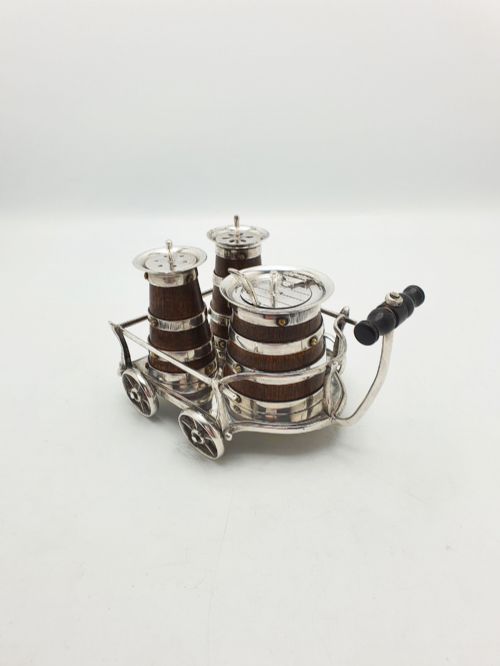
Makers utilised silver plate over base metals alongside solid sterling silver, 800 silver and cut glass inserts. Many Victorian and Edwardian examples combine silver plating with carved oak mounts, gilt highlights and fitted glass bottles.
Listings feature items from the Victorian and Edwardian eras alongside mid-century British examples, utilising silver plate, solid silver, oak and cut glass.
What varies in quality
The distinction between ordinary and superior pieces lies in the crispness of the casting and the naturalism of the modelling. Workshop execution determines whether an animal figure possesses character and anatomical definition or appears stiff and generic.
Completeness also dictates value, particularly when original cut glass inserts, matching spoons or associated stoppers survive intact. The integration of functional elements into the novelty theme, such as a water pump handle or a cart wheel that turns, demonstrates superior craftsmanship.
Sampson Mordan·Mappin and Webb·William Briggs·Elkington
The Silver Novelty Cruet Glossary
- Cruet set
- A matched collection of small bottles, pots or shakers designed to hold condiments like salt, pepper, mustard, oil and vinegar for the dining table.
- Silver plate
- A manufacturing method where a thin layer of silver is bonded to a base metal, frequently utilised in nineteenth-century novelty wares.
- Figural
- A design style where an object takes the literal shape of a human, animal, bird or familiar item rather than following standard geometric tableware forms.
- Condiment set
- A group of vessels holding table seasonings, often housed within a dedicated stand, tray or novelty framework.
- Cast
- A metalworking process where molten silver or base metal is poured into a mould to create detailed figural components and stands.
Silver Novelty Cruet: Frequently Asked Questions
What is a silver novelty cruet?
A silver novelty cruet is a functional tableware set designed in a playful or pictorial shape, such as an animal, vehicle or sporting scene.
These pieces combine salt and pepper shakers or mustard pots with sculptural artistry, serving both a practical dining purpose and a decorative function.
How were these sets used?
Victorian and Edwardian diners placed them on the table to dispense seasonings like salt, pepper, mustard and vinegar during meals.
Guests would pass the miniature cart, animal or tray around the table when they needed to season their food.
How do I date a silver novelty cruet?
Dating relies on hallmarks stamped on solid silver pieces, registration numbers stamped into the metal, and the overall style of the piece.
Victorian pieces often feature registry diamonds or patent marks from the mid to late nineteenth century, while Edwardian and later pieces carry standard assay office marks.
How should I care for silver plate?
Care requires gentle cleaning with a specialist silver cloth to avoid wearing away the thin layer of plating over the base metal.
Harsh chemical dips should be avoided, particularly on pieces with fitted oak bases, glass inserts or delicate hand-chased details.