



Silver Mounted Ceramic
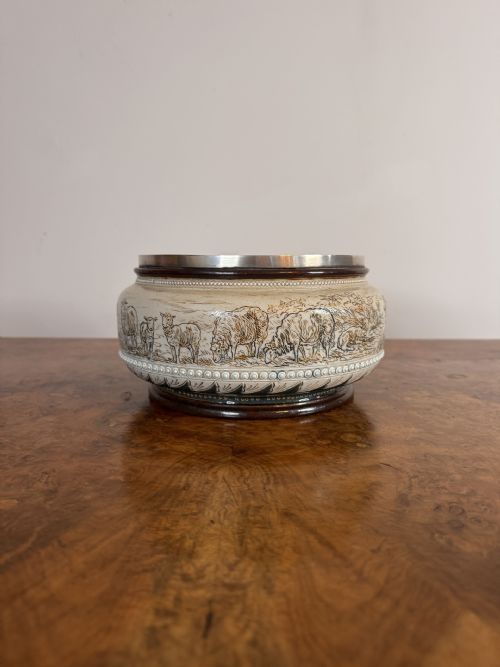
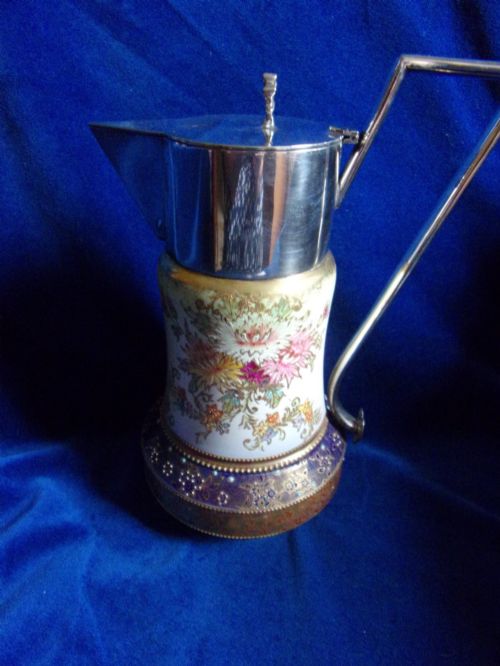
These silver mounted ceramic pieces combine ceramic bodies with silver rims and collars to create robust vessels for dining and display.
Silver Mounted Ceramic
Vessels span utilitarian forms like tygs and harvest jugs to decorative table wares, often originating from English potteries such as Doulton Lambeth or Wedgwood. These pieces bridge the gap between ceramic utility and metal smithing, utilising collars, rims, and hinged lids to reinforce or ornament the body.
Materials and Technique
Makers shaped ceramic bodies from stoneware, terracotta, and porcelain, frequently employing salt glazing or coloured slips before applying metalwork. Silversmiths then fitted custom sterling silver or silver plate rims, collars, and hinged lids directly onto the fired clay.
Decoration often involved applied cabochons, incised foliage, or enamel work to complement the metallic sheen of the mounts. The union of ceramic and metal required precise fitting to secure the heavy mounts onto rigid earthenware bodies.
Silver Mounted Ceramic Retail Price Guide 2026
Typical asking prices for silver mounted ceramic among the pieces listed under this phrase on Sellingantiques today, from the lower quarter to the upper quarter. They describe what is for sale here now, not the wider market.
Some nineteenth-century makers mounted ordinary clay jugs with silver just to hide a slightly wonky rim from the kiln.
Judging Quality
Quality rests upon the harmony between the ceramic potter and the metalsmith, where well-balanced mounts enhance the vessel rather than overwhelm it. The crispness of incised or moulded ceramic detail and the weight of the silver mounts distinguish superior examples.
Artisanal involvement also dictates worth, particularly pieces bearing specific artist signatures or originating from notable workshops like Doulton Lambeth. The integrity of the fit between metal collar and ceramic rim remains central to the construction.
Doulton Lambeth·Wedgwood·Carltonware·Gorham
The Silver Mounted Ceramic Glossary
- Tyg
- A large drinking vessel with multiple handles, commonly produced in stoneware during the nineteenth century. These sturdy mugs allowed communal sharing at the table.
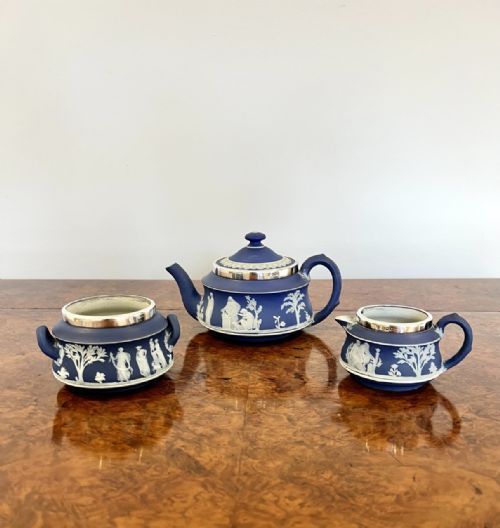
- Jasperware
- A fine-grained, unglazed stoneware developed by Wedgwood, typically featuring contrasting white reliefs against a coloured ground. It provides a distinct matte surface for silver collars.
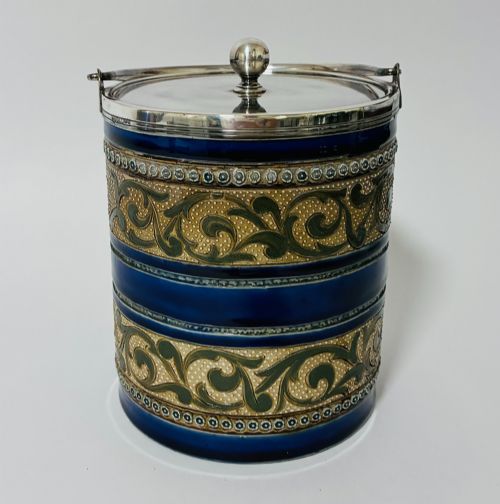
- Biscuit Barrel
- A covered ceramic container designed for storing dry biscuits at the Victorian dining table. They frequently incorporate silver plated rims and swing handles.
- Stoneware
- A hard, dense ceramic fired at high temperatures until vitrified, making it impermeable to liquids without requiring a glaze. It forms the durable body for many mounted jugs and flagons.
Silver Mounted Ceramic: Frequently Asked Questions
What are silver mounted ceramics?
These items consist of fired clay vessels, such as jugs, teapots, and vases, fitted with protective or decorative silver rims, collars, and handles. Silversmiths applied these metal elements to reinforce vulnerable edges and elevate the status of utilitarian earthenware.
The materials range from rustic terracotta and salt-glazed stoneware to refined porcelain and jasperware. Together, the ceramic body and metal mount form a cohesive piece designed for dining and display.
How were these vessels used?
Many of these pieces served practical functions at the dining table, holding liquids like claret, ale, water, or whisky. Others functioned as dry storage containers, such as biscuit barrels and tea caddies.
Over time, as manufacturing shifted, many of these utilitarian forms evolved into decorative mantelpiece ornaments. Their dual construction made them both durable enough for daily service and handsome enough for the parlour.
How do I date these pieces?
Dating relies heavily on stylistic markers within the ceramic body, the shape of the silver mounts, and any hallmarks stamped onto the metal. Victorian examples often feature registration marks or specific manufacturer stamps associated with the late nineteenth century.
Earlier items from the seventeenth and eighteenth centuries display simpler thrown forms and heavier, hand-beaten metal collars. Comparing the ceramic body style with the silver hallmarks provides a reliable timeframe.
How do I care for silver mounted ceramics?
Maintenance requires treating both the ceramic body and the metal mount with appropriate care, avoiding abrasive cleaners on the silver. Gentle dusting of the ceramic and occasional specialised polishing of the metal keep the materials in stable condition.
Keeping these vessels away from extreme temperature shifts protects the bond between the clay and the metal collar. Proper handling ensures the historic mounts remain secure on the ceramic body.