



Silver Mantle Clock
A silver mantle clock brings tactile presence to a room, recording the hours in polished metal and glass.
Silver Mantle Clock
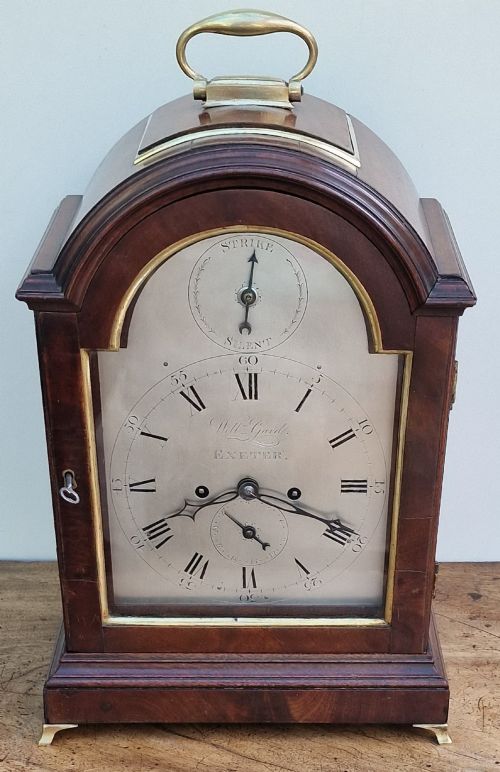
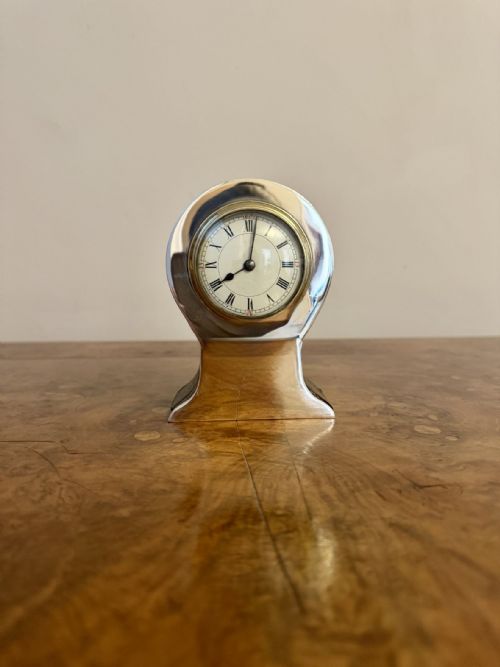
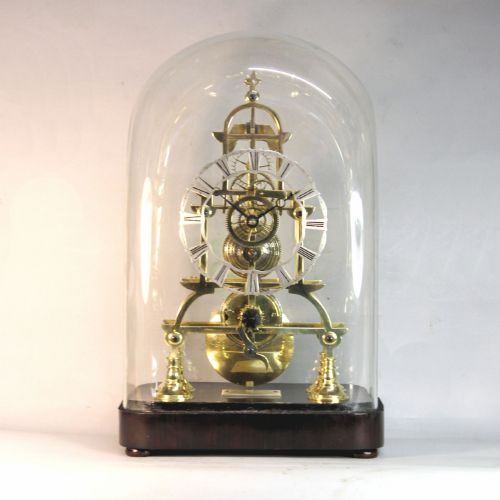
A silver mantle clock combines domestic timekeeping with decorative metalwork, appearing across periods from the Georgian era through Victorian, Edwardian, and Art Deco styles. These pieces range from substantial bracket and portico clocks to miniature timepiece carriage clocks and travel alarms designed for desks and boudoirs.
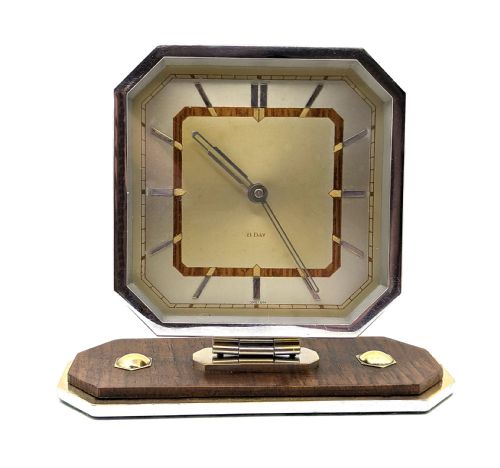
On this page, buyers frequently meet smaller Edwardian and Art Deco examples, alongside earlier nineteenth century designs and silver-mounted pieces. Materials stretch beyond solid silver to include silvered metal, chrome, glass, enamel, and mahogany cases housing mechanical movements.
Materials and construction
Clockmakers utilised hallmarked silver, silver plating, and chrome over brass alongside traditional cabinet timbers such as mahogany and rosewood. Enamel dial faces, glass panels, and brass movements complete the structure of these timepieces.
Movements span eight-day mechanisms, striking trains, and specialised platforms like Mauthe or Mappin & Webb calibres. Cases combine chased silver cladding, glass framing, and fitted leather or metal travel housings.
Listings feature silver mantle clocks spanning the Georgian period, the nineteenth century, and Art Deco 1930s designs.
Makers and material execution
Quality rests in the precision of the movement, the weight and thickness of the silver casing, and the crispness of chased decoration. Maker attribution to established firms like Asprey, Harrods, or Mappin & Webb elevates a piece.
Intricate dial work, such as guilloche enamel or finely silvered metal dials, distinguishes superior examples from standard production pieces.
William Gard·Mappin & Webb·Richard Winter·David Veasey·Liberty & Co·Harrods of London·Guilmet·Paul Garnier·Asprey·Winterhalder & Hofmeier·Vulliamy·Allen Colyer·Bayard·Blangy
The Silver Mantle Clock Glossary
- Bracket clock
- A portable table clock originally designed to sit on a wall bracket. These house complex movements and often feature striking mechanisms.
- Carriage clock
- A small spring-driven clock with a carrying handle, originally made for travellers. They frequently feature glass panels exposing the escapement.
- Guilloche enamel
- Decorative enamel with an intricate engine-turned pattern beneath. It provides translucent colour on miniature timepieces and dials.
- Portico clock
- A monumental clock style shaped like a classical portico. These tall architectural pieces often pair mahogany with silvered dials.
- Strut clock
- A timepiece supported by a hinged prop or stand at the back. They are typically intended for desk use.
Silver Mantle Clock: Frequently Asked Questions
How do I wind a mechanical desk clock?
Most mechanical clocks require a key or wing nut to tension the mainspring inside the movement. Insert the key gently and turn clockwise until resistance increases.
Avoid over-winding, as this can strain the internal spring mechanism and disrupt accurate timekeeping.
Where should I place a mantle clock?
Position your clock on a stable, level surface away from direct heat sources and damp environments. Mantle clocks suit mantelpieces, sideboards, and dedicated desk spaces.
A level surface ensures the pendulum or escapement beats evenly without stopping.
What is an eight-day movement?
An eight-day movement is a mechanical clock calibre designed to run for slightly more than a week on a single winding. This reduces the frequency of maintenance required by the owner.
Such movements appear in larger bracket clocks as well as smaller desk models.
How do I identify an Art Deco clock?
Art Deco clocks feature geometric forms, skyscraper silhouettes, and streamlined chrome or mirrored surfaces. They frequently date from the 1920s and 1930s.
Dial numbers and hands often employ stylized modern typography rather than traditional Roman numerals.