





Silver Link Bracelet
A silver link bracelet holds the wrist with geometric rhythm, offering a wearable archive of decorative metalwork from the Victorian era to the mid-century.
Silver Link Bracelet
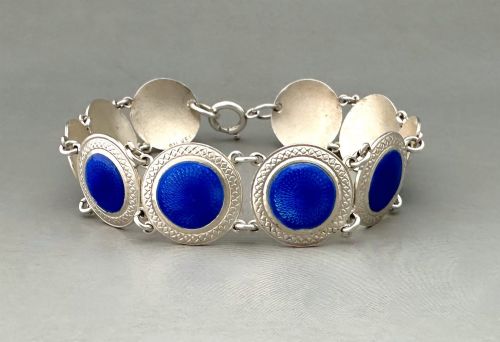
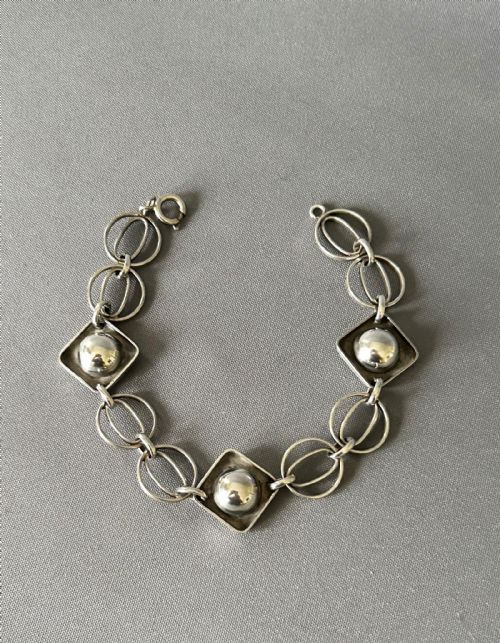
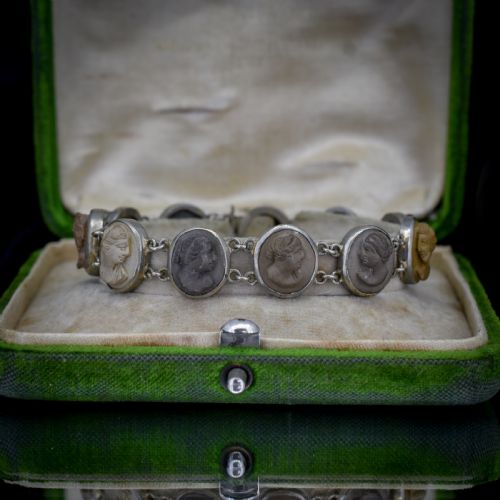
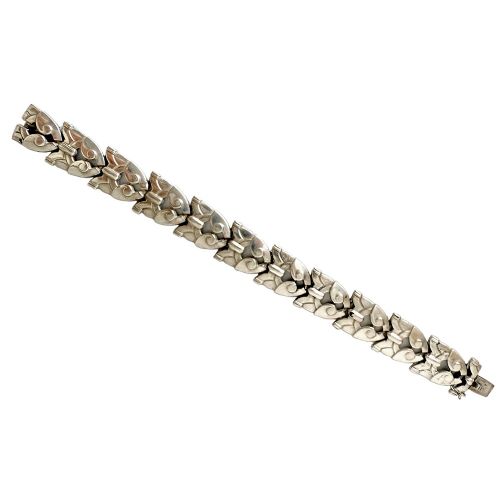
A silver link bracelet brings together articulated metal segments, ranging from heavy Victorian curb chains to streamlined Art Deco brickwork panels and geometric Scandinavian designs.
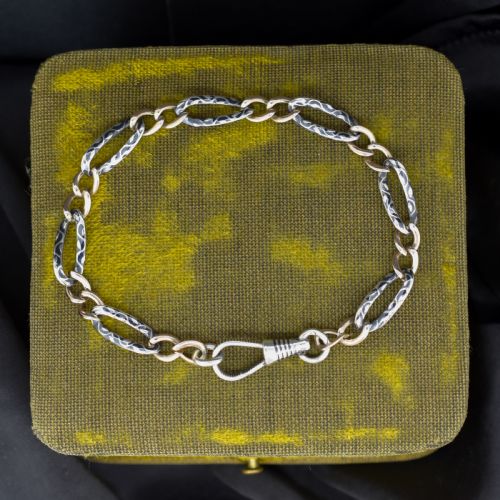
You will most frequently encounter pieces from the Art Deco period utilising enamel and chrome, alongside Victorian fancy link variations secured by dog clips or heart padlocks.
The selection extends from early twentieth-century Arts and Crafts silverwork set with glass or hardstones to minimalist mid-century Swedish and Norwegian creations.
How they were made
Silversmiths constructed these bracelets using sterling silver and solid silver components, often incorporating pierced filigree settings or stamped interlocking links.
Colour and visual depth were achieved through vitreous enamel, guilloche enamel, and niello work, sometimes accented with gold, marcasite, onyx, chalcedony, or hand-painted miniatures.
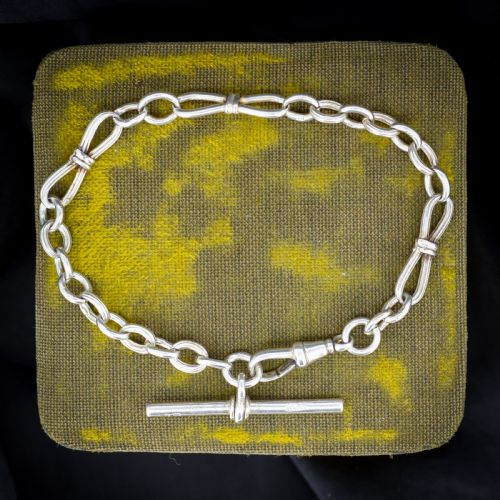
Clasps and connectors included functional dog clips, T-bar drops, and padlock fastenings integrated directly into the structural design of the chain.
Silver Link Bracelet Retail Price Guide 2026
Typical asking prices for silver link bracelet among the pieces listed under this phrase on Sellingantiques today, from the lower quarter to the upper quarter. They describe what is for sale here now, not the wider market.
Represented periods span the nineteenth century, Victorian era, Edwardian years, Arts and Crafts movement, Art Deco, and mid-century modern design.
What varies in quality
The distinction between standard production and exceptional work lies in the precision of the link articulation and the complexity of the metal fabrication, such as hand-pierced filigree versus simple stamped connections.
In enamelled pieces, the depth and preservation of the vitreous or guilloche surface, free from loss or heavy grazing, mark the upper tier of craftsmanship.
Attribution to documented makers and the retention of original functional hardware, including matching safety chains and secure padlocks, elevate the standing of an individual piece.
Jakob Bengel·Murrle Bennett·Fahrner and Bennett
The Silver Link Bracelet Glossary
- Dog clip
- A spring-loaded swivel fastening commonly found on Victorian and Edwardian watch chains and bracelets.
- Guilloche enamel
- Decorative enamel applied over a mechanically engraved metal background that creates repeating geometric patterns beneath the translucent colour.
- Niello
- A black metallic alloy of sulphur, silver, lead, and copper used as an inlay to fill engraved designs on silver.
- Filigree
- Delicate openwork jewellery created by twisting and soldering fine silver wire into intricate lace-like patterns.
- Brickwork
- An Art Deco link style characterised by rectangular metal panels overlapping or interlocking in a pattern resembling masonry.
Silver Link Bracelet: Frequently Asked Questions
How do I secure a dog clip bracelet?
The spring-loaded lever on the dog clip retracts inward, allowing you to hook the terminal ring or loop of the bracelet securely inside the enclosure.
Ensure the swivel mechanism moves freely so the bracelet does not twist during daily wear.
What is a book chain bracelet?
Book chains feature wide, folded metal links that echo the shape of book spines, originating primarily in the Victorian period as substantial statement jewellery.
They are frequently paired with padlock clasps and decorative central lockets.
How do I care for enamelled silver links?
Vitreous and guilloche enamel requires gentle handling, as harsh chemical dips can damage the glass surface or discolour the underlying silver.
Clean the metal parts softly with a specialised cloth while avoiding immersion in abrasive cleaning solutions.
How do I date an Art Deco panel bracelet?
Art Deco pieces from the 1920s and 1930s typically exhibit strict geometric symmetry, streamlined chrome or silver construction, and vibrant enamel work.
Makers such as Jakob Bengel utilised industrial motifs like brickwork patterns that define this era.