





Silver Lidded Vanity Pot
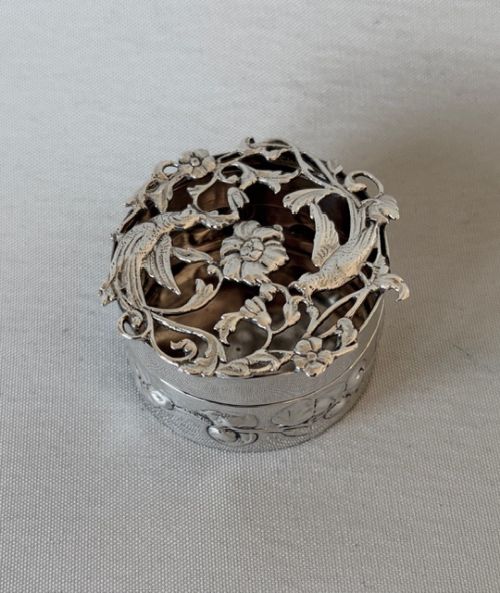
A silver lidded vanity pot sits on the dressing table to hold powders and trinkets, combining bright metal with heavy glass.
Silver Lidded Vanity Pot
A silver lidded vanity pot serves as a dressing table container for creams, pins, and small cosmetics. These pieces date from the nineteenth century through the Art Deco era, with Edwardian examples appearing most frequently.
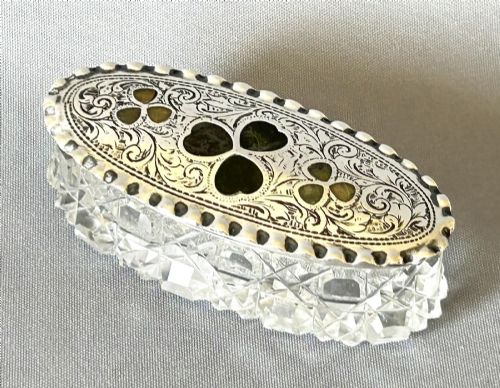
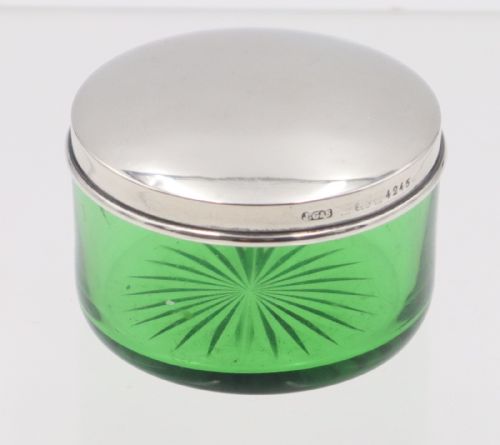
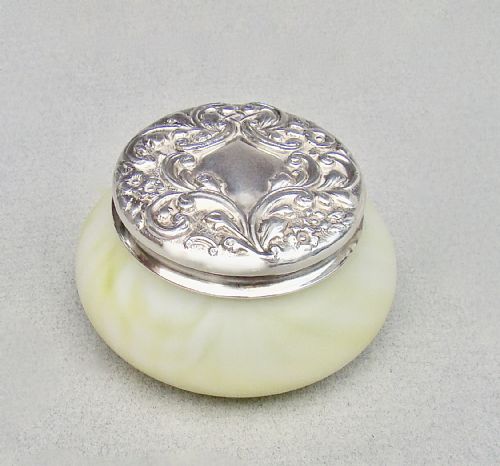
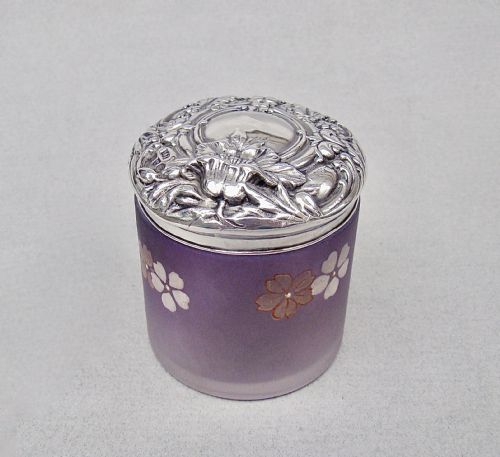
The body of the vessel is formed from cut glass, crystal, satin glass, coloured glass, or porcelain, topped with a fitted lid of sterling silver. Makers placed these pots on dressing tables and desks alongside brushes and mirrors.
Forms range from small rouge pots to large crystal jars and cylindrical trinket boxes. They reflect the dressing table customs of the Victorian, Edwardian, and 1920s periods.
How they were made
Glass bodies were blown into moulds or cut by hand to create deep facets and patterns that caught the dressing table light. Coloured glass variants relied on minerals added to the molten batch to achieve cranberry, green, blue, or amethyst tones.
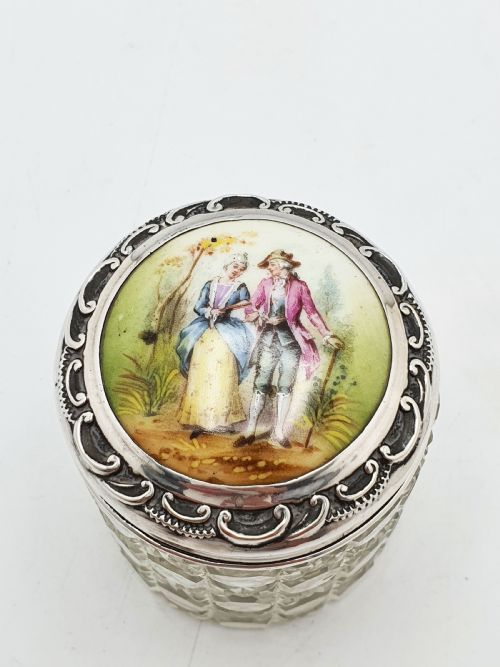
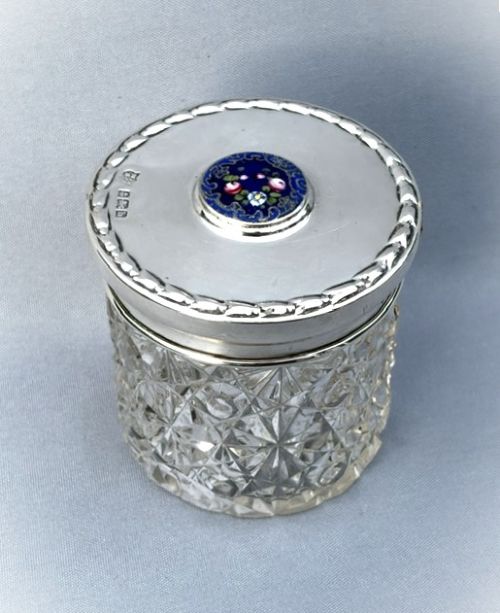
Sterling silver lids were stamped, chased, or engraved, carrying hallmarks from assay offices such as London, Birmingham, and Chester. Some lids incorporate panels of hand-painted porcelain or layers of translucent enamel over engine-turned silver.
Tortoiseshell inserts and glass overlays were applied to the metal and crystal structures with specialised adhesives and tight mechanical fittings. These contrasting materials demanded precise metalworking to ensure the silver collars met the glass rims securely.
Silver Lidded Vanity Pot Retail Price Guide 2026
Typical asking prices for silver lidded vanity pot among the pieces listed under this phrase on Sellingantiques today, from the lower quarter to the upper quarter. They describe what is for sale here now, not the wider market.
Assay marks from Birmingham, Chester, and London appear frequently on the silver lids of these dressing table jars.
What varies in quality
The thickness and clarity of the glass vessel dictate the baseline standard of the piece, with heavy cut crystal sitting above thin moulded glass. Deep diamond cutting and sharp faceting show greater skill in the glasshouse.
Lids adorned with guilloché enamel, hand-painted plaques, or piqué tortoiseshell represent more ambitious workshop output than plain stamped silver. Crisp hallmarks and substantial metal weight distinguish better silver mounts from thin sheet alternatives.
A. Bromet & Co·Asprey
The Silver Lidded Vanity Pot Glossary
- Guilloché
- A decorative mechanical technique whereby intricate geometric patterns are engraved into metal before translucent enamel is applied over the top. This lets the underlying pattern show through the coloured glass-like coating.
- Sterling silver
- An alloy consisting of silver and other metals, typically copper, standardised for purity at ninety-two point five percent. British pieces carry hallmark stamps confirming this standard.
- Cut glass
- Glass shaped and patterned by holding the vessel against a rotating abrasive wheel. The resulting facets scatter light across the dressing table.
- Tortoiseshell
- The mottled brown and amber shell of certain sea turtles, used in thin panels for box lids. It is often paired with silver inlay known as piqué work.
- Assay office
- An official body responsible for testing the purity of precious metals and stamping them with hallmark symbols. Towns such as Birmingham, Chester, and London operated distinct offices.
Silver Lidded Vanity Pot: Frequently Asked Questions
What were vanity pots used for?
These jars held face powders, cold creams, rouge, hairpins, and small jewellery items on the Victorian or Edwardian dressing table. They kept daily cosmetic supplies tidy and protected from dust.
Lids kept contents private and hygienic while adding a decorative flash of polished silver to the bedroom suite.
How do I date a silver vanity pot?
Hallmarks stamped on the silver lid provide the most precise date, indicating the assay office, standard of silver, and a specific year letter. Stylistic clues like Art Deco geometry or Edwardian garland motifs narrow down the period.
Glass cutting styles and colour preferences also shift between the nineteenth century and the 1930s.
Are the lids removable?
Most silver lids lift straight off or rest on a collar fitted to the glass rim. Some smaller rouge pots feature threaded screw-fit lids designed to prevent loose powder from spilling.
Friction fits rely on cork or paper liners inside the silver rim to maintain a snug grip on the glass.
How do I clean the glass and silver?
Silver components require a soft cloth and a gentle polish formulated for precious metals, taking care not to stain surrounding glass or enamel. Warm soapy water cleans the glass body safely.
Enamel, tortoiseshell, and painted porcelain panels need dry dusting rather than immersion in liquid.