
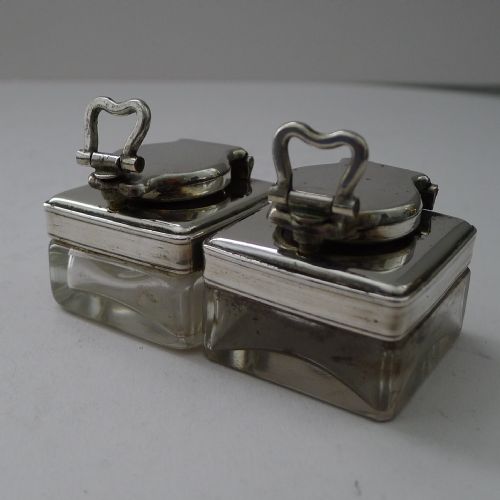


Silver Lidded Bottle
A silver lidded bottle is a sturdy desktop or dressing table companion crafted to hold perfume, ink, or spirits safely.
Silver Lidded Bottle
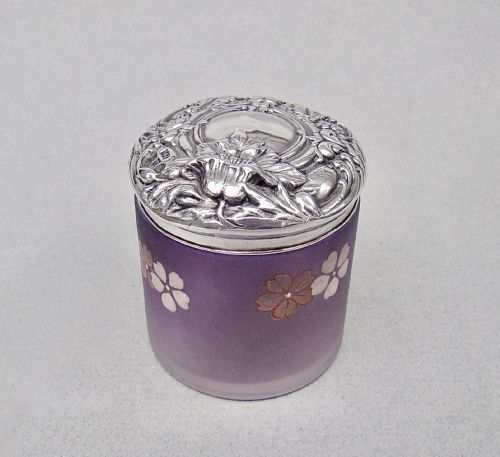
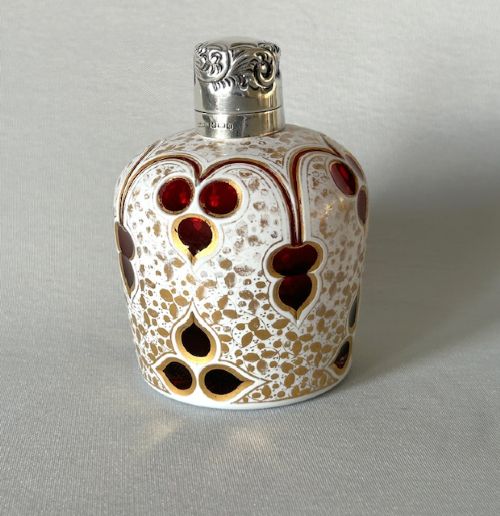
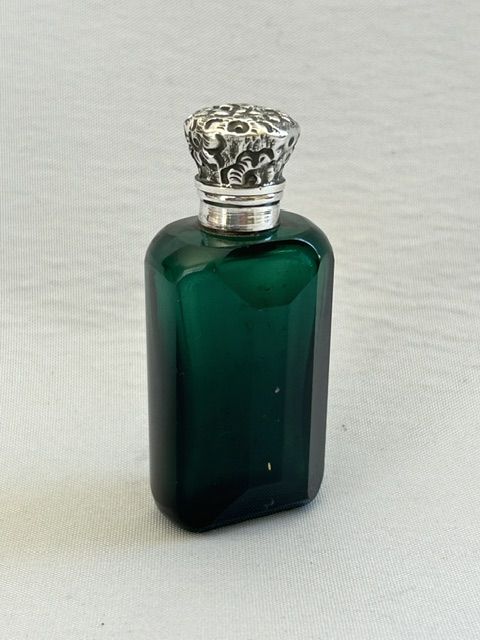
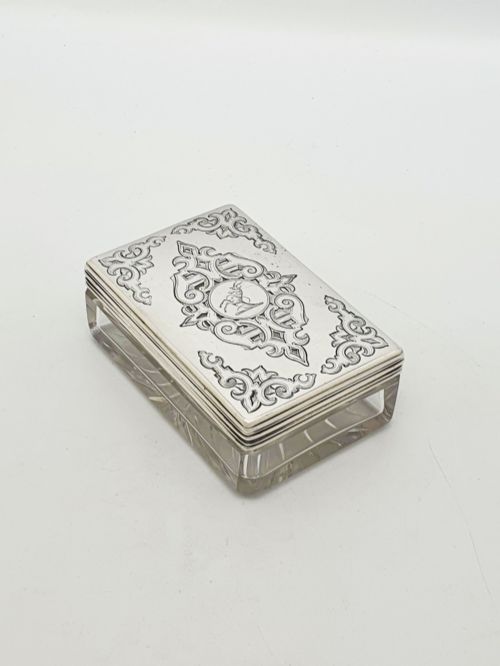
When you search for a silver lidded bottle, you find a collection spanning scent bottles, dressing table jars, inkwells, and whisky noggins. These pieces bring together functional glass or crystal vessels and precious metal lids, often shaped for travel or display.
The selection here draws primarily on Victorian, Edwardian, and early twentieth-century examples. You will frequently encounter cut glass and sterling silver pairings, alongside pieces incorporating tortoiseshell, enamel, and Bristol green glass.
Origins stretch from Georgian beginnings through nineteenth-century French workshops to the geometric lines of Art Deco design. Each object reflects the daily domestic rituals of writing, grooming, and entertaining across past eras.
How they were made
Maker's workshops combined blown or mould-formed glass with hammered, cast, and hallmarked silver components. Cut glass vessels required heavy grinding and polishing to achieve deep facets that caught the light, while fitted silver collars secured the threaded or hinged lids.
Specialist techniques like guilloche enamel and piqué work in tortoiseshell decorated the metal surfaces. Craftsmen turned solid silver, silver plate, and specialised glass types such as Bohemian and Clichy glass to meet the demands of affluent households.
Some gentleman's cologne bottles came with locks to stop servants sampling the contents.
What varies in quality
Quality rests on the weight and clarity of the glass vessel alongside the gauge of the silver used for the lid and mounts. Heavier cut glass with precise, sharp faceting distinguishes finer dressing table jars and scent bottles from lighter, simpler pressed glass alternatives.
The integration between the metal collar and the glass body reveals the maker's hand, where tight seals and crisp hallmarks indicate superior workshop standards. Finer pieces also display intricate decorative details like hand-painted enamel or carefully inlaid tortoiseshell.
Goldsmith's and Silversmith's Co.
The Silver Lidded Bottle Glossary
- Sterling silver
- An alloy containing 925 parts of pure silver per thousand, widely used for British lids and mounts.
- Guilloche enamel
- Decorative mechanical engraving applied beneath translucent coloured enamel on metal surfaces.
- Bristol green
- A deep, rich green glass traditionally produced in Bristol during the eighteenth and nineteenth centuries.
- Clichy glass
- Nineteenth-century French glass known for distinctive coloration and high-quality dressing table wares.
- Whisky noggin
- A small drinking vessel, often fitted with a silver rim and lid, used for a single measure of spirits.
Silver Lidded Bottle: Frequently Asked Questions
What were silver lidded bottles used for?
These vessels held personal scents, toiletries, ink for correspondence, or spirits for private refreshment. Their secure metal lids prevented evaporation and spills during daily use.
Ladies and gentlemen kept them on dressing tables, writing desks, and travel chests. They served as both practical containers and decorative items reflecting the owner's status.
How do I date a silver lidded bottle?
British hallmarking on the silver components provides the most reliable date, showing the assay office, standard, and year letter. Examining the style of the glass cutting and the silhouette helps confirm the period.
Victorian pieces often feature heavy cut glass and ornate floral repousse work, while Edwardian examples lean towards lighter forms. Art Deco pieces introduce geometric motifs and guilloche enamel.
Can I still use an antique inkwell?
Many antique inkwells retain their glass or ceramic inserts and remain fully functional for everyday desk use. You should check the interior for cracks and ensure the hinged lid opens smoothly.
Modern fountain pen inks work well, but you must clean the insert regularly to prevent dried residue from building up. Keep the silver polished with a soft cloth to avoid damaging any delicate glass edges.