


Silver Lid Glass Trinket Box
A silver lid glass trinket box combines the weight of precious metal with the tactile clarity of cut crystal and pressed glass.
Silver Lid Glass Trinket Box
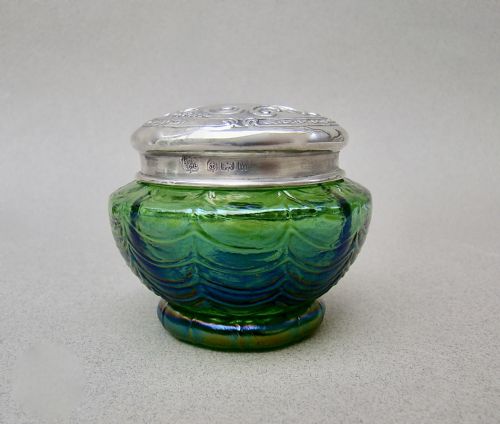
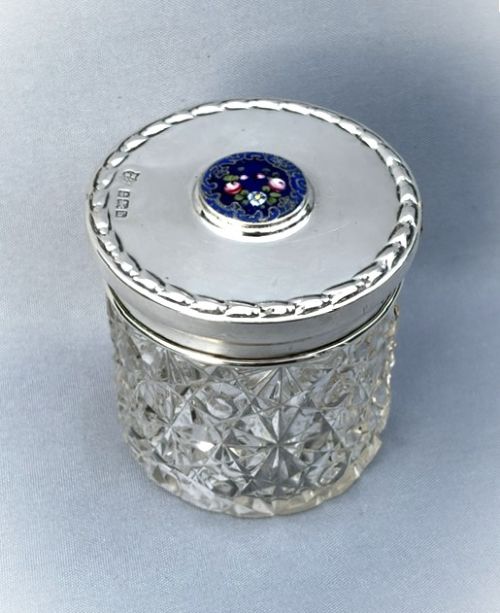
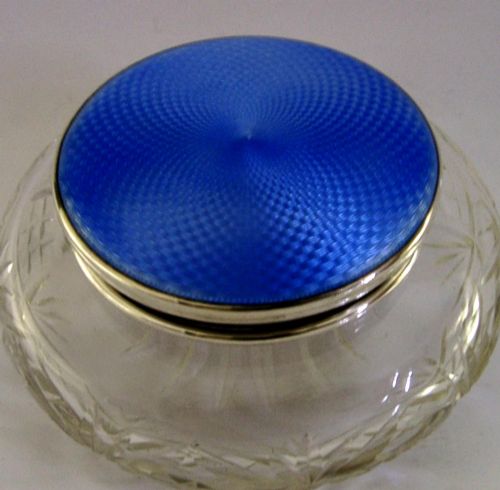
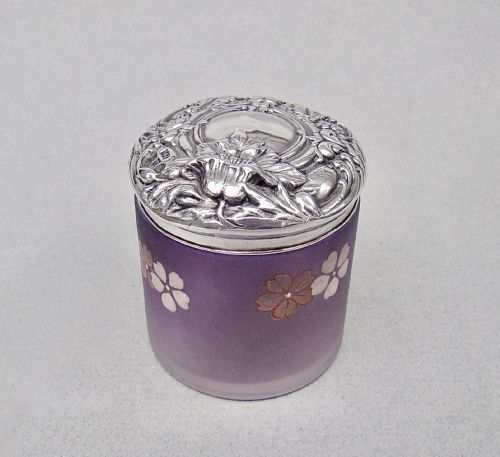
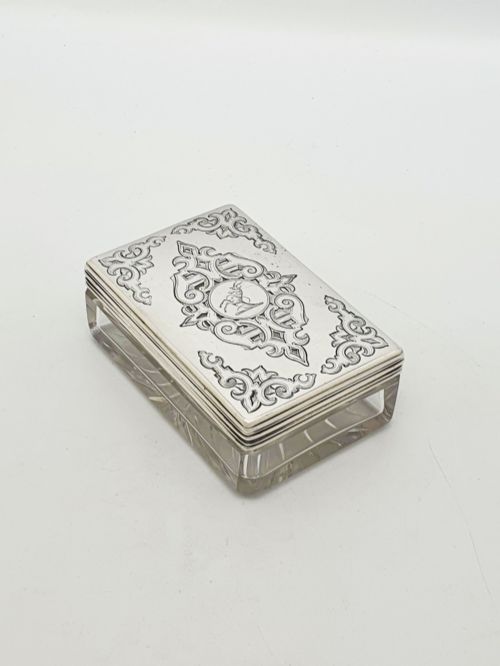
A silver lid glass trinket box takes the form of small dressing table jars, vanity pots and lidded boxes designed to hold small personal items. The pieces seen here span the Victorian, Edwardian and Art Deco periods, alongside Mid-Century examples.
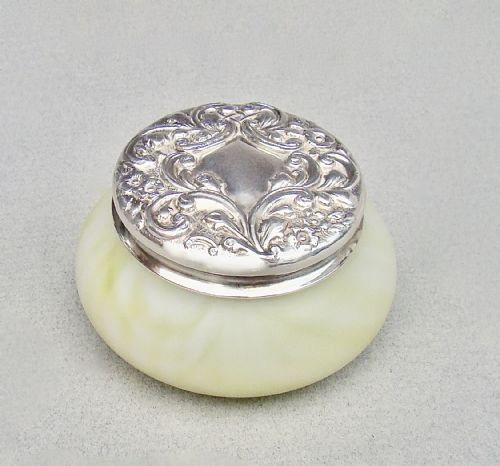
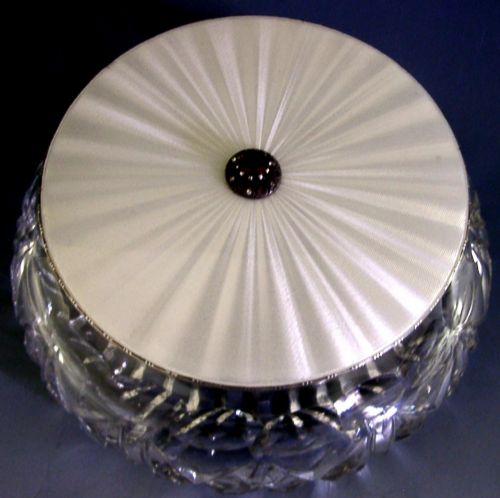
Makers utilised various glass types including cut glass, satin glass, frosted glass and cranberry glass, frequently paired with sterling silver covers. Shapes range from heart-shaped boxes to substantial seven-inch crystal jars.
Origin points include English provincial assay offices such as Birmingham and Chester, alongside nineteenth-century French production. Most examples date from the early twentieth century, reflecting the dressing table customs of the era.
Materials and Technique
The glass bodies are formed through cutting, moulding or blowing, utilising clear crystal, coloured glass or frosted finishes to achieve texture. Artisans then fitted these vessels with sterling silver lids, often secured with internal collars.
Lids frequently display surface ornamentation including vitreous enamel work, engine-turning, repoussé decoration or inlaid tortoiseshell panels. Assay office hallmarks stamped into the silver provide precise markers of date and origin.
Victorian ladies often stored delicate hairpins in these jars, trusting the heavy silver lid to keep runaway pins contained during morning dressing.
Assessing the Pieces
Quality rests in the depth and sharpness of the glass cutting, the weight of the crystal body and the thickness of the silver lid. Heavier gauge silver resists denting better and maintains crisper hallmarks over time.
The integration between the metal collar and the glass rim indicates manufacturing standard, alongside the preservation of applied enamel or delicate tortoiseshell inserts.
A. J. Pepper & Co·A. Bromet & Co
The Silver Lid Glass Trinket Box Glossary
- Assay mark
- A stamp indicating the purity of the silver, the town of testing, and the year of manufacture. These small punches are typically found on the rim or top of the lid.
- Cut glass
- Glassware shaped and patterned by grinding facets into the surface using abrasive wheels. This technique creates the sparkle and weight characteristic of better vanity jars.
- Repoussé
- A metalworking technique where the silver is hammered from the reverse side to form raised relief designs on the lid. This ornamental method was widely used in Edwardian pieces.
- Satin glass
- Glass treated with hydrofluoric acid or sandblasting to produce a dull, soft-sheen surface resembling satin. It provides a tactile contrast to the bright polish of the silver lid.
- Tortoiseshell
- The mottled brown and amber keratin material sourced from the shell of certain turtle species, used as an inset panel on silver lids. It offers a rich, warm contrast to sterling metal.
Silver Lid Glass Trinket Box: Frequently Asked Questions
How do I date a silver lid glass trinket box?
Dating relies primarily on the hallmarks stamped into the silver lid, which indicate the assay office, metal standard and year letter.
Stylistic indicators such as Art Nouveau curves or geometric Art Deco lines also help narrow down the period when hallmarks are rubbed.
What were these boxes originally used for?
These jars sat upon dressing tables and vanities to hold hairpins, rings, brooches and daily cosmetics.
They kept small personal valuables tidy and protected from dust in domestic bedchambers.
How should I clean the silver and glass?
The glass body tolerates warm soapy water, but silver polish should be kept away from glass rims, fabric linings and enamel panels.
Special care is necessary for pieces containing tortoiseshell or enamel, as moisture can damage adhesives and under-surfaces.
Are the lids removable?
Most lids simply lift off or rest on a fitted silver collar attached to the glass rim.
Hinged examples do exist, though loose slip-on lids are more common among the smaller dressing table jars.